THE ADVENTURE COLLECTIVE® · Independent discovery and booking for outdoor travel

Explore Oslo at your own pace with a 17-stop self-guided audio tour that pairs historian narration and soundscapes with an interactive map. Visit stations from the Opera House to Vigeland Park on a flexible route tailored to your interests.
Explore Oslo at your own pace with a 17-stop self-guided audio tour that pairs historian narration and soundscapes with an interactive map. Visit stations from the Opera House to Vigeland Park on a flexible route tailored to your interests.
You step out of Oslo Central Station into a city that measures itself in stone, fjord and the quiet choreography of daily life. The audio guide opens as you cross the marble slope of the Opera House; narration, ambient soundscapes and a historian's cadence turn ordinary steps into timed scenes—wartime dramas at the cathedral, the industrial grit of Aker Brygge, and Vigeland's granite people frozen mid-gesture.
Verified experiences and guided adventures in the surrounding area.
Operated by Uvamai Niche Tourism · Oslo, Oslo
You step out of Oslo Central Station into a city that measures itself in stone, fjord and the quiet choreography of daily life. The audio guide opens as you cross the marble slope of the Opera House; narration, ambient soundscapes and a historian's cadence turn ordinary steps into timed scenes—wartime dramas at the cathedral, the industrial grit of Aker Brygge, and Vigeland's granite people frozen mid-gesture.
Oslo's streets tell a layered history: Viking trade routes met 19th-century industrial growth, and the name changes from Christiania back to Oslo mark a nation reshaping its identity. Geology is visible too—granite promenades, the fjord's glacial cut, and reclaimed harborlands where architects married engineering with public space. Culture shows in cafes on Karl Johans Gate, the egalitarian access to Palace Park, and spoken anecdotes revealing why the tiger became Oslo's emblem.
The experience is flexible: 17 discrete stops let you tailor time and pace, listen before arrival or play on-site. Expect mostly easy, flat walking on paved city streets with occasional stairs and museum entries that can require tickets. Public transport is nearby if you need to shortcut between neighborhoods. Practical notes: bring headphones, a charged phone, and waterproof layers—Oslo weather shifts fast. Start early for quieter parks and late afternoon for golden light on the fjord. This is a city walk with the depth of a private lecture—built for travelers who want context with freedom.
easy.
3–9 hours.
Suitable for most fitness levels—basic walking stamina for several hours with optional public-transport shortcuts
You get two private links before your start date: a SoundCloud playlist for the audio tracks and a Google My Maps link for the interactive itinerary—open both in a web browser.
Yes—audio and map links stream from external platforms. You can pre-listen to tracks and download pages that your browser supports, but a data connection is recommended.
Yes—the private links remain valid until your tour is complete (maximum six days), so you can spread stops over multiple visits.
No—this is a self-guided audio experience. Some interiors like Akershus Castle or organ tours at the Opera may require separate admission fees.
Oslo evolved from a medieval trading town into a national capital, carrying remnants of Viking routes, 19th-century industrialization, and 20th-century urban renewal in its streets and waterfront.
Oslo emphasizes sustainable urban planning—reclaimed harborfronts, extensive bike lanes, and strong public transport reduce visitor impact on green spaces.
Uvamai Niche Tourism operates guided outdoor trips and adventures with an emphasis on safety, stewardship, and memorable experiences.



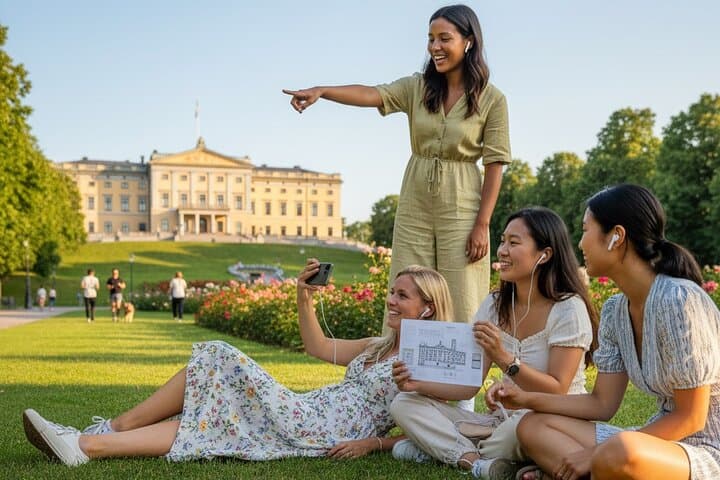
You step out of Oslo Central Station into a city that measures itself in stone, fjord and the quiet choreography of daily life. The audio guide opens as you cross the marble slope of the Opera House; narration, ambient soundscapes and a historian's cadence turn ordinary steps into timed scenes—wartime dramas at the cathedral, the industrial grit of Aker Brygge, and Vigeland's granite people frozen mid-gesture.
You step out of Oslo Central Station into a city that measures itself in stone, fjord and the quiet choreography of daily life. The audio guide opens as you cross the marble slope of the Opera House; narration, ambient soundscapes and a historian's cadence turn ordinary steps into timed scenes—wartime dramas at the cathedral, the industrial grit of Aker Brygge, and Vigeland's granite people frozen mid-gesture.
Oslo's streets tell a layered history: Viking trade routes met 19th-century industrial growth, and the name changes from Christiania back to Oslo mark a nation reshaping its identity. Geology is visible too—granite promenades, the fjord's glacial cut, and reclaimed harborlands where architects married engineering with public space. Culture shows in cafes on Karl Johans Gate, the egalitarian access to Palace Park, and spoken anecdotes revealing why the tiger became Oslo's emblem.
The experience is flexible: 17 discrete stops let you tailor time and pace, listen before arrival or play on-site. Expect mostly easy, flat walking on paved city streets with occasional stairs and museum entries that can require tickets. Public transport is nearby if you need to shortcut between neighborhoods. Practical notes: bring headphones, a charged phone, and waterproof layers—Oslo weather shifts fast. Start early for quieter parks and late afternoon for golden light on the fjord. This is a city walk with the depth of a private lecture—built for travelers who want context with freedom.