THE ADVENTURE COLLECTIVE® · Independent discovery and booking for outdoor travel

Walk Oslo’s winter-lit waterfront from the marble Opera House to the medieval ramparts, guided by a local who explains Norwegian Christmas customs and leads you into Jul i Vinterland for food, crafts, and warm gløgg. Ideal for first-time visitors who want context with their holiday cheer.
Walk Oslo’s winter-lit waterfront from the marble Opera House to the medieval ramparts, guided by a local who explains Norwegian Christmas customs and leads you into Jul i Vinterland for food, crafts, and warm gløgg. Ideal for first-time visitors who want context with their holiday cheer.
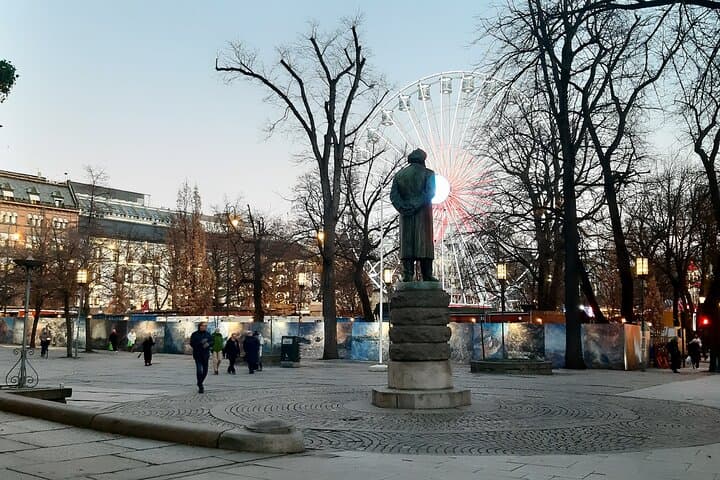
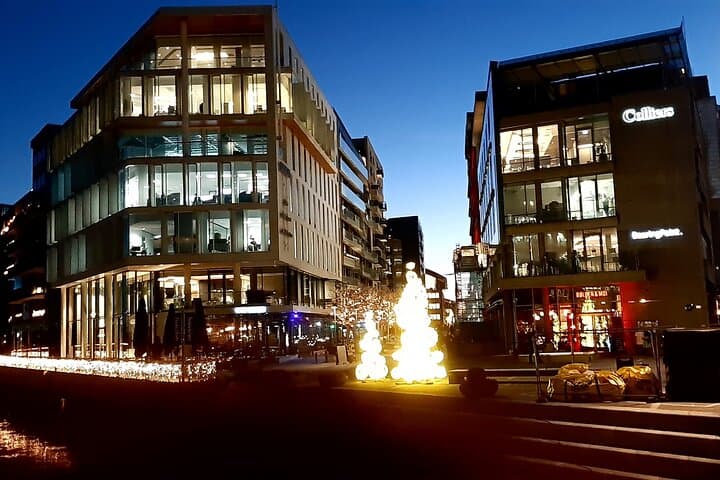
A cold, salt-scented wind pushes off the Oslofjord as your guide pulls a wool scarf tighter and points toward a low, flat white roof that looks like an iceberg — the Opera House. The city glows in small clusters: strings of lights at Aker Brygge, chimney smoke from bakeries, and the low murmur of a market where vendors warm their hands over steaming cups of gløgg. This private walking tour threads those clusters together, moving from the architectural sharpness of the opera to the medieval stones of Akershus, and finally into the loud, fragrant pulse of Jul i Vinterland.
Verified experiences and guided adventures in the surrounding area.
Operated by Quality Tours · Oslo, Oslo
A cold, salt-scented wind pushes off the Oslofjord as your guide pulls a wool scarf tighter and points toward a low, flat white roof that looks like an iceberg — the Opera House. The city glows in small clusters: strings of lights at Aker Brygge, chimney smoke from bakeries, and the low murmur of a market where vendors warm their hands over steaming cups of gløgg. This private walking tour threads those clusters together, moving from the architectural sharpness of the opera to the medieval stones of Akershus, and finally into the loud, fragrant pulse of Jul i Vinterland.
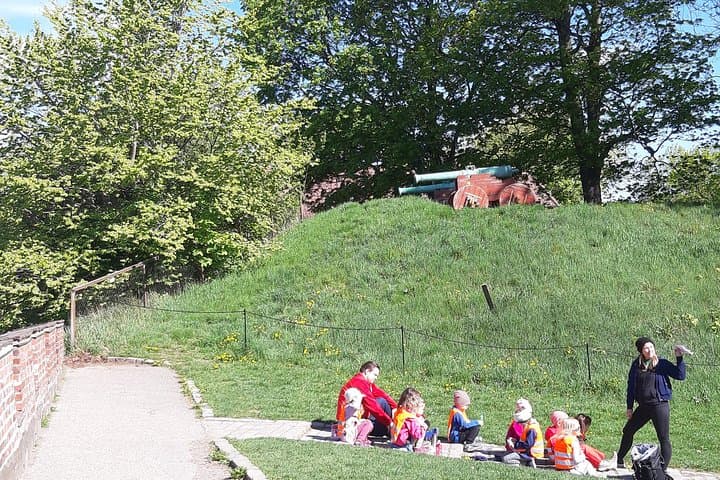
Oslo’s story is visible in the stones beneath your boots. The fortress at Akershus began as a 13th-century military keep and now watches a city that grew up around its harbor trade. The Opera House, by contrast, is a 21st-century slab of marble and glass that invites you to walk up its roof for a tilted view over ferries and waterfront cranes. Between them sit the Royal Palace, Ibsen’s theater, and low boathouses that recall a city shaped by fjord and tide.
Culture here mixes civic pride with blunt practicality: Norwegians bring their own reusable cups to market stalls, and the market’s food offerings trace holiday customs — roasted almonds, lefse, and the thick, spiced gløgg that feels like a hand on your back against the cold. Your local guide will explain what makes Norwegian Christmas distinct: quieter family-focused celebrations on Christmas Eve, and traditions like julebord parties built around shared plates rather than single-course formality.
For planning: this private tour runs 1–3 hours and suits most walkers — it’s largely flat pavement with a few cobbled sections and rooftop inclines. Dress in layers: a windproof outer shell and insulated mid-layer will keep you comfortable while you linger at stalls. Bring small change or a contactless card for market tasting, and allow at least 45 minutes at Jul i Vinterland if you want to sample food and shop artisan gifts.
Accessibility and practicality are straightforward: the route is wheelchair accessible and public transport options are close to the start. Booking is instant and refundable up to 24 hours before departure.
Whether you’re after architectural angles, a primer on Norwegian yuletide customs, or the warm chaos of a large city market, this tour is a compact, informed way to feel the season in Oslo—one illuminated window and one steaming cup at a time.
easy.
1–3 hours.
Suitable for anyone comfortable walking 2–4 km on mostly flat city pavement; light mobility needs accommodated.
Yes — the route uses paved streets and has wheelchair-accessible options; note that some market aisles can be crowded.
Some stops may include admission when available (the Nobel reception room is subject to opening); otherwise the tour focuses on exterior views and market access.
Yes — the tour is family-friendly; infants should sit on laps as required and activities can be adjusted for young walkers.
Standard meeting is at the main entrance indicated on your booking; pickup from nearby hotels can be arranged if selected at booking.
The tour operates in most weather; cancellations for a full refund are available up to 24 hours before departure per the policy.
Allocate at least 45–60 minutes to sample food, shop stalls, and enjoy performances; longer if you want to dine at nearby restaurants.
Oslo grew from a medieval trading port around a 13th-century fortress; modern waterfront redevelopment contrasts with centuries-old streets and royal grounds.
Jul i Vinterland emphasizes reusable cups and reduced single-use plastics; visitors are encouraged to carry reusable bottles and minimize waste.
Quality Tours operates guided outdoor trips and adventures with an emphasis on safety, stewardship, and memorable experiences.
A cold, salt-scented wind pushes off the Oslofjord as your guide pulls a wool scarf tighter and points toward a low, flat white roof that looks like an iceberg — the Opera House. The city glows in small clusters: strings of lights at Aker Brygge, chimney smoke from bakeries, and the low murmur of a market where vendors warm their hands over steaming cups of gløgg. This private walking tour threads those clusters together, moving from the architectural sharpness of the opera to the medieval stones of Akershus, and finally into the loud, fragrant pulse of Jul i Vinterland.
A cold, salt-scented wind pushes off the Oslofjord as your guide pulls a wool scarf tighter and points toward a low, flat white roof that looks like an iceberg — the Opera House. The city glows in small clusters: strings of lights at Aker Brygge, chimney smoke from bakeries, and the low murmur of a market where vendors warm their hands over steaming cups of gløgg. This private walking tour threads those clusters together, moving from the architectural sharpness of the opera to the medieval stones of Akershus, and finally into the loud, fragrant pulse of Jul i Vinterland.
Oslo’s story is visible in the stones beneath your boots. The fortress at Akershus began as a 13th-century military keep and now watches a city that grew up around its harbor trade. The Opera House, by contrast, is a 21st-century slab of marble and glass that invites you to walk up its roof for a tilted view over ferries and waterfront cranes. Between them sit the Royal Palace, Ibsen’s theater, and low boathouses that recall a city shaped by fjord and tide.
Culture here mixes civic pride with blunt practicality: Norwegians bring their own reusable cups to market stalls, and the market’s food offerings trace holiday customs — roasted almonds, lefse, and the thick, spiced gløgg that feels like a hand on your back against the cold. Your local guide will explain what makes Norwegian Christmas distinct: quieter family-focused celebrations on Christmas Eve, and traditions like julebord parties built around shared plates rather than single-course formality.
For planning: this private tour runs 1–3 hours and suits most walkers — it’s largely flat pavement with a few cobbled sections and rooftop inclines. Dress in layers: a windproof outer shell and insulated mid-layer will keep you comfortable while you linger at stalls. Bring small change or a contactless card for market tasting, and allow at least 45 minutes at Jul i Vinterland if you want to sample food and shop artisan gifts.
Accessibility and practicality are straightforward: the route is wheelchair accessible and public transport options are close to the start. Booking is instant and refundable up to 24 hours before departure.
Whether you’re after architectural angles, a primer on Norwegian yuletide customs, or the warm chaos of a large city market, this tour is a compact, informed way to feel the season in Oslo—one illuminated window and one steaming cup at a time.