THE ADVENTURE COLLECTIVE® · Independent discovery and booking for outdoor travel

Try traditional sword techniques and perform a supervised cut with a real Japanese sword near Osaka Castle. This one-hour Bushido trial blends instruction, costume, and a photo keepsake for a compact cultural workout.
Try traditional sword techniques and perform a supervised cut with a real Japanese sword near Osaka Castle. This one-hour Bushido trial blends instruction, costume, and a photo keepsake for a compact cultural workout.
You step out of Osaka-jo Koen Station and the city’s rhythm gives way to the hush of a small dojo a minute away, where wood floors and the sharp glint of steel set the tone.
Verified experiences and guided adventures in the surrounding area.
Operated by SAMURAI HONOR · Osaka, Osaka Prefecture
You step out of Osaka-jo Koen Station and the city’s rhythm gives way to the hush of a small dojo a minute away, where wood floors and the sharp glint of steel set the tone.
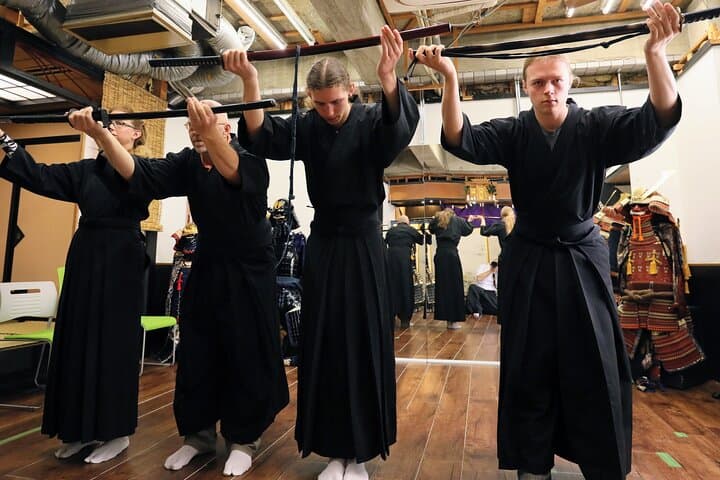
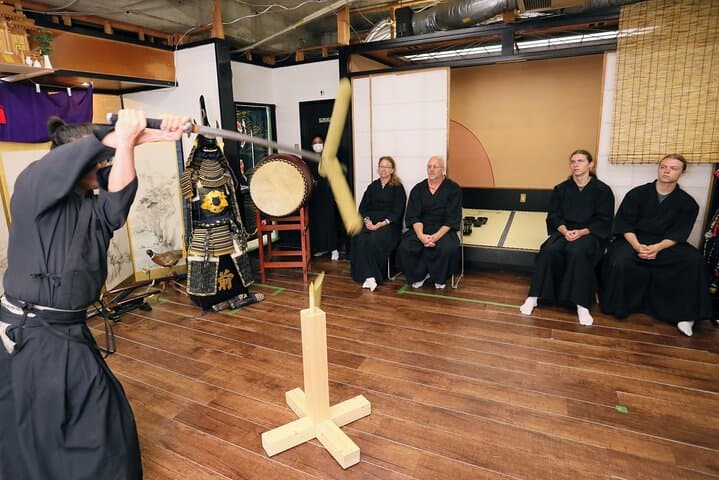
The lesson opens with a bow — a deliberate reset that places you in the lineage of Japan’s warrior class. Instructors explain sword anatomy and samurai manners before you don traditional dogi and hakama. Practice begins with an iai wooden sword, rehearsing draws, cuts, and the ceremonial motions of chiburui and nottō, then moves to a real Japanese sword for a supervised trial slashing of rolled straw.
Historically, the katana became emblematic of samurai authority during the Warring States and early Edo periods; the nearby Osaka Castle, built by Toyotomi Hideyoshi in the late 16th century, frames that legacy. Geology and urban history intersect here — the castle’s stone walls and moats anchor a green park amid Osaka’s dense grid, giving the dojo a rare mix of city energy and heritage gravity.
Practical guidance: the session is about 60 minutes, taught in English with other languages by request; expect basic physical demands and follow instructor safety rules closely. Public transport to Osaka-jo Koen Station is the easiest approach. Photography is provided and delivered digitally within two days. Not recommended for those with back, heart, or pregnancy restrictions. Bring comfortable underlayers and closed-toe shoes; leave large bags at your hotel. The experience is short but precise — it rewards attention to detail and an appetite to move deliberately, like the blade itself.
moderate.
1 hour.
Moderate fitness—able to stand, bow, and perform coordinated upper-body movements; basic mobility required
Yes — under strict supervision you will attempt a supervised cut on a rolled straw target using a real Japanese sword; instructors manage all safety protocols.
No — the session is designed for beginners and includes basic iai practice and kata instruction before any live cutting.
English is the default; other languages (Italian, Spanish, French, Chinese, Thai, Indonesian) can be requested—check availability when booking.
The dojo is a one-minute walk from Osaka-jo Koen Station near Osaka Castle; photography is provided and digital files are emailed within two days.
The katana’s cultural role grew during the Warring States and early Edo periods; nearby Osaka Castle, begun by Toyotomi Hideyoshi in the late 1500s, anchors this era of samurai history.
Dojo operations emphasize respect for cultural heritage and the park’s facilities—follow instructions, avoid touching historical masonry, and dispose of any consumables in designated bins.
SAMURAI HONOR operates guided outdoor trips and adventures with an emphasis on safety, stewardship, and memorable experiences.


You step out of Osaka-jo Koen Station and the city’s rhythm gives way to the hush of a small dojo a minute away, where wood floors and the sharp glint of steel set the tone.
You step out of Osaka-jo Koen Station and the city’s rhythm gives way to the hush of a small dojo a minute away, where wood floors and the sharp glint of steel set the tone.
The lesson opens with a bow — a deliberate reset that places you in the lineage of Japan’s warrior class. Instructors explain sword anatomy and samurai manners before you don traditional dogi and hakama. Practice begins with an iai wooden sword, rehearsing draws, cuts, and the ceremonial motions of chiburui and nottō, then moves to a real Japanese sword for a supervised trial slashing of rolled straw.
Historically, the katana became emblematic of samurai authority during the Warring States and early Edo periods; the nearby Osaka Castle, built by Toyotomi Hideyoshi in the late 16th century, frames that legacy. Geology and urban history intersect here — the castle’s stone walls and moats anchor a green park amid Osaka’s dense grid, giving the dojo a rare mix of city energy and heritage gravity.
Practical guidance: the session is about 60 minutes, taught in English with other languages by request; expect basic physical demands and follow instructor safety rules closely. Public transport to Osaka-jo Koen Station is the easiest approach. Photography is provided and delivered digitally within two days. Not recommended for those with back, heart, or pregnancy restrictions. Bring comfortable underlayers and closed-toe shoes; leave large bags at your hotel. The experience is short but precise — it rewards attention to detail and an appetite to move deliberately, like the blade itself.