THE ADVENTURE COLLECTIVE® · Independent discovery and booking for outdoor travel

Cover Osaka’s highlights in a single day: a bullet-train ride from Tokyo, a guided visit to Osaka Castle, and an evening through Dotonbori’s neon and street food. Ideal for travelers who want efficient logistics paired with local insight.
Cover Osaka’s highlights in a single day: a bullet-train ride from Tokyo, a guided visit to Osaka Castle, and an evening through Dotonbori’s neon and street food. Ideal for travelers who want efficient logistics paired with local insight.
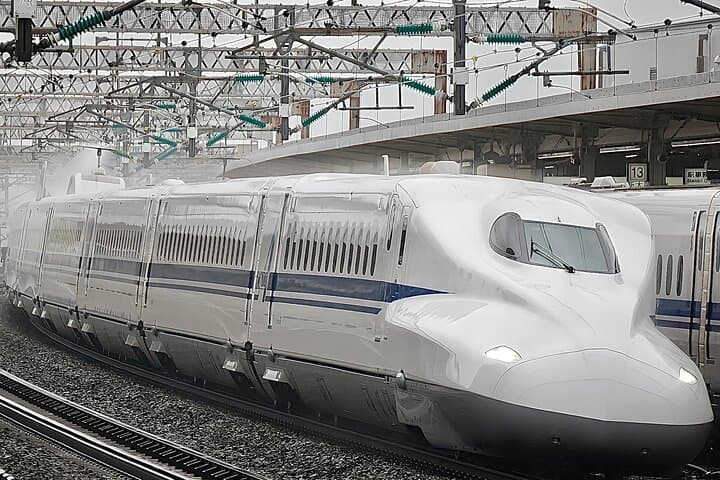
You step out of Tokyo Station into the hush before the first Nozomi departs; within hours the landscape smears into rice paddies and the train presses you toward the bright pulse of Osaka.
Verified experiences and guided adventures in the surrounding area.
Operated by MY Travel Consulting · Osaka, Osaka Prefecture
You step out of Tokyo Station into the hush before the first Nozomi departs; within hours the landscape smears into rice paddies and the train presses you toward the bright pulse of Osaka.
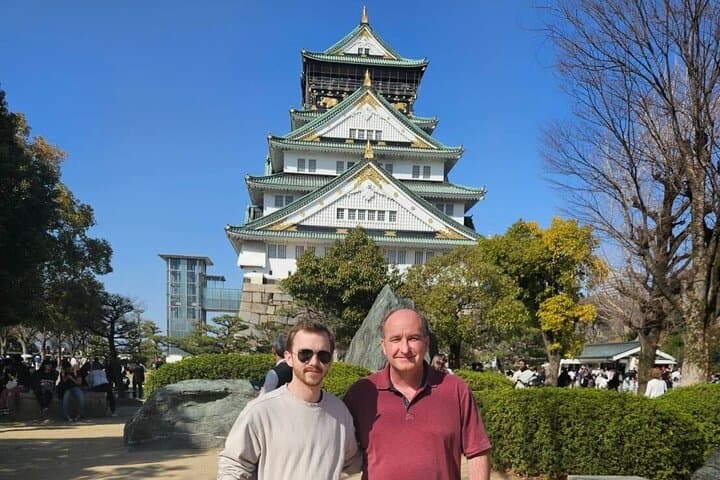
Arriving at Osaka, the day unfolds between the stoic stone of Osaka Castle and the neon currents of Dotonbori. Osaka Castle — raised by Toyotomi Hideyoshi in the late 16th century — stands atop filled moats and earthen walls that recall feudal power and samurai logistics. The city itself sits on the Osaka Plain, fed by alluvial soils from the Yodo River and a coastline shaped by the Seto Inland Sea; that geography made Osaka a historic merchant hub and explains its dense, walkable neighborhoods.
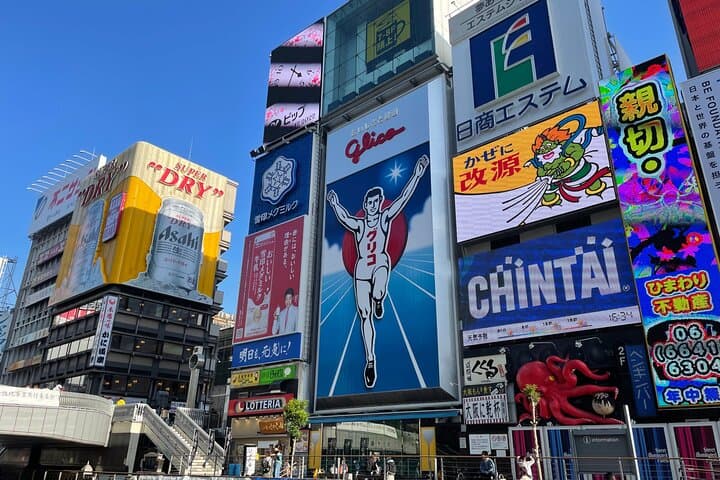
A nationally licensed guide threads local context through the itinerary: castle architecture and restoration, Edo- and Meiji-era commerce, and Dotonbori’s evolution from a 17th-century canal district to a street-food corridor with takoyaki and kushikatsu competing for attention.
Practical edge: the tour blends high-speed transfer with on-foot exploration — expect several miles of walking on paved paths, stairs inside the castle museum, and crowded streets at Dotonbori. Hotel pickup and bullet-train tickets are included, but bring a compact daypack, charged phone, and yen for cash-only stalls.
Timing matters: depart early to maximize castle time and plan breaks for lunch by the canal. Listen to your guide for skip-the-line maneuvers and cultural cues — Japan’s etiquette around cameras, silence on platforms, and dining will smooth the day. This is a fast, immersive slice of Kansai that balances history, urban energy, and straightforward logistics.
moderate.
12 hours.
Moderate fitness; able to walk several miles and climb multiple staircases over the day.
Yes — round-trip bullet train tickets between Tokyo and Osaka are included with the tour.
Expect several miles of walking across paved castle grounds and busy Dotonbori streets with stairs inside Osaka Castle’s museum.
Yes — the operator can accommodate vegetarian, vegan, and gluten-free needs if indicated at booking.
No — shinkansen tickets for this itinerary are provided, so a separate JR Pass is not necessary for the tour.
Osaka Castle was begun by Toyotomi Hideyoshi in 1583 as a show of power during the unification of Japan; the current keep is a modern reconstruction that houses historical exhibits.
Respect park rules, stay on designated paths around the castle grounds, and minimize single-use plastics — local guides encourage low-impact tourism to protect urban green spaces.
MY Travel Consulting operates guided outdoor trips and adventures with an emphasis on safety, stewardship, and memorable experiences.

You step out of Tokyo Station into the hush before the first Nozomi departs; within hours the landscape smears into rice paddies and the train presses you toward the bright pulse of Osaka.
You step out of Tokyo Station into the hush before the first Nozomi departs; within hours the landscape smears into rice paddies and the train presses you toward the bright pulse of Osaka.
Arriving at Osaka, the day unfolds between the stoic stone of Osaka Castle and the neon currents of Dotonbori. Osaka Castle — raised by Toyotomi Hideyoshi in the late 16th century — stands atop filled moats and earthen walls that recall feudal power and samurai logistics. The city itself sits on the Osaka Plain, fed by alluvial soils from the Yodo River and a coastline shaped by the Seto Inland Sea; that geography made Osaka a historic merchant hub and explains its dense, walkable neighborhoods.
A nationally licensed guide threads local context through the itinerary: castle architecture and restoration, Edo- and Meiji-era commerce, and Dotonbori’s evolution from a 17th-century canal district to a street-food corridor with takoyaki and kushikatsu competing for attention.
Practical edge: the tour blends high-speed transfer with on-foot exploration — expect several miles of walking on paved paths, stairs inside the castle museum, and crowded streets at Dotonbori. Hotel pickup and bullet-train tickets are included, but bring a compact daypack, charged phone, and yen for cash-only stalls.
Timing matters: depart early to maximize castle time and plan breaks for lunch by the canal. Listen to your guide for skip-the-line maneuvers and cultural cues — Japan’s etiquette around cameras, silence on platforms, and dining will smooth the day. This is a fast, immersive slice of Kansai that balances history, urban energy, and straightforward logistics.