THE ADVENTURE COLLECTIVE® · Independent discovery and booking for outdoor travel

A compact, four-hour guided walk through Osaka’s defining districts—Osaka Castle, Tsutenkaku and Dotonbori—blends history, food culture and easy urban exploration. Ideal for first-time visitors who want local context with efficient routes and insider tips.
A compact, four-hour guided walk through Osaka’s defining districts—Osaka Castle, Tsutenkaku and Dotonbori—blends history, food culture and easy urban exploration. Ideal for first-time visitors who want local context with efficient routes and insider tips.
You step out of Exit 1B into a pulse of neon and morning commuters, the guide's yellow-and-green bag a small anchor in the human tide. The first leg threads through Osaka Castle Park—wide paths, ginkgo and cherry trees, the castle's stone base rising like history made visible. Voices fall quiet as the guide traces Toyotomi Hideyoshi’s life across the courtyard; bronze statues and shrine gates mark chapters of the city’s past.
Verified experiences and guided adventures in the surrounding area.
Operated by ウォーキングツアー、居酒屋、バー巡り · Osaka, Osaka Prefecture
You step out of Exit 1B into a pulse of neon and morning commuters, the guide's yellow-and-green bag a small anchor in the human tide. The first leg threads through Osaka Castle Park—wide paths, ginkgo and cherry trees, the castle's stone base rising like history made visible. Voices fall quiet as the guide traces Toyotomi Hideyoshi’s life across the courtyard; bronze statues and shrine gates mark chapters of the city’s past.
From feudal grandeur the tour hops a 10-minute train to Shinsekai, where Tsutenkaku’s iron frame points skyward and retro storefronts hum below. The guide explains postwar reconstruction and Osaka’s working-class culture that shaped its food scene. Dotonbori arrives as a sensory rush: sizzling takoyaki, lacquered signboards, and back alleys that reward curiosity with hidden temples and the moss-damp hush of Hōzenji’s Mizukake Fudō.
This is an urban walk—paved terrain, mostly flat, roughly 4–6 km of walking with frequent stops; expect stairs at the castle and station platforms. Admission to Osaka Castle’s observation deck (~600 JPY) and Tsutenkaku (~1,000 JPY) is optional and paid separately. The group size is small (up to 12), so questions and detours are part of the rhythm.
Practical notes: wear comfortable, broken-in shoes and bring a transit card or exact change for trains. Start mid-morning to avoid meal crowds in Dotonbori; carry a water bottle and a light layer for coastal breezes. The guide’s local knowledge shortens lines and amplifies flavors—be ready to taste, ask, and walk with purpose.
moderate.
4 hours.
Moderate: comfortable walking fitness, able to manage stairs and 4–6 km over 4 hours
Expect roughly 4–6 km of mostly flat walking over paved paths, with frequent stops at sights and food areas.
No—optional admissions to Osaka Castle’s and Tsutenkaku’s observation decks are paid separately (approx. 600 JPY and 1,000 JPY respectively).
Meet outside the 7-Eleven at Exit 1B of the designated station; look for the guide’s yellow-and-green bag and arrive a few minutes early.
Yes for older children who can walk 4 hours; it's not suitable for those with limited mobility or significant cardiovascular issues.
Osaka developed as a commercial hub in the Edo period; Toyotomi Hideyoshi’s castle anchored political power and economic networks that shaped modern Osaka.
Stick to paved paths in Osaka Castle Park and avoid feeding wildlife; support small vendors by taking waste with you to reduce litter in busy districts.
ウォーキングツアー、居酒屋、バー巡り operates guided outdoor trips and adventures with an emphasis on safety, stewardship, and memorable experiences.
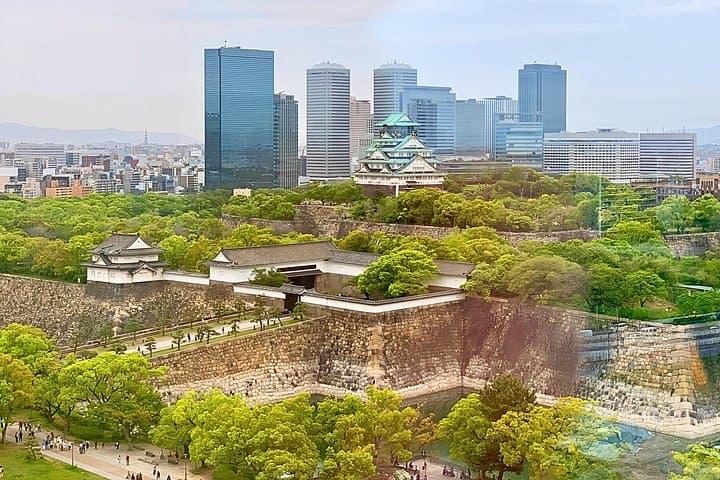
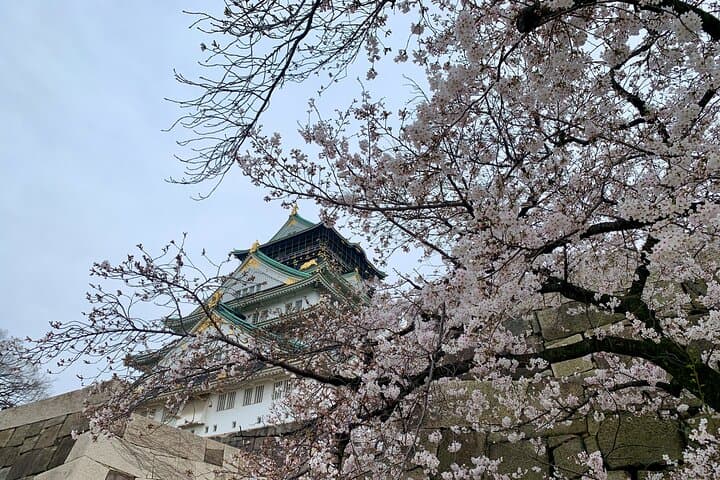
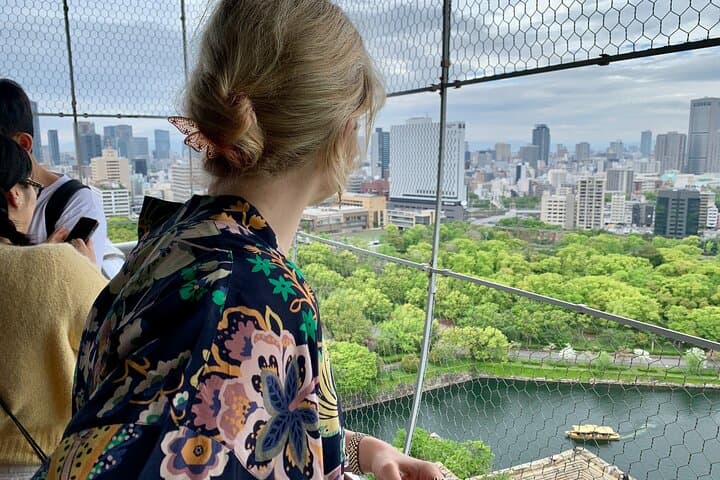
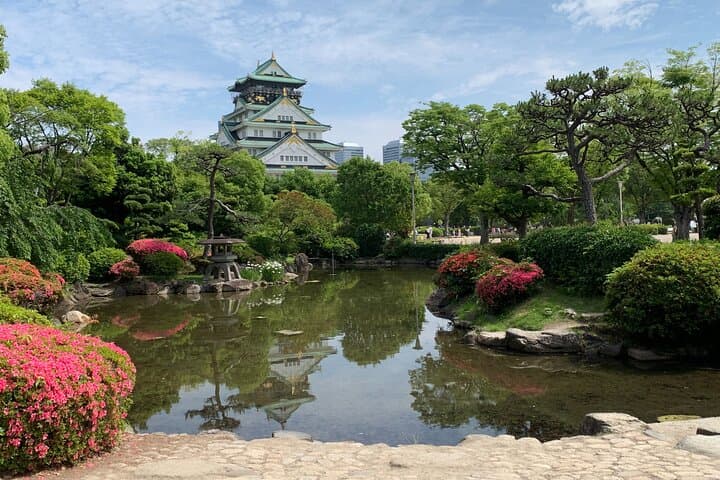
You step out of Exit 1B into a pulse of neon and morning commuters, the guide's yellow-and-green bag a small anchor in the human tide. The first leg threads through Osaka Castle Park—wide paths, ginkgo and cherry trees, the castle's stone base rising like history made visible. Voices fall quiet as the guide traces Toyotomi Hideyoshi’s life across the courtyard; bronze statues and shrine gates mark chapters of the city’s past.
You step out of Exit 1B into a pulse of neon and morning commuters, the guide's yellow-and-green bag a small anchor in the human tide. The first leg threads through Osaka Castle Park—wide paths, ginkgo and cherry trees, the castle's stone base rising like history made visible. Voices fall quiet as the guide traces Toyotomi Hideyoshi’s life across the courtyard; bronze statues and shrine gates mark chapters of the city’s past.
From feudal grandeur the tour hops a 10-minute train to Shinsekai, where Tsutenkaku’s iron frame points skyward and retro storefronts hum below. The guide explains postwar reconstruction and Osaka’s working-class culture that shaped its food scene. Dotonbori arrives as a sensory rush: sizzling takoyaki, lacquered signboards, and back alleys that reward curiosity with hidden temples and the moss-damp hush of Hōzenji’s Mizukake Fudō.
This is an urban walk—paved terrain, mostly flat, roughly 4–6 km of walking with frequent stops; expect stairs at the castle and station platforms. Admission to Osaka Castle’s observation deck (~600 JPY) and Tsutenkaku (~1,000 JPY) is optional and paid separately. The group size is small (up to 12), so questions and detours are part of the rhythm.
Practical notes: wear comfortable, broken-in shoes and bring a transit card or exact change for trains. Start mid-morning to avoid meal crowds in Dotonbori; carry a water bottle and a light layer for coastal breezes. The guide’s local knowledge shortens lines and amplifies flavors—be ready to taste, ask, and walk with purpose.