THE ADVENTURE COLLECTIVE® · Independent discovery and booking for outdoor travel

Explore Ortigia on foot with an archaeologist and watch Syracuse’s long history unfold across ancient stones, seaside piazzas, and tucked-away wells. This two-hour guided walk pairs close-up archaeology with practical local insight—ideal for travelers who want history and fresh sea air in one compact experience.
Explore Ortigia on foot with an archaeologist and watch Syracuse’s long history unfold across ancient stones, seaside piazzas, and tucked-away wells. This two-hour guided walk pairs close-up archaeology with practical local insight—ideal for travelers who want history and fresh sea air in one compact experience.
Twilight settles over the narrow lanes of Ortigia and the stone cools beneath your soles. Salt air rolls off the channel and tugs at the hems of small fishing boats; a cathedral bell marks time while the guide—an archaeologist—turns a corner and points to a well-worn threshold that has held stories for millennia.
Verified experiences and guided adventures in the surrounding area.
Operated by Italo Giordano (archeologo e tour guide) · Syracuse, Sicily
Twilight settles over the narrow lanes of Ortigia and the stone cools beneath your soles. Salt air rolls off the channel and tugs at the hems of small fishing boats; a cathedral bell marks time while the guide—an archaeologist—turns a corner and points to a well-worn threshold that has held stories for millennia.
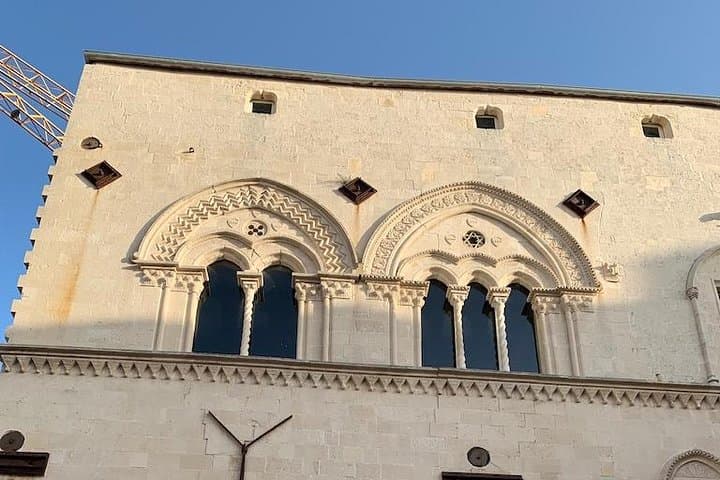
Ortigia is the historic core of Syracuse, a Greek-founded island where Hellenic temples, Roman mosaics and medieval façades overlap in a compact grid. The island sits on limestone bedrock carved by the sea; you’ll see blocks reused across eras—temple capitals reborn as door lintels. Local culture folds together classical myth (Arethusa’s fresh spring), Baroque cathedral renovations, and a still-lively market where vendors sell citrus and anchovies.
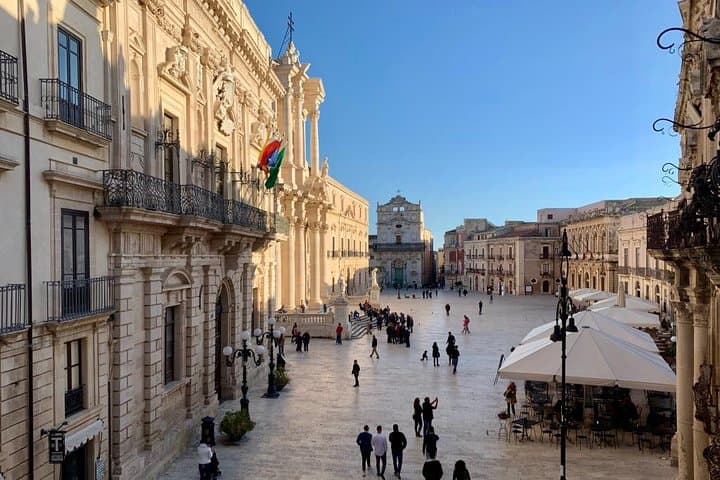
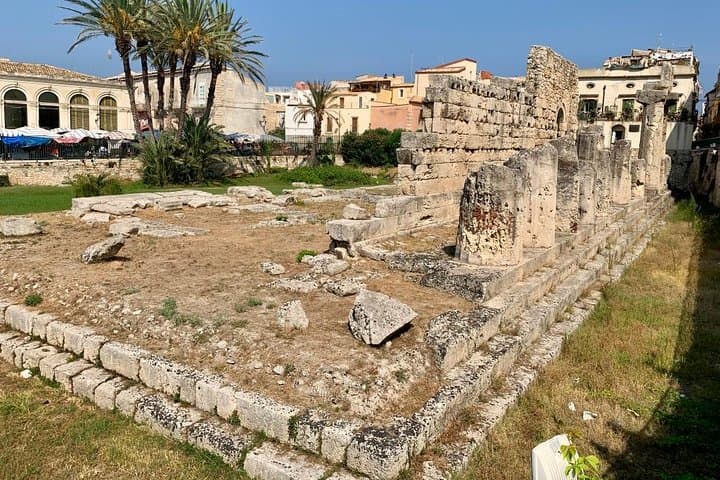
Walking with an archaeologist reframes details: masonry tool marks, patched columns, and street names that echo Byzantine and Spanish occupations. Expect interpretive stops at the Temple of Apollo’s gateway, the Fountain of Arethusa, and the Duomo piazza, with time to feel how the sea breeze rearranges the city’s evening light.
Practical guidance: the route is short (about 1.5–2 km) on mostly level, uneven stone streets—sturdy footwear matters. Summer afternoons are hot; aim for late afternoon or early evening for cooler air and softer light. Bring a refillable water bottle, a hat, and modest layers for windy waterfronts. Tours are wheelchair-accessible in many areas, but ask ahead about specific spots. With a small-group, private format and a certified guide, this is a concentrated, low-effort way to connect with Syracuse’s layered past.
easy.
2 hours.
Suitable for most fitness levels; involves gentle walking on cobbles and short standing talks
The guided experience runs about two hours and covers roughly 1.5–2 km of mostly flat, historic streets with several short stops.
Many parts of Ortigia are wheelchair- and stroller-accessible; however some archaeological points include steps—inform the operator of specific needs when booking.
Tours are typically offered in Italian and English depending on guide availability; check the booking page for language options.
This guided walk focuses on public sites and commentary; admission to certain museums or restricted sites is usually not included—confirm when booking.
Ortigia is the nucleus of ancient Syracuse—founded by Greek colonists in the 8th century BCE—and its fabric bears Greek, Roman, Byzantine and Baroque layers.
Ortigia is part of the Syracuse UNESCO area; visitors are encouraged to avoid touching fragile stonework, reduce plastic waste, and support local preservation-minded businesses.
Italo Giordano (archeologo e tour guide) operates guided outdoor trips and adventures with an emphasis on safety, stewardship, and memorable experiences.
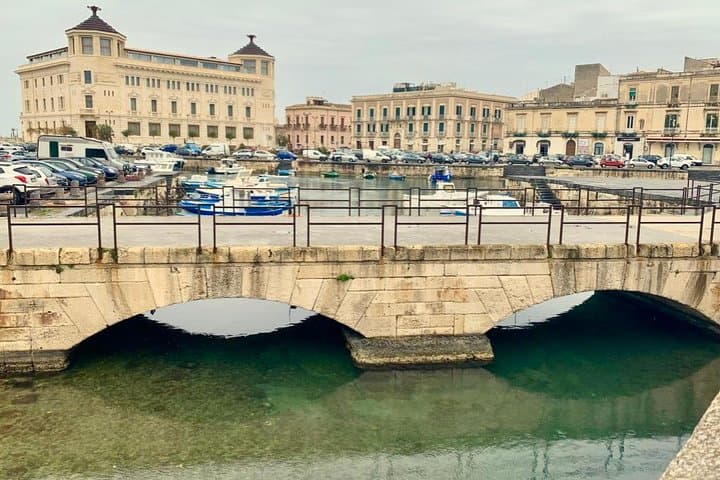
Twilight settles over the narrow lanes of Ortigia and the stone cools beneath your soles. Salt air rolls off the channel and tugs at the hems of small fishing boats; a cathedral bell marks time while the guide—an archaeologist—turns a corner and points to a well-worn threshold that has held stories for millennia.
Twilight settles over the narrow lanes of Ortigia and the stone cools beneath your soles. Salt air rolls off the channel and tugs at the hems of small fishing boats; a cathedral bell marks time while the guide—an archaeologist—turns a corner and points to a well-worn threshold that has held stories for millennia.
Ortigia is the historic core of Syracuse, a Greek-founded island where Hellenic temples, Roman mosaics and medieval façades overlap in a compact grid. The island sits on limestone bedrock carved by the sea; you’ll see blocks reused across eras—temple capitals reborn as door lintels. Local culture folds together classical myth (Arethusa’s fresh spring), Baroque cathedral renovations, and a still-lively market where vendors sell citrus and anchovies.
Walking with an archaeologist reframes details: masonry tool marks, patched columns, and street names that echo Byzantine and Spanish occupations. Expect interpretive stops at the Temple of Apollo’s gateway, the Fountain of Arethusa, and the Duomo piazza, with time to feel how the sea breeze rearranges the city’s evening light.
Practical guidance: the route is short (about 1.5–2 km) on mostly level, uneven stone streets—sturdy footwear matters. Summer afternoons are hot; aim for late afternoon or early evening for cooler air and softer light. Bring a refillable water bottle, a hat, and modest layers for windy waterfronts. Tours are wheelchair-accessible in many areas, but ask ahead about specific spots. With a small-group, private format and a certified guide, this is a concentrated, low-effort way to connect with Syracuse’s layered past.