THE ADVENTURE COLLECTIVE® · Independent discovery and booking for outdoor travel

Follow the rim of Rano Kau to Orongo and explore ancestral caves, ceremonial ahu, and volcanic overlooks on a private full-day tour from Hanga Roa. Learn Bird Man history, see precise stonework at Ahu Vinapu, and walk accessible trails led by a certified local guide.
Follow the rim of Rano Kau to Orongo and explore ancestral caves, ceremonial ahu, and volcanic overlooks on a private full-day tour from Hanga Roa. Learn Bird Man history, see precise stonework at Ahu Vinapu, and walk accessible trails led by a certified local guide.
At the rim of Rano Kau, the wind shapes the crater’s grasses and seems to push visitors toward the stone village of Orongo, where cliffs look down at a sea that once carried Birdmen to and from tiny islets. On this private full-day tour, travelers follow the carved footprints of Rapa Nui history—volcanic rims, ceremonial ahu platforms, and a deep cave used for shelter and ritual—each place holding readable scars of past lives.
Verified experiences and guided adventures in the surrounding area.
Operated by Kapua Tours & Experience · Hanga Roa, Valparaíso Region
At the rim of Rano Kau, the wind shapes the crater’s grasses and seems to push visitors toward the stone village of Orongo, where cliffs look down at a sea that once carried Birdmen to and from tiny islets. On this private full-day tour, travelers follow the carved footprints of Rapa Nui history—volcanic rims, ceremonial ahu platforms, and a deep cave used for shelter and ritual—each place holding readable scars of past lives.
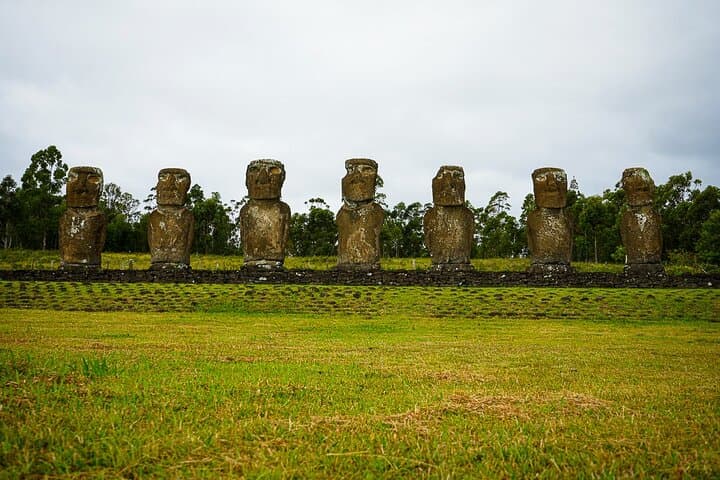
Orongo is the site of the Tangata Manu (Bird Man) competition, a late-period ritual that reshaped politics on the island; the surrounding cliffs and stone houses date to that era. Geologically, the route traces late-Pleistocene volcanic flows and the rim of a dormant crater whose basalt and tuff pavements provided platforms for moai and pukao construction. Culturally, local guides explain carving techniques, clan territories and the social role of ahu such as Ahu Vinapu—an example of precision stonework that invites global comparisons.
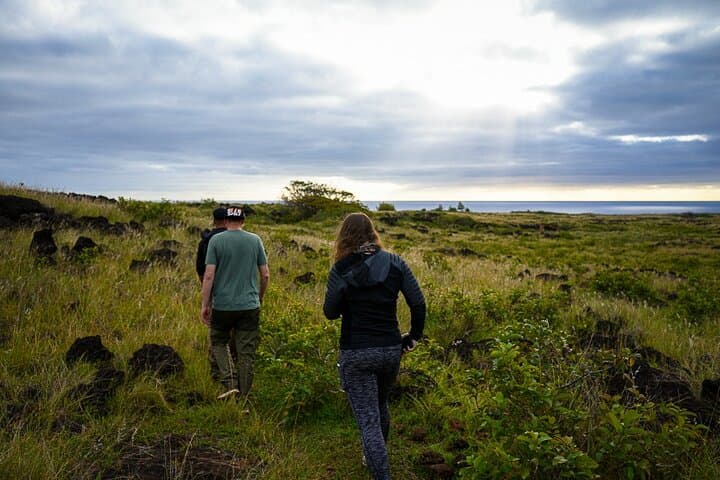
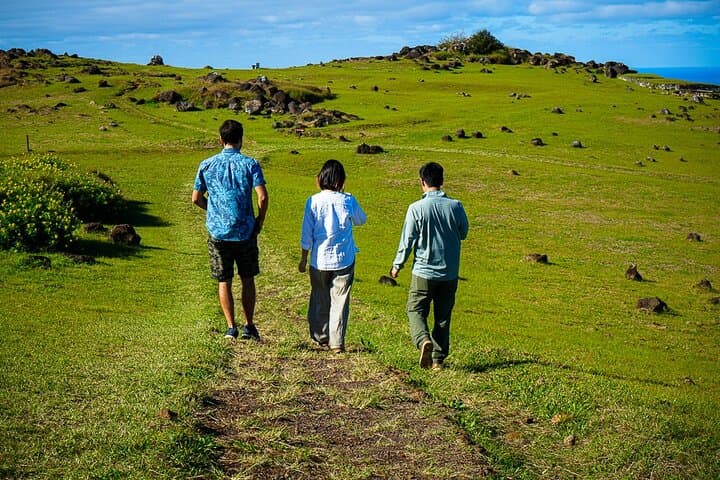
Practically, expect 4–6 hours on mostly flat coastal rim trails with short stair sections at viewpoints. The guide will coordinate park ticket purchase and manage stops at key sites: the volcano overlook, Orongo village, Ahu Vinapu, the seven-explorer ahu, pukao quarry areas and an ancestral cave. Bring sun protection, 1–2 liters of water, sturdy walking shoes, and a light wind layer; weather shifts quickly on the rim. Photography windows are generous but respect fenced archaeological areas and do not climb on monuments.
This is a cultural-archaeological day with easy walking, rich interpretation and an emphasis on conservation—an efficient way to see Rapa Nui’s most significant ancestral footprints without losing context or comfort.
easy.
4–6 hours.
Suitable for moderate fitness: mostly flat walking with occasional stairs and uneven ground; accessible to most travelers.
Yes — you must have the Rapa Nui National Park entrance ticket; the guide can assist with purchase prior to or during the tour but buying in advance speeds up the day.
Generally yes — the route is rated easy with mostly flat walking, but there are short stair sections and uneven surfaces in the cave; inform the operator of mobility needs.
Expect several short walks between viewpoints and a total of 4–6 hours touring; individual stretches are short (10–20 minutes) with time for interpretation and photos.
No — touching, climbing or entering fenced archaeological zones is prohibited to protect fragile monuments; follow guide instructions at all times.
Orongo became the epicenter of the Bird Man cult after clan rivalries reshaped island leadership; the stone houses and petroglyphs record those social changes.
Rapa Nui’s fragile archaeological zones are managed through park fees and visitor limits—stay on marked trails, pack out waste, and avoid touching carved or coated stone.
Kapua Tours & Experience operates guided outdoor trips and adventures with an emphasis on safety, stewardship, and memorable experiences.
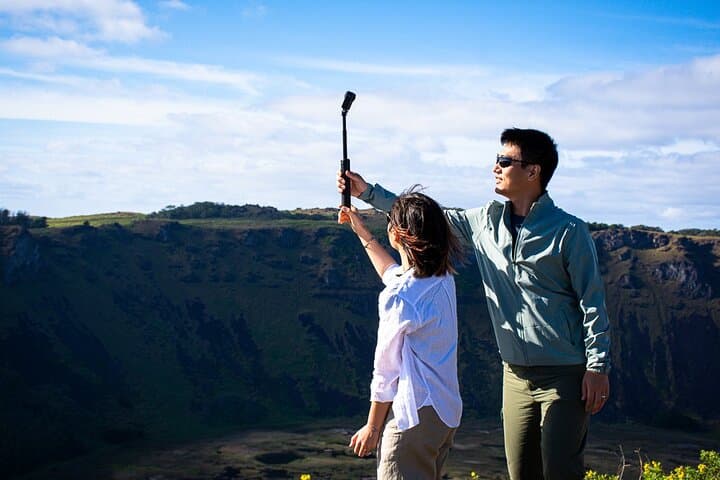
At the rim of Rano Kau, the wind shapes the crater’s grasses and seems to push visitors toward the stone village of Orongo, where cliffs look down at a sea that once carried Birdmen to and from tiny islets. On this private full-day tour, travelers follow the carved footprints of Rapa Nui history—volcanic rims, ceremonial ahu platforms, and a deep cave used for shelter and ritual—each place holding readable scars of past lives.
At the rim of Rano Kau, the wind shapes the crater’s grasses and seems to push visitors toward the stone village of Orongo, where cliffs look down at a sea that once carried Birdmen to and from tiny islets. On this private full-day tour, travelers follow the carved footprints of Rapa Nui history—volcanic rims, ceremonial ahu platforms, and a deep cave used for shelter and ritual—each place holding readable scars of past lives.
Orongo is the site of the Tangata Manu (Bird Man) competition, a late-period ritual that reshaped politics on the island; the surrounding cliffs and stone houses date to that era. Geologically, the route traces late-Pleistocene volcanic flows and the rim of a dormant crater whose basalt and tuff pavements provided platforms for moai and pukao construction. Culturally, local guides explain carving techniques, clan territories and the social role of ahu such as Ahu Vinapu—an example of precision stonework that invites global comparisons.
Practically, expect 4–6 hours on mostly flat coastal rim trails with short stair sections at viewpoints. The guide will coordinate park ticket purchase and manage stops at key sites: the volcano overlook, Orongo village, Ahu Vinapu, the seven-explorer ahu, pukao quarry areas and an ancestral cave. Bring sun protection, 1–2 liters of water, sturdy walking shoes, and a light wind layer; weather shifts quickly on the rim. Photography windows are generous but respect fenced archaeological areas and do not climb on monuments.
This is a cultural-archaeological day with easy walking, rich interpretation and an emphasis on conservation—an efficient way to see Rapa Nui’s most significant ancestral footprints without losing context or comfort.