THE ADVENTURE COLLECTIVE® · Independent discovery and booking for outdoor travel

Spend six hours moving through Orkney’s oldest landscapes and most iconic sites: Skara Brae, the Ring of Brodgar and the Cliffs of Yesnaby. This small-group tour pairs archaeology, coastal geology and local stories for a compact introduction to Mainland Orkney.
Spend six hours moving through Orkney’s oldest landscapes and most iconic sites: Skara Brae, the Ring of Brodgar and the Cliffs of Yesnaby. This small-group tour pairs archaeology, coastal geology and local stories for a compact introduction to Mainland Orkney.
A salt-lashed wind meets the minibus as it pulls away from Kirkwall, windows opening on a coastline that has watched human stories for five millennia. In six concise hours the West Mainland tour threads ancient stone circles, neolithic homes and dramatic sea-cliffs — each stop a different chapter written in stone and surf.
Verified experiences and guided adventures in the surrounding area.
Operated by Orkney Travel · Kirkwall, Orkney Islands
A salt-lashed wind meets the minibus as it pulls away from Kirkwall, windows opening on a coastline that has watched human stories for five millennia. In six concise hours the West Mainland tour threads ancient stone circles, neolithic homes and dramatic sea-cliffs — each stop a different chapter written in stone and surf.
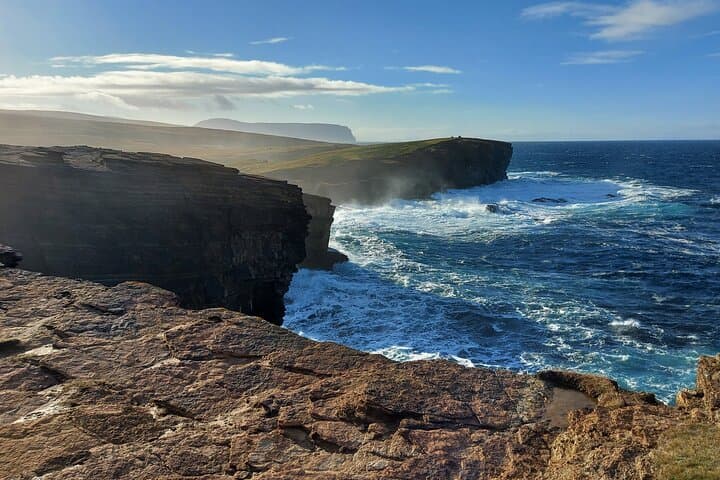
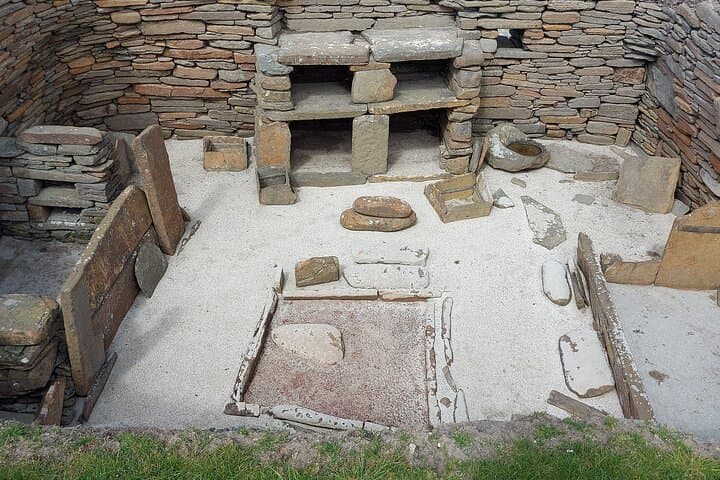
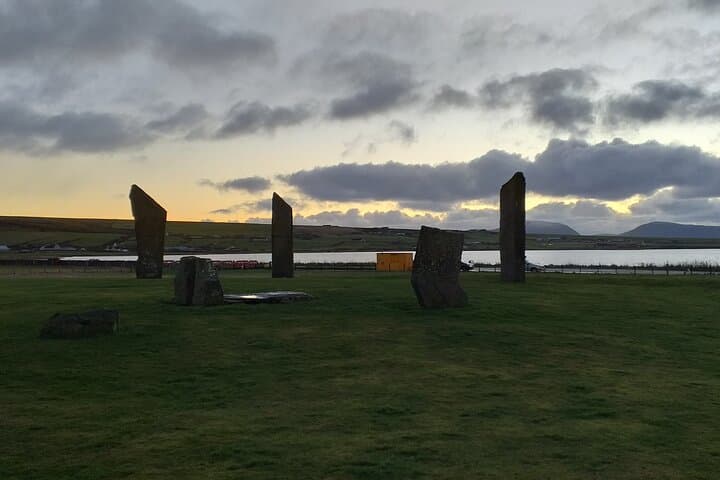
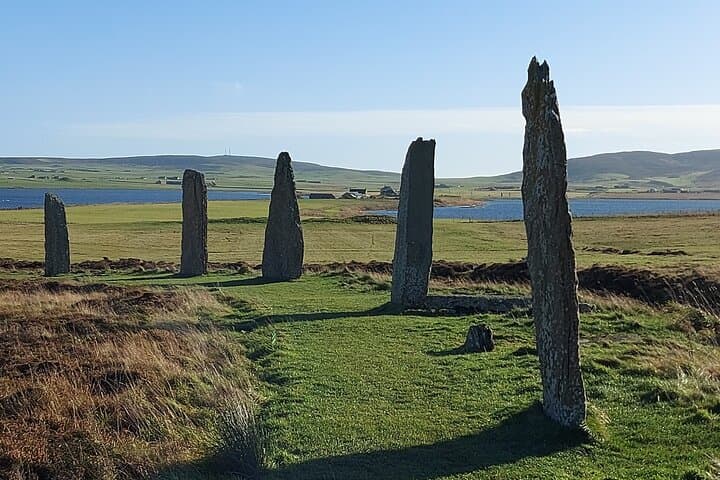
You start with the power of place: Skara Brae’s sunken neolithic houses, preserved beneath sand until a storm revealed them in the 19th century, give an immediate human scale to Orkney’s long occupation. The Ring of Brodgar and Stones of Stenness crown a flat, peat-scoured plain where glacial forces smoothed bedrock and human hands later raised monoliths. Along the coast, Yesnaby’s cliffs and basalt shelves show the island’s volcanic and sedimentary history, while Scapa Flow whispers naval stories from both World Wars.
Cultural notes are compact but rich: crofting traditions, peat fires and island museums such as Kirbuster reveal everyday life beyond the monuments. Local guides link archaeology to weather and seafaring, and small-group timing keeps visits personal.
Practical details matter here: expect walking on uneven stone and grassy tracks, unpredictable wind and rain, and multiple short stops for photos and interpretation. Wear waterproof layers, sturdy boots, and bring a camera and lunch or snacks; admission to Skara Brae/Skaill House is included. The route suits a wide range of fitness levels but involves repeated short walks and steps at each site. Plan for changing weather and savor the moments where wind and rock seem to argue with history — an efficient, grounded way to read Orkney’s deep past.
easy.
6 hours.
Suitable for most fitness levels; requires short walks (10–80 minutes) at each stop and negotiating uneven terrain.
Yes — the tour includes the entrance fee for Skara Brae / Skaill House.
Expect a series of short walks from 10 to about 80 minutes total on uneven ground, including steps and grassy terrain at each attraction.
The meeting point and finish are at Kirkwall Travel Centre; look for a minibus marked 'Orkney Travel.'
Yes — the tour is rated easy and suitable for most ages, though participants should be able to walk short distances over uneven surfaces.
Orkney hosts one of Europe’s densest concentrations of Neolithic sites — Skara Brae, Ring of Brodgar and Stones of Stenness date back roughly 5,000 years, while Scapa Flow was a key naval anchorage in both World Wars.
Visitors are asked to stick to paths, avoid touching exposed archaeology and follow local guidance to protect fragile peatlands and coastal habitats.
Orkney Travel operates guided outdoor trips and adventures with an emphasis on safety, stewardship, and memorable experiences.
A salt-lashed wind meets the minibus as it pulls away from Kirkwall, windows opening on a coastline that has watched human stories for five millennia. In six concise hours the West Mainland tour threads ancient stone circles, neolithic homes and dramatic sea-cliffs — each stop a different chapter written in stone and surf.
A salt-lashed wind meets the minibus as it pulls away from Kirkwall, windows opening on a coastline that has watched human stories for five millennia. In six concise hours the West Mainland tour threads ancient stone circles, neolithic homes and dramatic sea-cliffs — each stop a different chapter written in stone and surf.
You start with the power of place: Skara Brae’s sunken neolithic houses, preserved beneath sand until a storm revealed them in the 19th century, give an immediate human scale to Orkney’s long occupation. The Ring of Brodgar and Stones of Stenness crown a flat, peat-scoured plain where glacial forces smoothed bedrock and human hands later raised monoliths. Along the coast, Yesnaby’s cliffs and basalt shelves show the island’s volcanic and sedimentary history, while Scapa Flow whispers naval stories from both World Wars.
Cultural notes are compact but rich: crofting traditions, peat fires and island museums such as Kirbuster reveal everyday life beyond the monuments. Local guides link archaeology to weather and seafaring, and small-group timing keeps visits personal.
Practical details matter here: expect walking on uneven stone and grassy tracks, unpredictable wind and rain, and multiple short stops for photos and interpretation. Wear waterproof layers, sturdy boots, and bring a camera and lunch or snacks; admission to Skara Brae/Skaill House is included. The route suits a wide range of fitness levels but involves repeated short walks and steps at each site. Plan for changing weather and savor the moments where wind and rock seem to argue with history — an efficient, grounded way to read Orkney’s deep past.