THE ADVENTURE COLLECTIVE® · Independent discovery and booking for outdoor travel

A full-day private circuit from Kirkwall linking Scapa Flow, Unstan Cairn, the Stones of Stenness, Ring of Brodgar, Skara Brae, Skaill House and the Italian Chapel. Expect uneven turf, coastal wind and expert local context for 5,000-year-old sites.
A full-day private circuit from Kirkwall linking Scapa Flow, Unstan Cairn, the Stones of Stenness, Ring of Brodgar, Skara Brae, Skaill House and the Italian Chapel. Expect uneven turf, coastal wind and expert local context for 5,000-year-old sites.
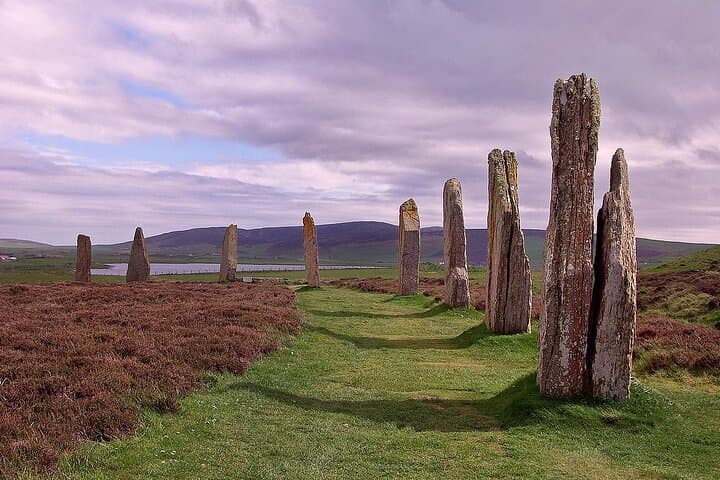
A raw wind runs across the low fields as the minivan eases out of Kirkwall and the sea opens into Scapa Flow, a harbour that holds both shipwrecks and stories. You step from the vehicle onto grass flattened by centuries of weather, then move between standing stones—each monolith a patient, upright voice in a landscape that still remembers its makers.
Verified experiences and guided adventures in the surrounding area.
Operated by Top Private Tours UK · Kirkwall, Orkney
A raw wind runs across the low fields as the minivan eases out of Kirkwall and the sea opens into Scapa Flow, a harbour that holds both shipwrecks and stories. You step from the vehicle onto grass flattened by centuries of weather, then move between standing stones—each monolith a patient, upright voice in a landscape that still remembers its makers.
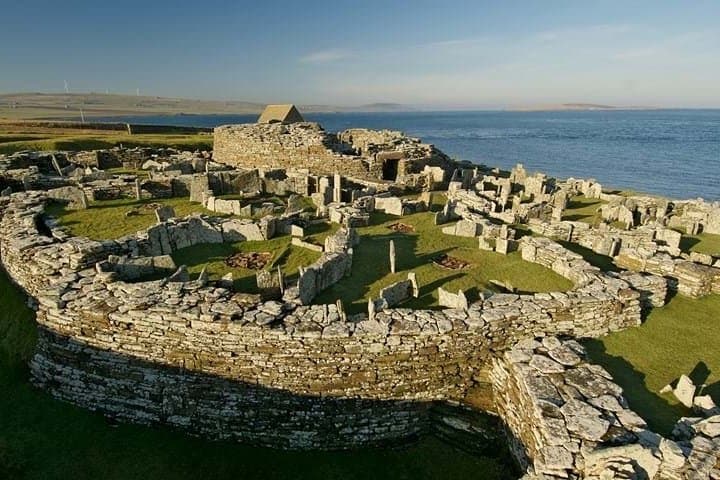
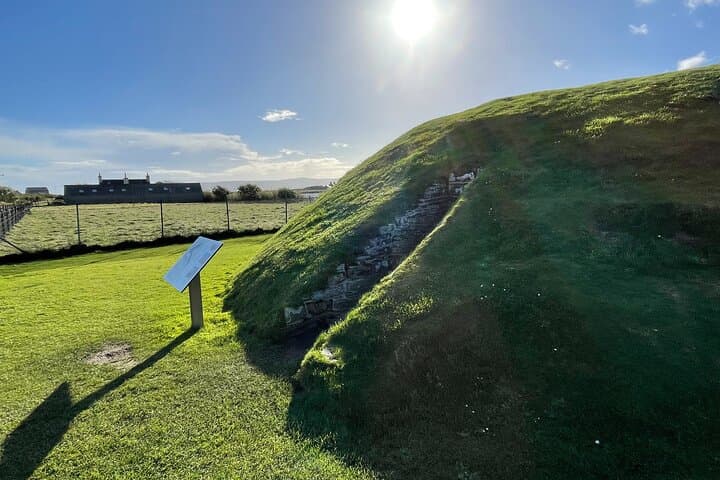
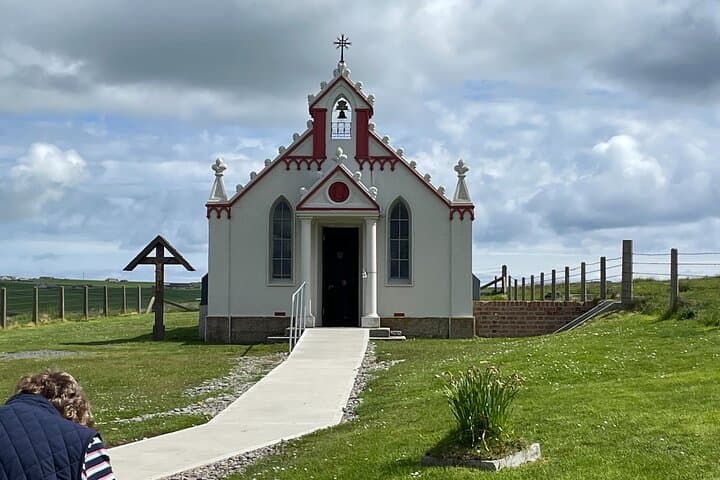
This tour threads together Orkney’s Neolithic heart: stalled cairns like Unstan (c. 3000–2500 BCE), the vast concentric Ring of Brodgar and the nearby Stones of Stenness, then the astonishing stone houses at Skara Brae, older than the pyramids. Geologically, the islands are Old Red Sandstone carved by ice and sea; archaeologically, they preserve ritual landscapes and domestic life in remarkable detail. Skaill House, overlooking the Bay of Skaill, ties later Orcadian history to those prehistoric ruins, while the Italian Chapel tells a 20th-century wartime story—built by POWs with found materials, it’s an intimate counterpoint to open moorland.
Expect short walks over uneven turf and flagstones, low elevation change but exposed conditions—wind can sharpen a fine drizzle into a soaking. Guides place sites in context, point out seabird colonies and explain conservation measures; Skara Brae entry is usually gated and ticketed as part of the visit.
Practical edge: layers, waterproofs and sturdy footwear make the day comfortable; early starts improve light for photos and reduce crowds. The route is ideal for anyone comfortable with several on-off short walks, curious about prehistory, and ready to let the islands’ long timelines slow their pace.
moderate.
7 hours.
Suitable for most fitness levels; requires multiple short walks over uneven ground and some stairs at Skara Brae access.
Yes—Skara Brae and Skaill House tickets are included in the tour price as indicated in the itinerary.
Expect several short walks (hundreds of metres) at each stop over mostly flat but uneven terrain; minimal elevation gain overall.
Yes—port or hotel pick-up and drop-off are provided; confirm your pickup point when booking.
The tour is described as suitable for all fitness levels, but participants should be able to manage short uneven walks and steps; notify the operator of mobility concerns.
Orkney’s heartland preserves Neolithic monuments over 5,000 years old; these sites reveal communal burial practices, ritual circles and well-preserved domestic structures.
Sites are vulnerable to erosion and visitor impact—stay on designated paths, follow guide instructions, and avoid stepping on fragile turf or stonework.
Top Private Tours UK operates guided outdoor trips and adventures with an emphasis on safety, stewardship, and memorable experiences.
A raw wind runs across the low fields as the minivan eases out of Kirkwall and the sea opens into Scapa Flow, a harbour that holds both shipwrecks and stories. You step from the vehicle onto grass flattened by centuries of weather, then move between standing stones—each monolith a patient, upright voice in a landscape that still remembers its makers.
A raw wind runs across the low fields as the minivan eases out of Kirkwall and the sea opens into Scapa Flow, a harbour that holds both shipwrecks and stories. You step from the vehicle onto grass flattened by centuries of weather, then move between standing stones—each monolith a patient, upright voice in a landscape that still remembers its makers.
This tour threads together Orkney’s Neolithic heart: stalled cairns like Unstan (c. 3000–2500 BCE), the vast concentric Ring of Brodgar and the nearby Stones of Stenness, then the astonishing stone houses at Skara Brae, older than the pyramids. Geologically, the islands are Old Red Sandstone carved by ice and sea; archaeologically, they preserve ritual landscapes and domestic life in remarkable detail. Skaill House, overlooking the Bay of Skaill, ties later Orcadian history to those prehistoric ruins, while the Italian Chapel tells a 20th-century wartime story—built by POWs with found materials, it’s an intimate counterpoint to open moorland.
Expect short walks over uneven turf and flagstones, low elevation change but exposed conditions—wind can sharpen a fine drizzle into a soaking. Guides place sites in context, point out seabird colonies and explain conservation measures; Skara Brae entry is usually gated and ticketed as part of the visit.
Practical edge: layers, waterproofs and sturdy footwear make the day comfortable; early starts improve light for photos and reduce crowds. The route is ideal for anyone comfortable with several on-off short walks, curious about prehistory, and ready to let the islands’ long timelines slow their pace.