THE ADVENTURE COLLECTIVE® · Independent discovery and booking for outdoor travel

Handpick beans, roast them over an open flame and sit down to a fire-cooked Tanzanian meal in Ambureni village. This three-hour organic coffee and food experience near Arusha pairs hands-on farming with cultural storytelling and supports a local children’s project.
Handpick beans, roast them over an open flame and sit down to a fire-cooked Tanzanian meal in Ambureni village. This three-hour organic coffee and food experience near Arusha pairs hands-on farming with cultural storytelling and supports a local children’s project.
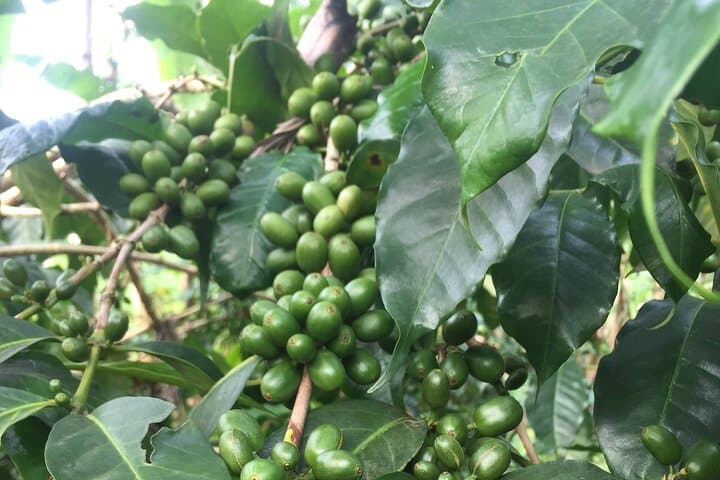
You arrive through a patchwork of red-dust lanes and the steady green of young coffee bushes, the air already carrying the bright, citrus-tinged scent of arabica cherries. Under a sun-flecked canopy, a simple wooden treehouse perches above the farm like a vantage point for the slow business of rural life: chickens fretting in the yard, women stirring clay pots over open flames, and a line of banana trees rustling as if they are whispering the day’s recipe.
Verified experiences and guided adventures in the surrounding area.
Operated by Furahia Cultural Tourism · Arusha, Arusha Region
You arrive through a patchwork of red-dust lanes and the steady green of young coffee bushes, the air already carrying the bright, citrus-tinged scent of arabica cherries. Under a sun-flecked canopy, a simple wooden treehouse perches above the farm like a vantage point for the slow business of rural life: chickens fretting in the yard, women stirring clay pots over open flames, and a line of banana trees rustling as if they are whispering the day’s recipe.
This is Ambureni village, just outside Arusha and in the shadow of Mount Meru. Coffee arrived here as part of Tanzania’s larger agricultural shift during the colonial era—smallholder farms multiplied and local cultivars were gradually grafted into global markets. The land itself is volcanic, soils deepened and enriched by ancient lava flows from Meru; that mineral grounding gives the beans a bright acidity and floral notes you’ll taste when you roast your own handful.
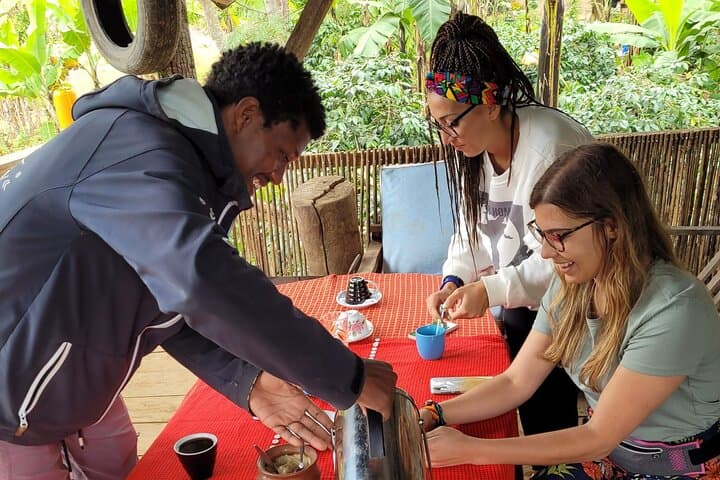
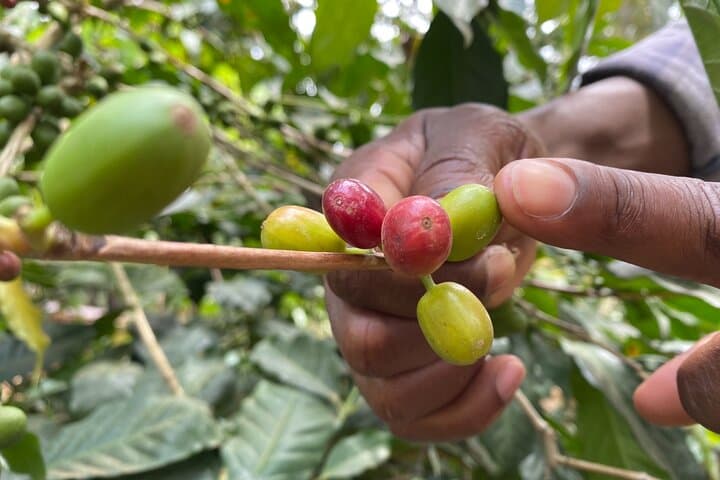
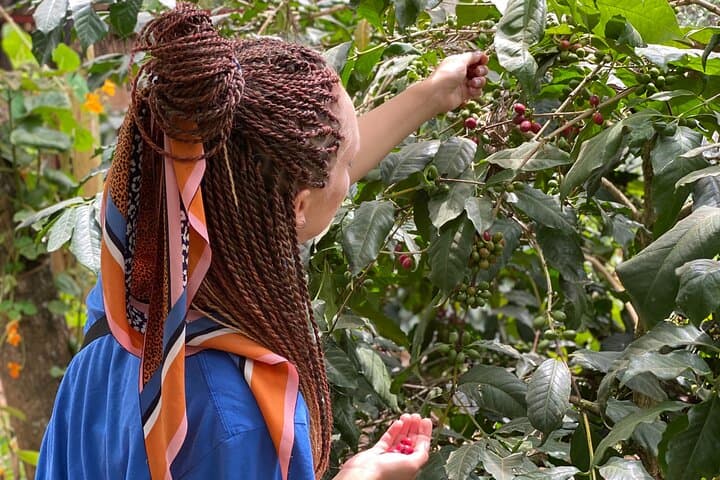
The tour moves at a human pace. You’ll trek short rows of coffee plants with a guide who explains flowering cycles and shows how cherries are selectively stripped by hand. Then comes processing: pulping, fermenting, washing and sun-drying on raised beds. Each step is tactile—beans that warm under your palm, a basket clinking with dried seed—and you participate: from sorting to roasting over a small drum roaster to grinding on a mortar and pestle. Hospitality is central; local mamas lay out chapati, ugali, mchicha and roasted bananas, all cooked on charcoal and firewood in clay pots.
Expect bird calls and the chance to spot blue monkeys among the trees; the farm doubles as a working ecosystem. Guides share Meru tribal history—how crops, crafts and communal kitchens shaped daily life—and how 25% of tour proceeds support a nearby children’s kindergarten, weaving social purpose into the visit.
Practicals: the experience runs about three hours and starts in the early afternoon. Wear sturdy, closed-toe shoes for the farm paths, and bring a light rain layer—equatorial weather can flip fast. Hydrate before you arrive; local water may be provided but bottled water is recommended if you have sensitive digestion. Bring cash for optional pick-up, souvenirs and tips; pickup is available from Arusha hotels for an extra fee and the host, Cosmas, is a familiar local contact.
For photographers, the soft afternoon light beneath the canopy flatters close-up shots of beans and hands at work—try low angles with the treehouse as a backdrop. Taste mindfully: when you sip the coffee you helped roast, note brightness, sweetness and the smoky warmth that comes from the open-fire roasting. This is less a factory tour than an invitation to slow, sensory learning—where soil and story are as much a part of the cup as the bean.
easy.
3 hours.
Suitable for most fitness levels; involves short walks on uneven terrain and standing during demonstrations.
The experience lasts approximately three hours, typically starting in the early afternoon at 13:00.
Pickup from Arusha hotels is available for an extra charge and must be arranged with the operator; costs vary by location.
Yes—this activity is family-friendly, but always supervise children around cooking fires and drying racks.
Local dishes are prepared fresh; notify the operator of allergies or restrictions when booking so they can adapt meals where possible.
The tour is low-impact with short walks, but paths are uneven; contact the operator ahead of time to discuss accessibility needs.
Guides typically speak English and Kiswahili; confirm language needs when booking for other languages.
Coffee cultivation expanded in northern Tanzania during the colonial and post-colonial periods; smallholder farms like Ambureni have shaped local economies and food culture.
The farm practices small-scale organic methods and encourages sun-drying and composting; visitors are asked to minimize waste and avoid single-use plastics.
Furahia Cultural Tourism operates guided outdoor trips and adventures with an emphasis on safety, stewardship, and memorable experiences.
You arrive through a patchwork of red-dust lanes and the steady green of young coffee bushes, the air already carrying the bright, citrus-tinged scent of arabica cherries. Under a sun-flecked canopy, a simple wooden treehouse perches above the farm like a vantage point for the slow business of rural life: chickens fretting in the yard, women stirring clay pots over open flames, and a line of banana trees rustling as if they are whispering the day’s recipe.
You arrive through a patchwork of red-dust lanes and the steady green of young coffee bushes, the air already carrying the bright, citrus-tinged scent of arabica cherries. Under a sun-flecked canopy, a simple wooden treehouse perches above the farm like a vantage point for the slow business of rural life: chickens fretting in the yard, women stirring clay pots over open flames, and a line of banana trees rustling as if they are whispering the day’s recipe.
This is Ambureni village, just outside Arusha and in the shadow of Mount Meru. Coffee arrived here as part of Tanzania’s larger agricultural shift during the colonial era—smallholder farms multiplied and local cultivars were gradually grafted into global markets. The land itself is volcanic, soils deepened and enriched by ancient lava flows from Meru; that mineral grounding gives the beans a bright acidity and floral notes you’ll taste when you roast your own handful.
The tour moves at a human pace. You’ll trek short rows of coffee plants with a guide who explains flowering cycles and shows how cherries are selectively stripped by hand. Then comes processing: pulping, fermenting, washing and sun-drying on raised beds. Each step is tactile—beans that warm under your palm, a basket clinking with dried seed—and you participate: from sorting to roasting over a small drum roaster to grinding on a mortar and pestle. Hospitality is central; local mamas lay out chapati, ugali, mchicha and roasted bananas, all cooked on charcoal and firewood in clay pots.
Expect bird calls and the chance to spot blue monkeys among the trees; the farm doubles as a working ecosystem. Guides share Meru tribal history—how crops, crafts and communal kitchens shaped daily life—and how 25% of tour proceeds support a nearby children’s kindergarten, weaving social purpose into the visit.
Practicals: the experience runs about three hours and starts in the early afternoon. Wear sturdy, closed-toe shoes for the farm paths, and bring a light rain layer—equatorial weather can flip fast. Hydrate before you arrive; local water may be provided but bottled water is recommended if you have sensitive digestion. Bring cash for optional pick-up, souvenirs and tips; pickup is available from Arusha hotels for an extra fee and the host, Cosmas, is a familiar local contact.
For photographers, the soft afternoon light beneath the canopy flatters close-up shots of beans and hands at work—try low angles with the treehouse as a backdrop. Taste mindfully: when you sip the coffee you helped roast, note brightness, sweetness and the smoky warmth that comes from the open-fire roasting. This is less a factory tour than an invitation to slow, sensory learning—where soil and story are as much a part of the cup as the bean.