THE ADVENTURE COLLECTIVE® · Independent discovery and booking for outdoor travel

Spend a full day tracing the northern Oregon Coast from Astoria to Cannon Beach with a naturalist guide. Explore Lewis & Clark history, tidepools at Haystack Rock, and rainforested overlooks in Ecola State Park—balanced with practical tips for timing tides, what to pack, and where to photograph the coast.
Spend a full day tracing the northern Oregon Coast from Astoria to Cannon Beach with a naturalist guide. Explore Lewis & Clark history, tidepools at Haystack Rock, and rainforested overlooks in Ecola State Park—balanced with practical tips for timing tides, what to pack, and where to photograph the coast.
The morning fog lifts off the Columbia like a slow exhale as the minivan slides through Astoria’s harbor. Salt and diesel hang in the air; gulls wheel against the brightening sky and the Astoria Column stitches a white stripe into the ridge above town. Over the next ten hours the landscape shifts from rivermouth to open ocean: timbered bluffs that smell of resin, sand beaches rimmed with tide pools, and the squat bulk of Haystack Rock rising like a small empire off Cannon Beach.
Verified experiences and guided adventures in the surrounding area.
Operated by Evergreen Escapes Portland · Cannon Beach, Oregon
The morning fog lifts off the Columbia like a slow exhale as the minivan slides through Astoria’s harbor. Salt and diesel hang in the air; gulls wheel against the brightening sky and the Astoria Column stitches a white stripe into the ridge above town. Over the next ten hours the landscape shifts from rivermouth to open ocean: timbered bluffs that smell of resin, sand beaches rimmed with tide pools, and the squat bulk of Haystack Rock rising like a small empire off Cannon Beach.
This route stitches together layers of Pacific Northwest history. Astoria was the terminus of the Lewis & Clark expedition and a trading foothold for John Jacob Astor’s fur company; Fort Clatsop preserves the rough shelters where the Corps of Discovery wintered. Geologically, the coastline is young—uplifted basalt, sand bluffs eroded by relentless Pacific storms, and offshore stacks like Haystack Rock formed from basaltic lava that resisted erosion while softer rock washed away.
Culturally the corridor blends seaport grit with beach-town craft: chowder shacks and galleries line Cannon Beach’s main drag, while Ecola State Park’s Sitka spruce groves feel older, their roots woven into cliff faces. Guides on this tour are naturalists—expect field-level interpretation of tidepool ecology, seabird behavior, and the seasonal rhythms that shape local life.
Practicalities matter. The day is long but low-impact: several guided walks (a short stroll at Fort Clatsop, a beach walk to Haystack Rock, and a viewpoint walk in Ecola), set meal stops, and hotel pickup in Portland. Tides dictate tidepool access—low tide reveals sea stars and anemones, high tide reduces shore access—so the guide times beach visits for the best natural encounters. Weather can flip quickly: drizzle, wind, and sun can all arrive in the same hour.
For travelers: wear warm, layered clothing and waterproof shoes with good tread; bring a windproof jacket and a daypack with water and snacks (though lunch and bottled water are provided). Binoculars improve bird and marine mammal spotting; a camera with a wide-angle lens captures the sweep of coast and sea stack.
Expect modest walking over sand and packed gravel—nothing technical—but be prepared for slippery rocks and wind. The tour balances history, natural science, and simply standing with the ocean under your feet. If you want the coast’s signature moments—puffins in spring, tidepools at low tide, the cedar-green hush of Ecola’s forest—this day packs them into a single, well-versed loop from river to surf.
easy.
10 hours.
Suitable for most fitness levels; expect multiple short walks up to a mile on varying terrain.
Pickup is in downtown Portland with drop-off at the same point; if outside the pickup zone you’ll meet at the Portland Visitor Center.
The tour includes guided stops but not all entrance fees—your confirmation will note any included admissions; most viewpoints are public.
Yes—this tour is family-friendly, but it involves up to 10 hours in a vehicle and several outdoor walks, so plan accordingly.
Puffins are seasonal (spring-summer) around Haystack Rock; whales are seen offshore during migrations but sightings aren’t guaranteed.
No—beach walks are short and interpretive, but sand and tide conditions can make footing uneven.
Lunch, snacks, and bottled water are provided, and there are restroom stops at scheduled points during the day.
Astoria grew from fur trade origins under John Jacob Astor and marks the westward terminus of Lewis & Clark’s expedition; Fort Clatsop is their reconstructed winter encampment.
Respect tidepool rules—don’t lift animals or collect shells—and stay on marked trails in Ecola to protect fragile dune and forest ecosystems.
Evergreen Escapes Portland operates guided outdoor trips and adventures with an emphasis on safety, stewardship, and memorable experiences.
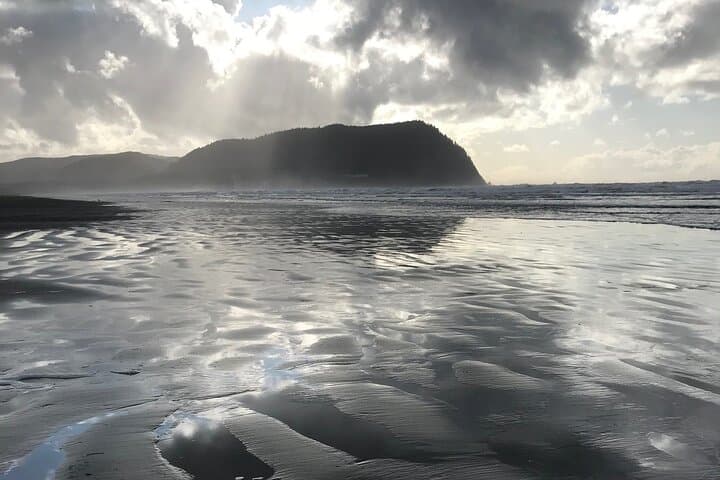
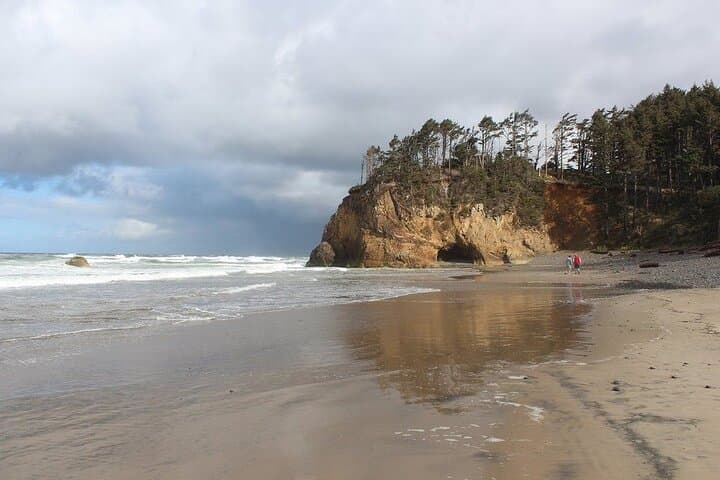
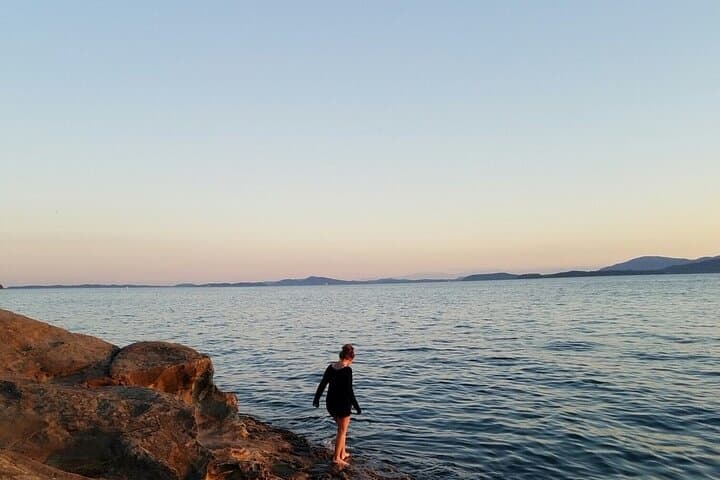
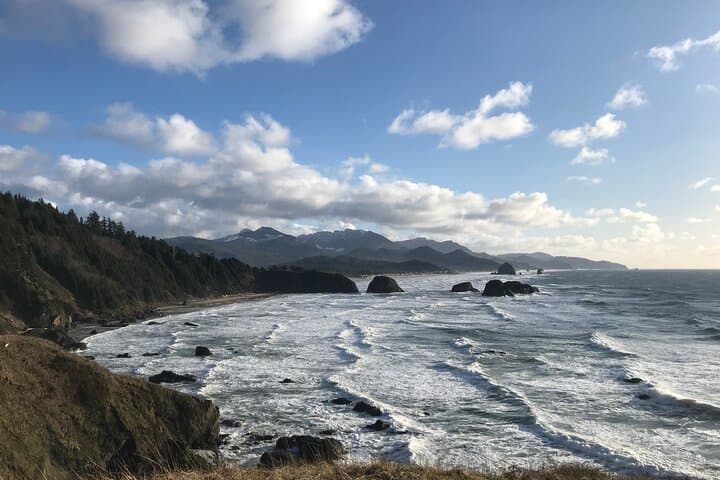
The morning fog lifts off the Columbia like a slow exhale as the minivan slides through Astoria’s harbor. Salt and diesel hang in the air; gulls wheel against the brightening sky and the Astoria Column stitches a white stripe into the ridge above town. Over the next ten hours the landscape shifts from rivermouth to open ocean: timbered bluffs that smell of resin, sand beaches rimmed with tide pools, and the squat bulk of Haystack Rock rising like a small empire off Cannon Beach.
The morning fog lifts off the Columbia like a slow exhale as the minivan slides through Astoria’s harbor. Salt and diesel hang in the air; gulls wheel against the brightening sky and the Astoria Column stitches a white stripe into the ridge above town. Over the next ten hours the landscape shifts from rivermouth to open ocean: timbered bluffs that smell of resin, sand beaches rimmed with tide pools, and the squat bulk of Haystack Rock rising like a small empire off Cannon Beach.
This route stitches together layers of Pacific Northwest history. Astoria was the terminus of the Lewis & Clark expedition and a trading foothold for John Jacob Astor’s fur company; Fort Clatsop preserves the rough shelters where the Corps of Discovery wintered. Geologically, the coastline is young—uplifted basalt, sand bluffs eroded by relentless Pacific storms, and offshore stacks like Haystack Rock formed from basaltic lava that resisted erosion while softer rock washed away.
Culturally the corridor blends seaport grit with beach-town craft: chowder shacks and galleries line Cannon Beach’s main drag, while Ecola State Park’s Sitka spruce groves feel older, their roots woven into cliff faces. Guides on this tour are naturalists—expect field-level interpretation of tidepool ecology, seabird behavior, and the seasonal rhythms that shape local life.
Practicalities matter. The day is long but low-impact: several guided walks (a short stroll at Fort Clatsop, a beach walk to Haystack Rock, and a viewpoint walk in Ecola), set meal stops, and hotel pickup in Portland. Tides dictate tidepool access—low tide reveals sea stars and anemones, high tide reduces shore access—so the guide times beach visits for the best natural encounters. Weather can flip quickly: drizzle, wind, and sun can all arrive in the same hour.
For travelers: wear warm, layered clothing and waterproof shoes with good tread; bring a windproof jacket and a daypack with water and snacks (though lunch and bottled water are provided). Binoculars improve bird and marine mammal spotting; a camera with a wide-angle lens captures the sweep of coast and sea stack.
Expect modest walking over sand and packed gravel—nothing technical—but be prepared for slippery rocks and wind. The tour balances history, natural science, and simply standing with the ocean under your feet. If you want the coast’s signature moments—puffins in spring, tidepools at low tide, the cedar-green hush of Ecola’s forest—this day packs them into a single, well-versed loop from river to surf.