THE ADVENTURE COLLECTIVE® · Independent discovery and booking for outdoor travel

Spend a private day tracing Bundela-era palaces, riverside chhatris and a twilight aarti in Orchha. This eight-hour tour pairs local stories with up-close access to Jahangir Mahal, Raja Mahal and the Betwa sunset.
Spend a private day tracing Bundela-era palaces, riverside chhatris and a twilight aarti in Orchha. This eight-hour tour pairs local stories with up-close access to Jahangir Mahal, Raja Mahal and the Betwa sunset.
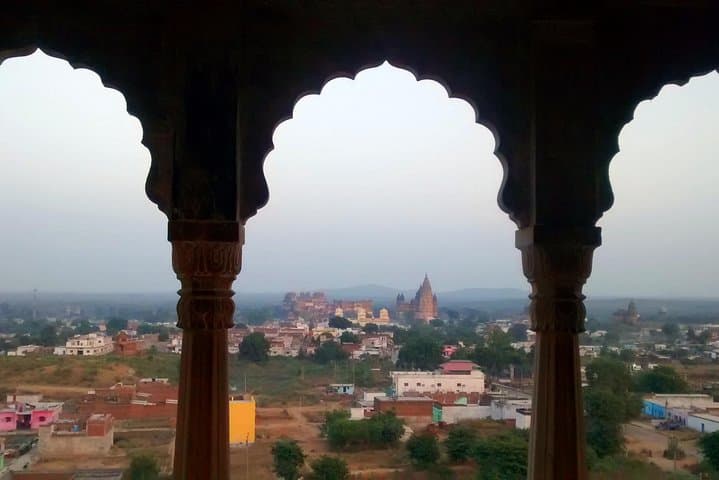
You arrive in Orchha as the morning light slants across the Betwa River, and the town opens like a lived-in set of carved stone rooms. A private car eases through quiet lanes; your guide points to domes and chhatris rising above flats of ochre brick. The palace-fort perches on a seasonal island—its battlement wall and connected halls signaling different eras of Bundela power.
Verified experiences and guided adventures in the surrounding area.
Operated by City Tours India · Orchha, Madhya Pradesh
You arrive in Orchha as the morning light slants across the Betwa River, and the town opens like a lived-in set of carved stone rooms. A private car eases through quiet lanes; your guide points to domes and chhatris rising above flats of ochre brick. The palace-fort perches on a seasonal island—its battlement wall and connected halls signaling different eras of Bundela power.
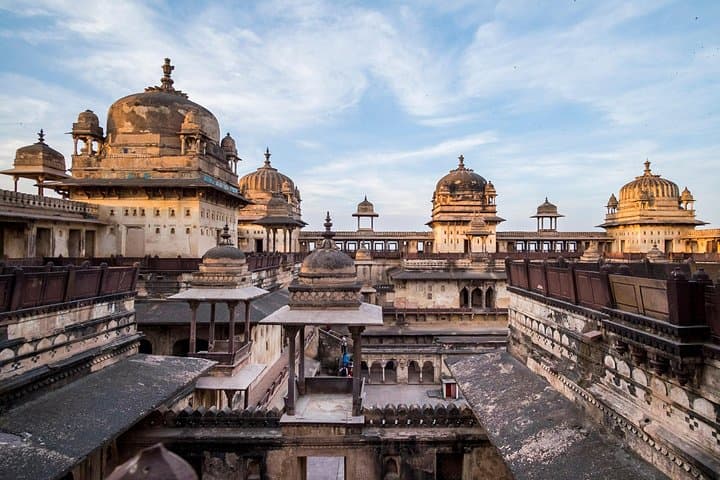
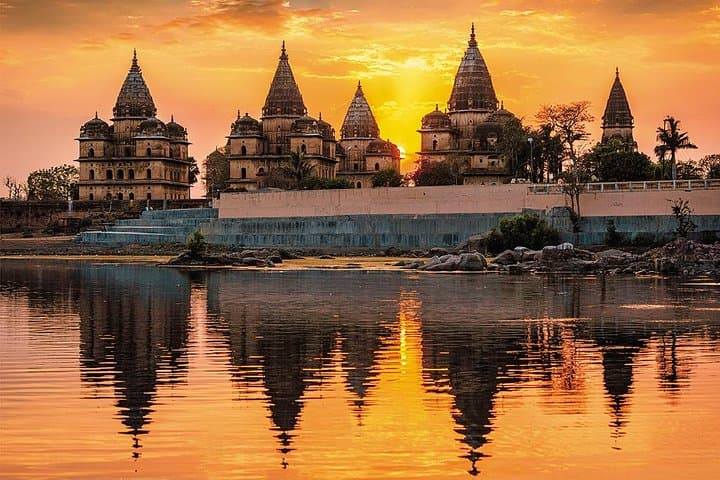
Orchha’s monuments date largely to the 16th–17th centuries under the Bundela rulers. Jahangir Mahal’s rectangular footprint with circular corner towers speaks to Mughal influence; Raja Mahal glows with delicate trellis work where sunbeams cut prismatic patterns across inner chambers. The chhatris along the Betwa are cenotaphs—14 memorial pavilions slicing the riverbank skyline—while Rai Praveen Mahal recalls a court poet’s world. Temples like Laxminarayan and Chaturbhuj blend temple and fort architecture; Ramraja’s evening aarti remains a local rhythm.
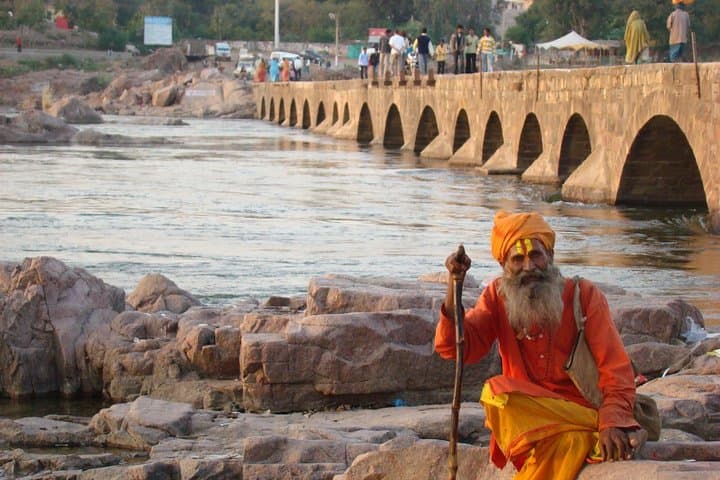
The Betwa, patient and occasionally defiant, frames the town and offers a sunset vantage few places match. Expect cobbled streets, steep temple steps, and short riverside walks rather than long hikes. Practicalities: this private eight-hour loop includes a chauffeur and guide, but carry water, wear sturdy shoes for uneven stone, and dress modestly for temples (no leather inside some sanctuaries). Timing matters—late afternoon light gives the best photos at the chhatris and aarti.
Plan for heat in summer, brief monsoon showers, and cool winter mornings; most sites have steps and are partially accessible. Bring a camera, small daypack, and an openness to move at a local pace—Orchha rewards slow attention.
easy.
8 hours.
Suitable for most fitness levels; involves repeated short walks and stair climbs.
Most admissions to palace complexes and key temples are included in this full-day private tour per the itinerary.
Lunch is not included; the schedule allows time for you to eat in Orchha bazaars or at a local restaurant at your own expense.
Yes—infants must sit on an adult’s lap; the tour is rated physically easy but includes stairs and short walks.
Yes—pickup from your Orchha hotel lobby is included; confirm exact pickup point when booking.
Orchha rose under the Bundela dynasty in the 16th–17th centuries; its forts and palaces reflect a regional court culture shaped by Mughal interactions and local patronage of poets and musicians.
Riverbank erosion and increasing tourist footfall strain some chhatri sites—stick to marked paths, avoid littering, and use local guides to support sustainable visitation.
City Tours India operates guided outdoor trips and adventures with an emphasis on safety, stewardship, and memorable experiences.
You arrive in Orchha as the morning light slants across the Betwa River, and the town opens like a lived-in set of carved stone rooms. A private car eases through quiet lanes; your guide points to domes and chhatris rising above flats of ochre brick. The palace-fort perches on a seasonal island—its battlement wall and connected halls signaling different eras of Bundela power.
You arrive in Orchha as the morning light slants across the Betwa River, and the town opens like a lived-in set of carved stone rooms. A private car eases through quiet lanes; your guide points to domes and chhatris rising above flats of ochre brick. The palace-fort perches on a seasonal island—its battlement wall and connected halls signaling different eras of Bundela power.
Orchha’s monuments date largely to the 16th–17th centuries under the Bundela rulers. Jahangir Mahal’s rectangular footprint with circular corner towers speaks to Mughal influence; Raja Mahal glows with delicate trellis work where sunbeams cut prismatic patterns across inner chambers. The chhatris along the Betwa are cenotaphs—14 memorial pavilions slicing the riverbank skyline—while Rai Praveen Mahal recalls a court poet’s world. Temples like Laxminarayan and Chaturbhuj blend temple and fort architecture; Ramraja’s evening aarti remains a local rhythm.
The Betwa, patient and occasionally defiant, frames the town and offers a sunset vantage few places match. Expect cobbled streets, steep temple steps, and short riverside walks rather than long hikes. Practicalities: this private eight-hour loop includes a chauffeur and guide, but carry water, wear sturdy shoes for uneven stone, and dress modestly for temples (no leather inside some sanctuaries). Timing matters—late afternoon light gives the best photos at the chhatris and aarti.
Plan for heat in summer, brief monsoon showers, and cool winter mornings; most sites have steps and are partially accessible. Bring a camera, small daypack, and an openness to move at a local pace—Orchha rewards slow attention.