THE ADVENTURE COLLECTIVE® · Independent discovery and booking for outdoor travel

Ride an open-air army jeep through some of Vietnam’s most rugged highlands on a three-day Ha Giang loop that reaches Ma Pi Leng Pass and the Nho Que River canyon. Expect panoramic viewpoints, traditional homestays, and a mix of paved and backroad driving that brings you close to remote villages and raw geology.
Ride an open-air army jeep through some of Vietnam’s most rugged highlands on a three-day Ha Giang loop that reaches Ma Pi Leng Pass and the Nho Que River canyon. Expect panoramic viewpoints, traditional homestays, and a mix of paved and backroad driving that brings you close to remote villages and raw geology.
Wind stitches dust across the open-air jeep as you climb toward Bac Sum Pass, the valley opening like a page turned by the wind. The road tightens, cliffs lean in, and the Nho Que River below dares you to look down: a ribbon of jade threading the canyon. On this three-day loop the landscape is the principal character—sheer limestone walls, stepped rice terraces, and plateaus that throw light differently at dawn and dusk.
Verified experiences and guided adventures in the surrounding area.
Operated by Ha Giang Jeep Adventures · Ha Giang, Ha Giang Province
Wind stitches dust across the open-air jeep as you climb toward Bac Sum Pass, the valley opening like a page turned by the wind. The road tightens, cliffs lean in, and the Nho Que River below dares you to look down: a ribbon of jade threading the canyon. On this three-day loop the landscape is the principal character—sheer limestone walls, stepped rice terraces, and plateaus that throw light differently at dawn and dusk.
This route follows roads cut and threaded through marginal highlands where Hmong, Dao and Tay communities have farmed for generations. The Hmong King’s Palace—built around 1898–1907—stands out as a period piece of wealth and cross-border architectural influence. Geologically, the region is karst country: cliffs and narrow passes carved by rivers and time, Ma Pi Leng Pass offering the most dramatic view of valley incision and exposed strata.
Culturally the trip moves at village pace: markets, looms, and homestays with home-cooked meals. Ecologically it’s fragile—terraced fields and riverbanks respond quickly to erosion and heavy rains.
Practical guidance: expect long drives with frequent viewpoint stops; motion is part of the experience so bring layers, sun protection, and a waterproof. Footwear should support short hikes and slippery paths at river springs. Plan for early starts when light is best for photos and afternoons when weather can change rapidly. Homestay rooms are private but basic—pack a small towel and quick-dry clothing. The open-air jeep gives panoramic sightlines; lean into the wind and let the landscape narrate the loop.
easy.
3 days.
No special fitness required to ride the jeep; reasonable mobility for short walks, viewpoints and river paths is helpful.
Professional drivers experienced with Ha Giang roads operate the jeeps; stay seated, use seat belts if provided and follow the driver’s instructions on steep or narrow sections.
Yes—this tour includes three breakfasts, three lunches, two dinners and private rooms in traditional homestays as listed in the itinerary.
Yes—most stops include short, easy walks to overlooks; longer hikes are optional and depend on weather and your comfort on narrow paths.
The operator notes infants must sit on laps; the route involves long drives and some exposed viewpoints, so consider age and motion tolerance before booking.
The Hmong King’s Palace near Dong Van was constructed around 1898–1907 and reflects the region’s wealth and cross-border craftsmanship from that era.
The highland karst and terrace systems erode quickly under heavy use; traveling with a local operator and staying in homestays helps distribute tourism benefits while reducing pressure on fragile sites.
Ha Giang Jeep Adventures operates guided outdoor trips and adventures with an emphasis on safety, stewardship, and memorable experiences.
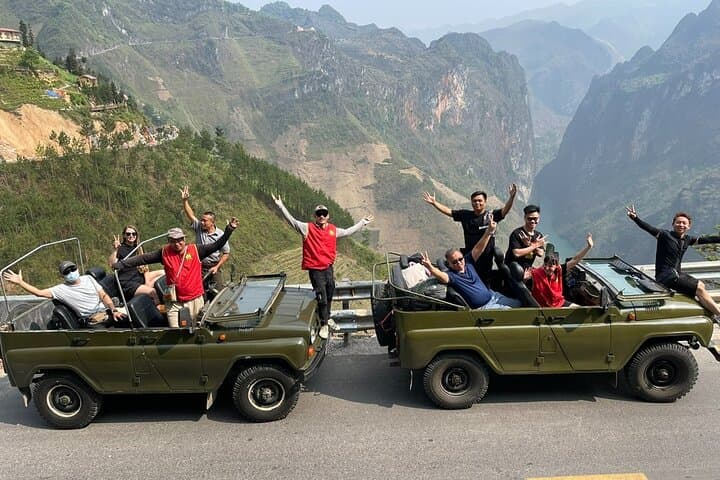
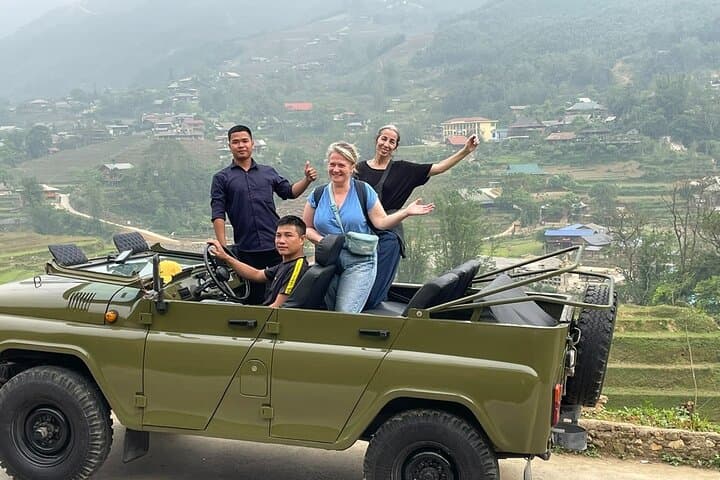
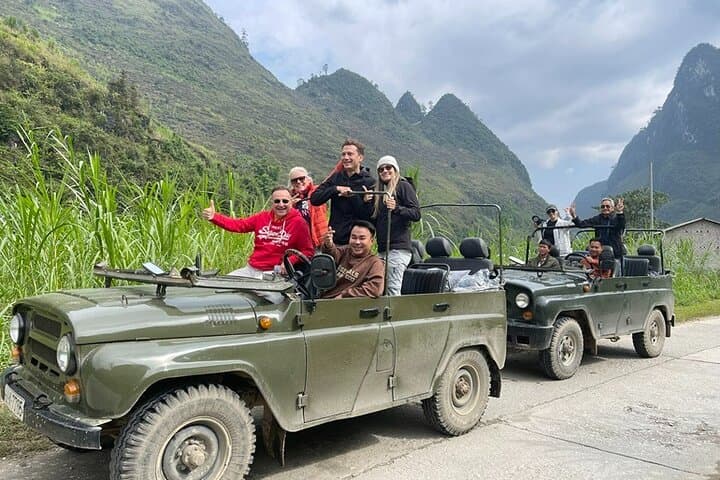
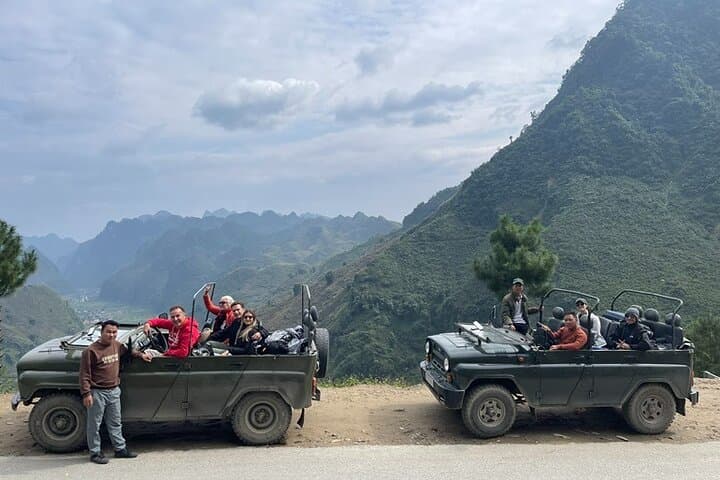
Wind stitches dust across the open-air jeep as you climb toward Bac Sum Pass, the valley opening like a page turned by the wind. The road tightens, cliffs lean in, and the Nho Que River below dares you to look down: a ribbon of jade threading the canyon. On this three-day loop the landscape is the principal character—sheer limestone walls, stepped rice terraces, and plateaus that throw light differently at dawn and dusk.
Wind stitches dust across the open-air jeep as you climb toward Bac Sum Pass, the valley opening like a page turned by the wind. The road tightens, cliffs lean in, and the Nho Que River below dares you to look down: a ribbon of jade threading the canyon. On this three-day loop the landscape is the principal character—sheer limestone walls, stepped rice terraces, and plateaus that throw light differently at dawn and dusk.
This route follows roads cut and threaded through marginal highlands where Hmong, Dao and Tay communities have farmed for generations. The Hmong King’s Palace—built around 1898–1907—stands out as a period piece of wealth and cross-border architectural influence. Geologically, the region is karst country: cliffs and narrow passes carved by rivers and time, Ma Pi Leng Pass offering the most dramatic view of valley incision and exposed strata.
Culturally the trip moves at village pace: markets, looms, and homestays with home-cooked meals. Ecologically it’s fragile—terraced fields and riverbanks respond quickly to erosion and heavy rains.
Practical guidance: expect long drives with frequent viewpoint stops; motion is part of the experience so bring layers, sun protection, and a waterproof. Footwear should support short hikes and slippery paths at river springs. Plan for early starts when light is best for photos and afternoons when weather can change rapidly. Homestay rooms are private but basic—pack a small towel and quick-dry clothing. The open-air jeep gives panoramic sightlines; lean into the wind and let the landscape narrate the loop.