THE ADVENTURE COLLECTIVE® · Independent discovery and booking for outdoor travel

Walk a narrow trail carved by the Kumano Sea and stand on dramatic platforms like Senjojiki at Onigajo — a UNESCO World Heritage coastal site where geology, legend and small shrines meet. This guided 90-minute route delivers close-up views, safe guidance and layered local context.
Walk a narrow trail carved by the Kumano Sea and stand on dramatic platforms like Senjojiki at Onigajo — a UNESCO World Heritage coastal site where geology, legend and small shrines meet. This guided 90-minute route delivers close-up views, safe guidance and layered local context.
You step onto a narrow path cut into black rock and the Kumano Sea immediately asserts itself — waves folding and striking, spray hanging like a brief flag. The Oni Statue marks the route’s start, a quiet signpost before the trail snakes along caves, ledges and lookout points where wind and water have sculpted raw, geometric forms.
Verified experiences and guided adventures in the surrounding area.
Operated by DeepExperience · Kumano, Mie Prefecture
You step onto a narrow path cut into black rock and the Kumano Sea immediately asserts itself — waves folding and striking, spray hanging like a brief flag. The Oni Statue marks the route’s start, a quiet signpost before the trail snakes along caves, ledges and lookout points where wind and water have sculpted raw, geometric forms.
Onigajo’s cliffs formed over millennia as the Kumano Sea gouged at volcanic and sedimentary layers; Senjojiki’s broad, slab-like platforms are an open ledger of that slow work. Local myths give the place its name — tales of a demon routed by an ancient warrior — while small shrines like Benten and Gyosha Cave show how faith has long threaded through this shoreline.
The walk is simple in layout but rich in detail: salt-streaked rock faces, tidal pools that host tiny crabs and anemones, and sweeping views toward the Kii Peninsula. An experienced guide points out geological seams, shrine histories, and safe lines along exposed sections, turning a short route into a layered learning experience.
Practically, expect uneven stone underfoot and coastal wind; non-technical but watch your footing. The route works well as a 90-minute half-day outing from nearby towns — combine it with a visit to local fishing ports or a segment of the Kumano Kodo if you have more time.
Bring a windproof layer, sturdy shoes, and a camera with a secure strap; morning light and low tide open the best vantage points. With respect for fragile rock and sacred sites, Onigajo delivers a compact, elemental encounter with Japan’s coastal power.
easy.
1.5 hours.
Suitable for most fitness levels; requires balance on uneven coastal rock and short periods of standing.
The guided experience is about 90 minutes total, covering the main viewpoints and short stops at caves and shrines.
Yes—it's rated easy, but guardians should monitor children on narrow ledges and anyone with limited mobility should notify the guide beforehand.
Guides typically provide local context in English or Japanese depending on booking—check language availability when you reserve.
Public access exists, but a guided tour adds safety briefings, route advice around exposed sections, and cultural insights you might miss solo.
Onigajo sits on the Kumano coast and derives its name from local legends of demons; it was designated a National Scenic Site and contributes to the Kumano World Heritage zone for its natural and cultural connections.
Rock platforms and intertidal zones are sensitive—stay on marked paths, avoid removing marine life, and follow shrine etiquette to limit visitor impact.
DeepExperience operates guided outdoor trips and adventures with an emphasis on safety, stewardship, and memorable experiences.
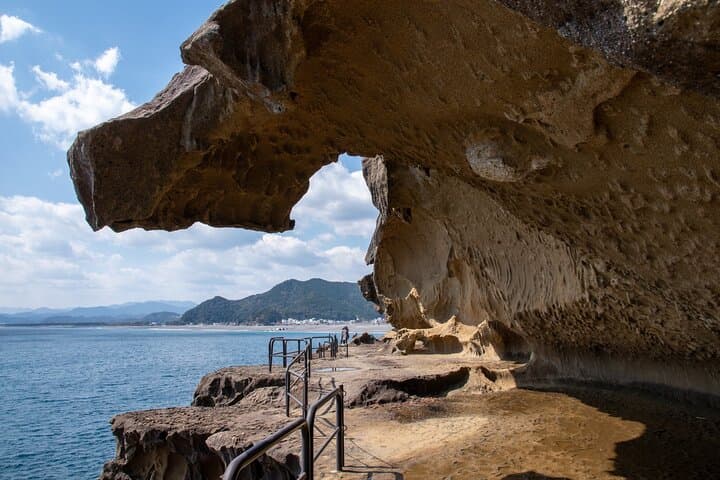
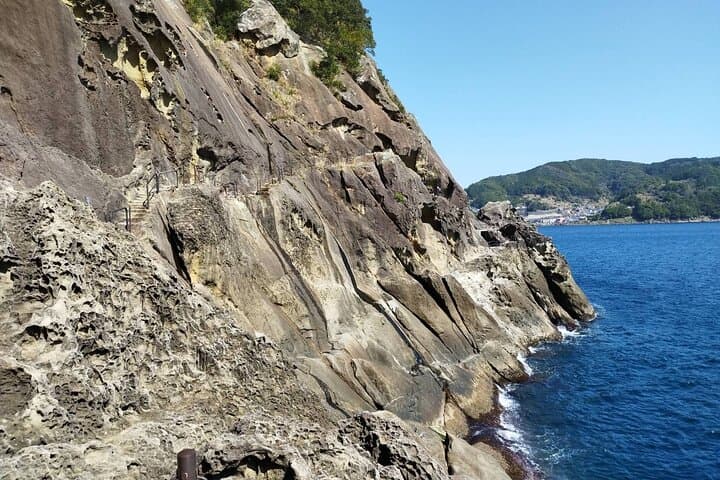
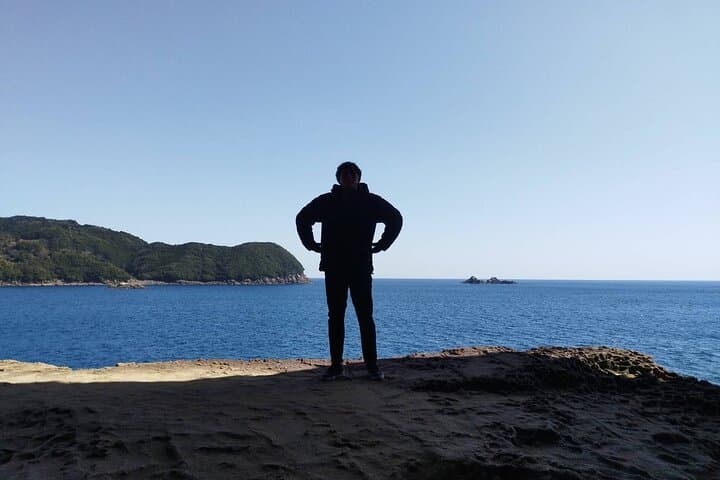
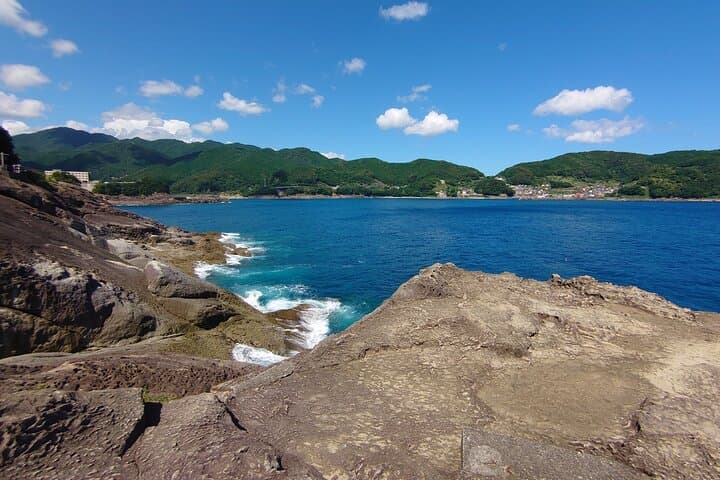
You step onto a narrow path cut into black rock and the Kumano Sea immediately asserts itself — waves folding and striking, spray hanging like a brief flag. The Oni Statue marks the route’s start, a quiet signpost before the trail snakes along caves, ledges and lookout points where wind and water have sculpted raw, geometric forms.
You step onto a narrow path cut into black rock and the Kumano Sea immediately asserts itself — waves folding and striking, spray hanging like a brief flag. The Oni Statue marks the route’s start, a quiet signpost before the trail snakes along caves, ledges and lookout points where wind and water have sculpted raw, geometric forms.
Onigajo’s cliffs formed over millennia as the Kumano Sea gouged at volcanic and sedimentary layers; Senjojiki’s broad, slab-like platforms are an open ledger of that slow work. Local myths give the place its name — tales of a demon routed by an ancient warrior — while small shrines like Benten and Gyosha Cave show how faith has long threaded through this shoreline.
The walk is simple in layout but rich in detail: salt-streaked rock faces, tidal pools that host tiny crabs and anemones, and sweeping views toward the Kii Peninsula. An experienced guide points out geological seams, shrine histories, and safe lines along exposed sections, turning a short route into a layered learning experience.
Practically, expect uneven stone underfoot and coastal wind; non-technical but watch your footing. The route works well as a 90-minute half-day outing from nearby towns — combine it with a visit to local fishing ports or a segment of the Kumano Kodo if you have more time.
Bring a windproof layer, sturdy shoes, and a camera with a secure strap; morning light and low tide open the best vantage points. With respect for fragile rock and sacred sites, Onigajo delivers a compact, elemental encounter with Japan’s coastal power.