THE ADVENTURE COLLECTIVE® · Independent discovery and booking for outdoor travel

Trace Kotor’s centuries of sea-borne history on a focused, one-hour private walk through the UNESCO-listed Old Town. Learn the city’s architecture, legends, and practical tips for navigating its cobbled lanes.
Trace Kotor’s centuries of sea-borne history on a focused, one-hour private walk through the UNESCO-listed Old Town. Learn the city’s architecture, legends, and practical tips for navigating its cobbled lanes.
You step through the Sea Gate and the stone cools the soles of your shoes — narrow alleys pull you inward, shops and churches framing sightlines toward the bay. Salt air from the Bay of Kotor drifts in, and the city’s layered past whispers from carved doorways and clock faces as your guide sets the pace.
Verified experiences and guided adventures in the surrounding area.
Operated by Tourist Agency "Montis Tours" · Kotor, Kotor Municipality
You step through the Sea Gate and the stone cools the soles of your shoes — narrow alleys pull you inward, shops and churches framing sightlines toward the bay. Salt air from the Bay of Kotor drifts in, and the city’s layered past whispers from carved doorways and clock faces as your guide sets the pace.
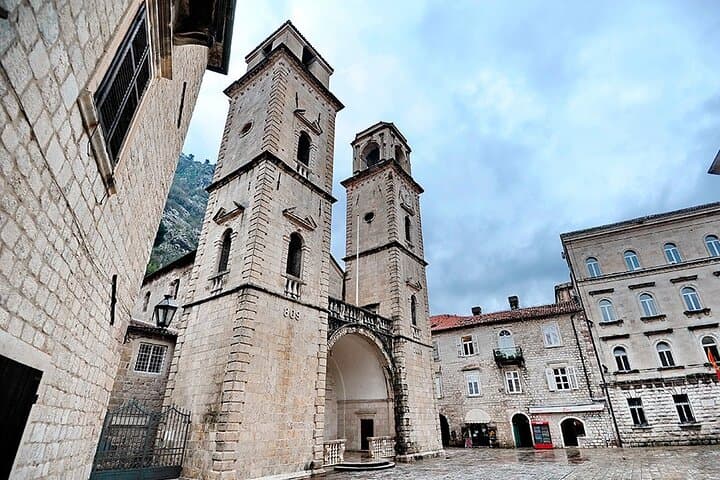
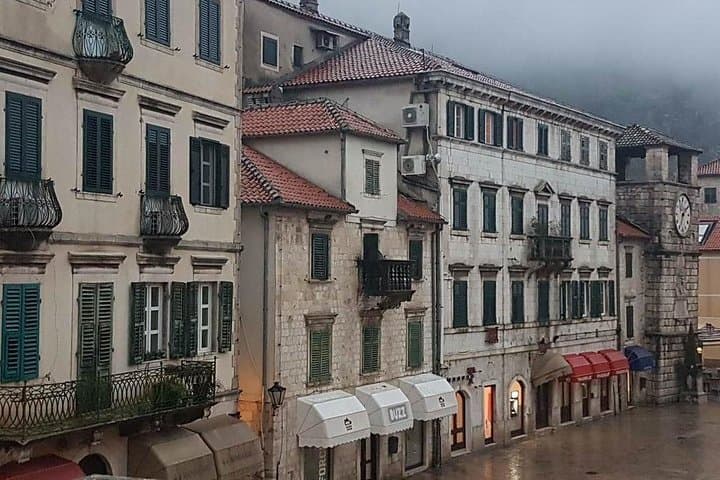
Kotor’s Old Town is UNESCO-protected for good reason: Romanesque and Venetian façades sit beside Byzantine and Baroque details, reflecting centuries of shifting rulers and maritime trade. The limestone shore and folded karst hills behind the town shaped both settlement and defense; St. Tryphon Cathedral (12th century) and Napoleon’s Theatre are physical pages in that history. Local culture remains civic and small-scale — family-run kafanas, boat builders, and stone masons still working in the same lanes.
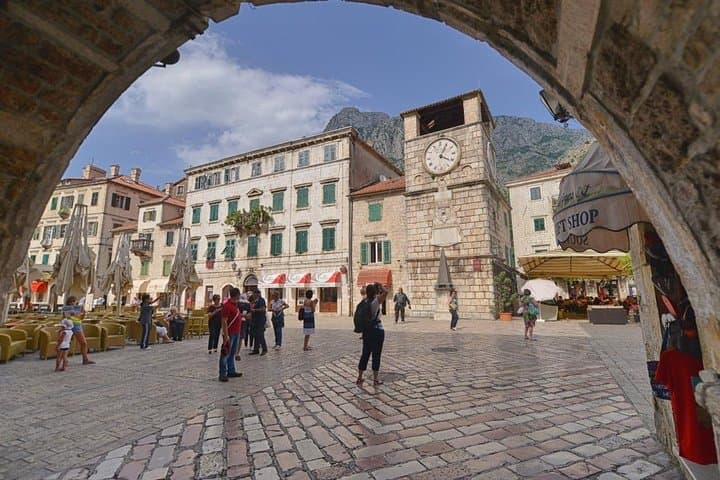
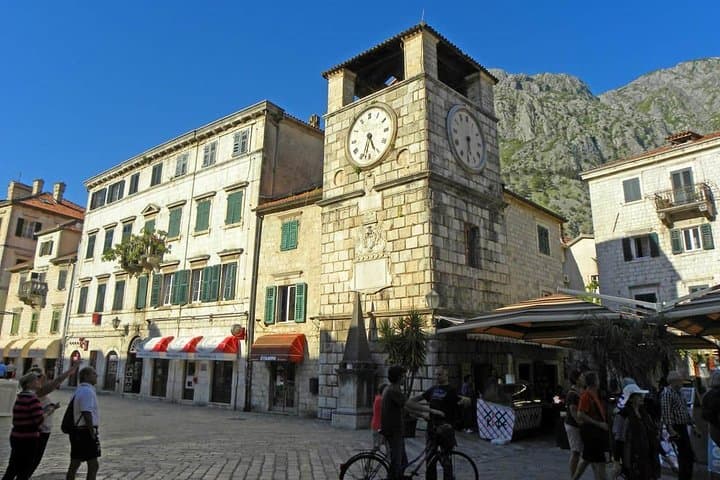
Expect a compact, mostly flat itinerary of roughly 1–1.5 km over cobbled streets, with stops at the Square of Arms, Clock Tower, Maritime Museum, and the Skurda River bridge. The tour is a concise orientation: history, architecture, and a few urban legends delivered by a licensed guide.
Practical notes: wear sturdy shoes for uneven cobbles, hydrate in summer, and plan mornings or late afternoons to avoid cruise-ship surges. The route is wheelchair- and stroller-accessible for the most part, but some narrow passages can be busy. Bring a light layer for sea breezes and a camera for details — carved lintels and hidden courtyards often reward a slower step.
easy.
1 hour.
Suitable for most fitness levels; primarily flat walking with short stops
The guide meets in front of the Sea Gate (Main Entrance) next to the Tourist Info Desk and returns to the same spot at the end of the hour.
Yes — the operator lists the route as wheelchair- and stroller-accessible, though some narrow passages can be busy; notify the guide of any mobility needs in advance.
The tour inclusion notes VAT, tourist taxes, and entrance fees to Kotor Old Town; specific paid museum entries may be separate — confirm with your booking.
Tours are led by licensed guides; language options depend on availability — confirm preferred language at booking.
Kotor’s Old Town grew as a fortified port influenced by Byzantine, Venetian, and later Austro-Hungarian rule; many of its churches and palaces date to the medieval and early modern maritime era.
The Old Town manages heavy tourism by restricting vehicle access and encouraging guided visits; visitors are asked to respect fragile stonework and minimize noise and waste.
Tourist Agency "Montis Tours" operates guided outdoor trips and adventures with an emphasis on safety, stewardship, and memorable experiences.
You step through the Sea Gate and the stone cools the soles of your shoes — narrow alleys pull you inward, shops and churches framing sightlines toward the bay. Salt air from the Bay of Kotor drifts in, and the city’s layered past whispers from carved doorways and clock faces as your guide sets the pace.
You step through the Sea Gate and the stone cools the soles of your shoes — narrow alleys pull you inward, shops and churches framing sightlines toward the bay. Salt air from the Bay of Kotor drifts in, and the city’s layered past whispers from carved doorways and clock faces as your guide sets the pace.
Kotor’s Old Town is UNESCO-protected for good reason: Romanesque and Venetian façades sit beside Byzantine and Baroque details, reflecting centuries of shifting rulers and maritime trade. The limestone shore and folded karst hills behind the town shaped both settlement and defense; St. Tryphon Cathedral (12th century) and Napoleon’s Theatre are physical pages in that history. Local culture remains civic and small-scale — family-run kafanas, boat builders, and stone masons still working in the same lanes.
Expect a compact, mostly flat itinerary of roughly 1–1.5 km over cobbled streets, with stops at the Square of Arms, Clock Tower, Maritime Museum, and the Skurda River bridge. The tour is a concise orientation: history, architecture, and a few urban legends delivered by a licensed guide.
Practical notes: wear sturdy shoes for uneven cobbles, hydrate in summer, and plan mornings or late afternoons to avoid cruise-ship surges. The route is wheelchair- and stroller-accessible for the most part, but some narrow passages can be busy. Bring a light layer for sea breezes and a camera for details — carved lintels and hidden courtyards often reward a slower step.