THE ADVENTURE COLLECTIVE® · Independent discovery and booking for outdoor travel

Set off from the busy medina to traverse the palm-lined tracks of Marrakech’s Palmeraie on a one-hour camel ride. This private, guided loop pairs a gentle physical challenge with cultural insights into local irrigation, village life, and palm-grove ecology.
Set off from the busy medina to traverse the palm-lined tracks of Marrakech’s Palmeraie on a one-hour camel ride. This private, guided loop pairs a gentle physical challenge with cultural insights into local irrigation, village life, and palm-grove ecology.
Dawn light spills across the Palmeraie and the palms throw long, moving shadows as camels stand patient like old-world ships waiting to sail. Riders mount with a practiced rhythm; the camel’s gait rocks forward, and the grove begins to breathe—wind through fronds, chatter from a distant shepherd, and the soft thud of padded feet on packed sand.
Verified experiences and guided adventures in the surrounding area.
Operated by Traces Berbres Voyages · Marrakech, Marrakesh-Safi
Dawn light spills across the Palmeraie and the palms throw long, moving shadows as camels stand patient like old-world ships waiting to sail. Riders mount with a practiced rhythm; the camel’s gait rocks forward, and the grove begins to breathe—wind through fronds, chatter from a distant shepherd, and the soft thud of padded feet on packed sand.
The Palmeraie is not a wild oasis but a cultivated palm zone that expanded over centuries to shield Marrakech from Saharan winds and support irrigation-based agriculture. Geologically this edge of the Haouz plain is flat, with sandy soils and an underground water table that made palm cultivation viable. Culturally, the palms have long marked a transition from city to countryside: small Berber hamlets and caravan paths thread the area, offering glimpses of rural life outside the souks.
On a one-hour camel trek you follow shaded tracks and open clearings, wearing a cheich (scarf) like locals do, pausing for photos and to watch palm-dependent birds flit between trunks. The experience is low-impact but demands balance and some core stability—camels rise and dip with personality. Guides explain local water management and village routines as much as they guide your mount.
Practical guidance: book morning or late-afternoon slots for cooler temperatures and softer light. Wear closed-toe shoes and sun protection; a light scarf helps with dust. If you have back issues or are pregnant, choose another activity; camels sit and stand with a sudden motion. Expect private pickup, short transfers from central Marrakech, and a relaxed pace that rewards slow observation rather than speed.
moderate.
1 hour.
Basic balance and core strength recommended; participants should be comfortable mounting and sitting on an animal that moves rhythmically.
The tour runs about 60 minutes: a short transfer, mounting, a guided loop through the palms with stops for photos and local insight, then return and dismount.
Children must be accompanied by an adult; the ride involves mounting and the camel’s rising motion, so it’s not recommended for those with spinal issues or pregnant travelers.
Yes — the tour includes private hotel pick-up and drop-off in an air-conditioned vehicle from central Marrakech.
Tipping is customary; small amounts for the guide and camel handler (5–10 EUR per person) are appreciated for good service.
The Palmeraie expanded over centuries as an irrigated palm zone protecting Marrakech from desert winds and supporting local agriculture and caravan routes.
Water use is a local concern—respect irrigation channels, avoid litter, and follow guides to minimize trampling and disturbance to village agriculture.
Traces Berbres Voyages operates guided outdoor trips and adventures with an emphasis on safety, stewardship, and memorable experiences.
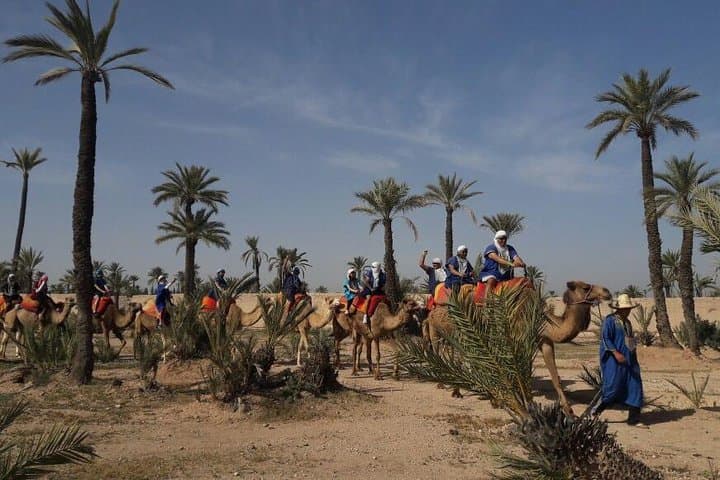
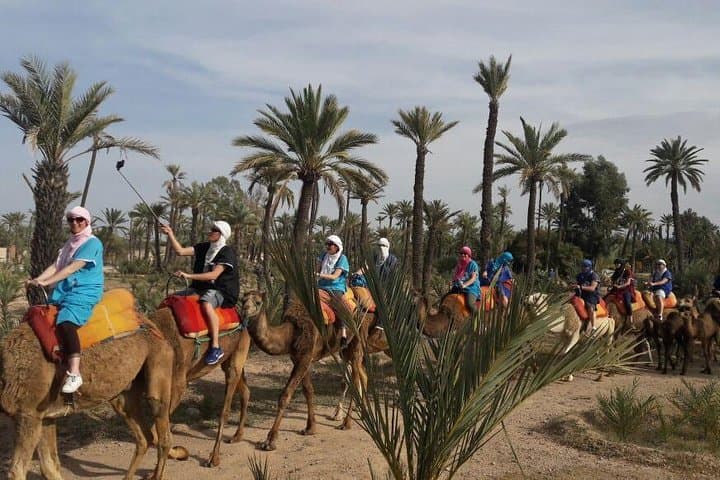
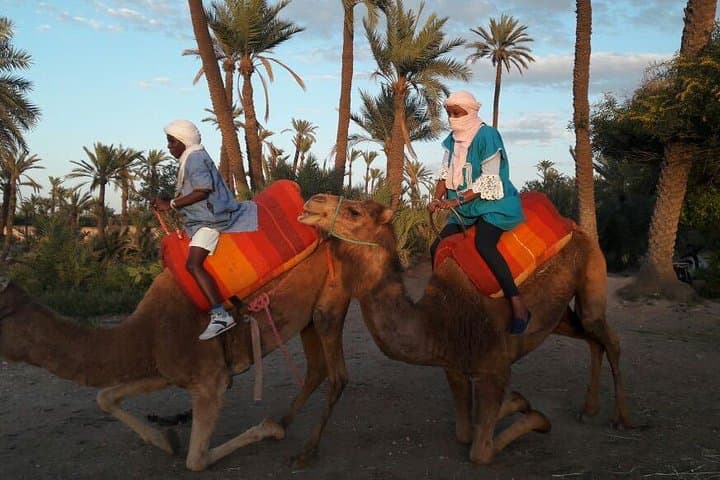
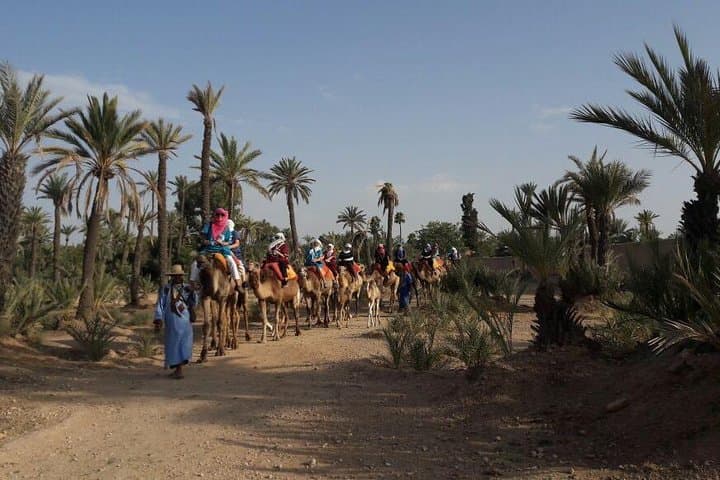
Dawn light spills across the Palmeraie and the palms throw long, moving shadows as camels stand patient like old-world ships waiting to sail. Riders mount with a practiced rhythm; the camel’s gait rocks forward, and the grove begins to breathe—wind through fronds, chatter from a distant shepherd, and the soft thud of padded feet on packed sand.
Dawn light spills across the Palmeraie and the palms throw long, moving shadows as camels stand patient like old-world ships waiting to sail. Riders mount with a practiced rhythm; the camel’s gait rocks forward, and the grove begins to breathe—wind through fronds, chatter from a distant shepherd, and the soft thud of padded feet on packed sand.
The Palmeraie is not a wild oasis but a cultivated palm zone that expanded over centuries to shield Marrakech from Saharan winds and support irrigation-based agriculture. Geologically this edge of the Haouz plain is flat, with sandy soils and an underground water table that made palm cultivation viable. Culturally, the palms have long marked a transition from city to countryside: small Berber hamlets and caravan paths thread the area, offering glimpses of rural life outside the souks.
On a one-hour camel trek you follow shaded tracks and open clearings, wearing a cheich (scarf) like locals do, pausing for photos and to watch palm-dependent birds flit between trunks. The experience is low-impact but demands balance and some core stability—camels rise and dip with personality. Guides explain local water management and village routines as much as they guide your mount.
Practical guidance: book morning or late-afternoon slots for cooler temperatures and softer light. Wear closed-toe shoes and sun protection; a light scarf helps with dust. If you have back issues or are pregnant, choose another activity; camels sit and stand with a sudden motion. Expect private pickup, short transfers from central Marrakech, and a relaxed pace that rewards slow observation rather than speed.