THE ADVENTURE COLLECTIVE® · Independent discovery and booking for outdoor travel

Spend an hour atop a gentle camel crossing the golden dunes outside Hurghada, with hotel pickup and refreshments included. This family-friendly outing pairs basic desert lore from local guides with dramatic coastal-desert scenery and minimal physical demands.
Spend an hour atop a gentle camel crossing the golden dunes outside Hurghada, with hotel pickup and refreshments included. This family-friendly outing pairs basic desert lore from local guides with dramatic coastal-desert scenery and minimal physical demands.
A low sun slices across rippled dunes as a line of camels eases over a crest — the animal’s slow, rocking gait sets a quiet rhythm that makes the desert feel older than time. You climb into the saddle and the coastal city of Hurghada slips behind you; the horizon is a long, dry plane of wind-sculpted sand and sudden rocky outcrops.
Verified experiences and guided adventures in the surrounding area.
Operated by JupiterTravel · Hurghada, Red Sea Governorate
A low sun slices across rippled dunes as a line of camels eases over a crest — the animal’s slow, rocking gait sets a quiet rhythm that makes the desert feel older than time. You climb into the saddle and the coastal city of Hurghada slips behind you; the horizon is a long, dry plane of wind-sculpted sand and sudden rocky outcrops.
The Eastern Desert that frames Hurghada has been a corridor for caravans and Bedouin families for centuries. Geologically it’s a mix of soft coastal dunes and harder, wind-abraded gravel plains; the dunes shift seasonally under persistent northerly winds. Guides on these rides typically explain local Bedouin customs and the camel’s place in desert life while pointing out telltale signs of ancient routes and the sparse plants that hold the sand together.
Practical details are straightforward: the advertised experience includes a one-hour camel ride plus hotel pick-up and drop-off in an air-conditioned vehicle (the full excursion is roughly two hours door-to-door). Terrain is soft sand and gentle dunes — expect some uneven footing when mounting and dismounting, and mild swaying while aboard. Operators provide safety gear and water; wear closed-toe shoes, sun protection, and bring a light layer for coastal evenings.
Best times are early morning or late afternoon when heat and glare lessen and the light makes the dunes more dramatic. The outing is family-friendly and requires only basic mobility; guides tailor pace for comfort. This is a short, accessible way to touch both the living culture and the slow-moving landscape of Egypt’s desert near Hurghada.
easy.
2 hours.
Minimal fitness required — you should be able to climb a short step and sit comfortably for an hour.
The camel ride is approximately one hour; the total excursion including hotel transfers is usually about two hours.
Yes — the tour is family-friendly and designed for riders of all experience levels with experienced handlers and safety instruction.
Standard inclusions are hotel pick-up/drop-off in an air-conditioned vehicle, a one-hour camel ride, bottled water, and a light refreshment such as tea or coffee.
Tipping is customary but discretionary; small tips for guides and handlers are appreciated for good service.
Camels and Bedouin routes have linked Red Sea settlements for centuries; these rides trace the same landscapes used for trade and seasonal grazing.
Stick to designated paths and follow guide instructions to avoid trampling fragile dune vegetation; operators typically practice low-impact pickups and limit group sizes to reduce disturbance.
JupiterTravel operates guided outdoor trips and adventures with an emphasis on safety, stewardship, and memorable experiences.
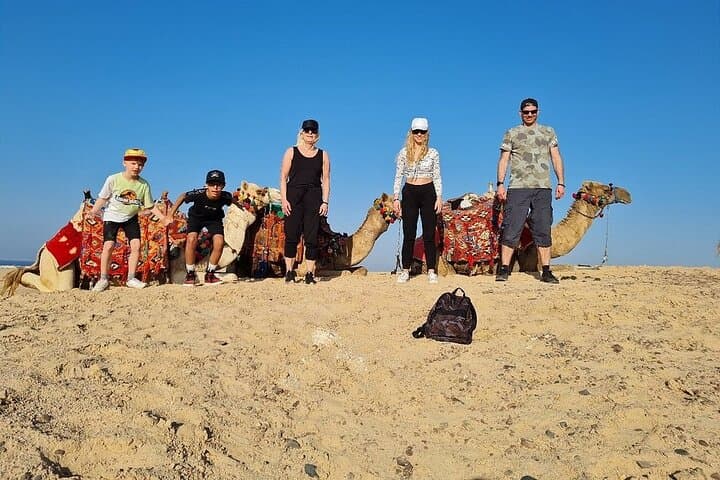
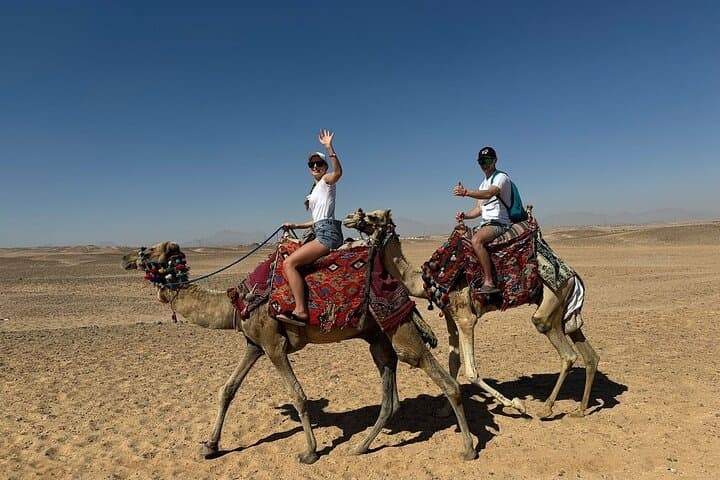

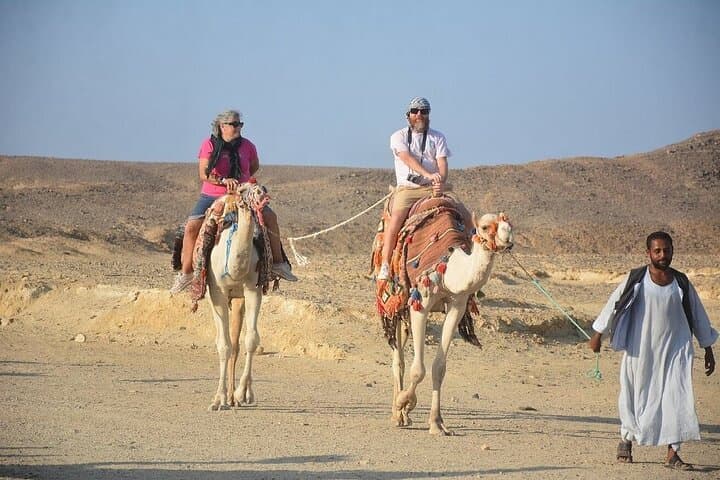
A low sun slices across rippled dunes as a line of camels eases over a crest — the animal’s slow, rocking gait sets a quiet rhythm that makes the desert feel older than time. You climb into the saddle and the coastal city of Hurghada slips behind you; the horizon is a long, dry plane of wind-sculpted sand and sudden rocky outcrops.
A low sun slices across rippled dunes as a line of camels eases over a crest — the animal’s slow, rocking gait sets a quiet rhythm that makes the desert feel older than time. You climb into the saddle and the coastal city of Hurghada slips behind you; the horizon is a long, dry plane of wind-sculpted sand and sudden rocky outcrops.
The Eastern Desert that frames Hurghada has been a corridor for caravans and Bedouin families for centuries. Geologically it’s a mix of soft coastal dunes and harder, wind-abraded gravel plains; the dunes shift seasonally under persistent northerly winds. Guides on these rides typically explain local Bedouin customs and the camel’s place in desert life while pointing out telltale signs of ancient routes and the sparse plants that hold the sand together.
Practical details are straightforward: the advertised experience includes a one-hour camel ride plus hotel pick-up and drop-off in an air-conditioned vehicle (the full excursion is roughly two hours door-to-door). Terrain is soft sand and gentle dunes — expect some uneven footing when mounting and dismounting, and mild swaying while aboard. Operators provide safety gear and water; wear closed-toe shoes, sun protection, and bring a light layer for coastal evenings.
Best times are early morning or late afternoon when heat and glare lessen and the light makes the dunes more dramatic. The outing is family-friendly and requires only basic mobility; guides tailor pace for comfort. This is a short, accessible way to touch both the living culture and the slow-moving landscape of Egypt’s desert near Hurghada.