THE ADVENTURE COLLECTIVE® · Independent discovery and booking for outdoor travel

Leave Cusco before dawn for a one-day trek to Vinicunca (Rainbow Mountain), a high-altitude hike through mineral-streaked ridgelines and Quechua highlands. Expect steep, windy approaches, thin air, and vivid views of Ausangate — bring acclimatization time and layered gear.
Leave Cusco before dawn for a one-day trek to Vinicunca (Rainbow Mountain), a high-altitude hike through mineral-streaked ridgelines and Quechua highlands. Expect steep, windy approaches, thin air, and vivid views of Ausangate — bring acclimatization time and layered gear.
A headlamp beam cuts through the pre-dawn chill as minibuses climb out of Cusco toward high Andean plateaus. By first light the trailhead near Cusipata breathes cold air and the mountain’s layered pigments wait like a folded map. The approach is an uphill march across stony, wind-swept terrain, and the rainbow stripes only fully reveal themselves as the sun climbs and the glacial light sharpens the mineral bands.
Verified experiences and guided adventures in the surrounding area.
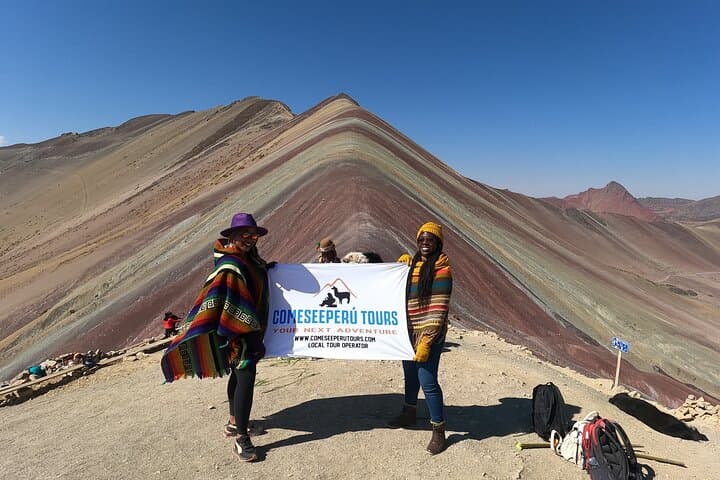
Operated by Come See Perú Tours · Cusco, Cusco
A headlamp beam cuts through the pre-dawn chill as minibuses climb out of Cusco toward high Andean plateaus. By first light the trailhead near Cusipata breathes cold air and the mountain’s layered pigments wait like a folded map. The approach is an uphill march across stony, wind-swept terrain, and the rainbow stripes only fully reveal themselves as the sun climbs and the glacial light sharpens the mineral bands.
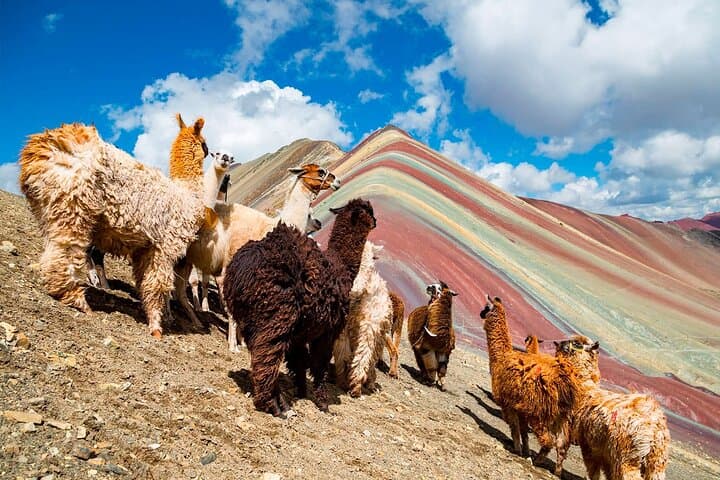
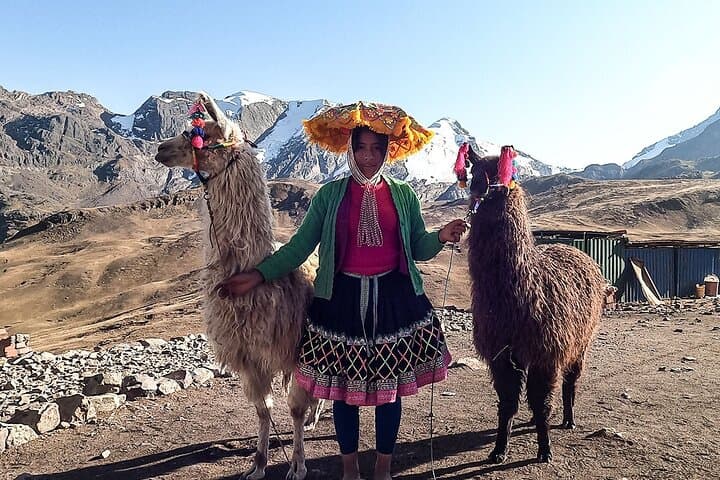
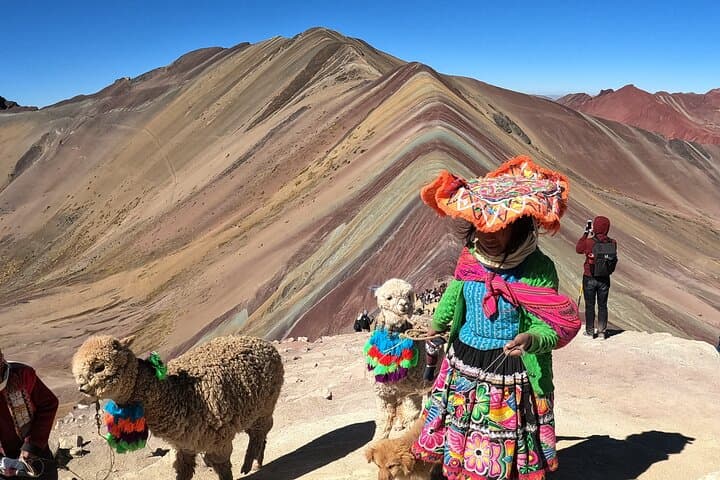
Geology explains the colors: iron oxides, copper sulfates and other minerals painted into sedimentary layers over millennia and exposed by glacial erosion. The valley sits beneath Ausangate — a 6,300 m Apu (sacred mountain) that dominates local cosmology — and the hike threads past Quechua hamlets where alpaca and llama graze in managed pastures. The culture here is visible in woven textiles, stepped fields and stern, welcoming faces that have worked these heights for generations.
Practical guidance: the day is long (roughly 6–8 hours round trip from Cusco with transport) and the altitude is the real challenge — trail high points reach about 5,100–5,200 m with roughly 600–900 m of ascent depending on your route. Terrain is high-altitude desert: loose scree, compacted dirt and occasional steep switchbacks. Take time to acclimatize in Cusco for 24–48 hours, carry layered windproof clothing, sunscreen, 2–3 liters of water, and consider trekking poles or a horse for the ascent if your legs feel thin. Start early, move steadily, and respect the mountain: weather shifts fast and the oxygen is thin, but the payoff — a chromatic ridge rimmed by glaciers and sky — is unmistakable.
moderate.
6–8 hours.
Moderate fitness with good aerobic baseline and prior acclimatization; be able to handle steep uphill walking at high altitude.
Physically the route is a non-technical hike, but altitude makes it feel much harder; expect steady climbing and take frequent breaks.
The dry season (May–September) gives the most reliable weather and clearer views; rainy season (Dec–Mar) brings cloud cover and slippery trails.
Yes, local operators and horse rentals are commonly available at the trailhead for those who prefer not to walk the full ascent.
Guides are recommended for logistics, safety and cultural context; permits are not typically required for the standard day route but park rules and vehicle access points can change.
The ridge sits within traditional Quechua territory and Ausangate has long been venerated as an Apu (sacred mountain); grazing patterns and textile motifs here reflect centuries-old pastoral systems.
Increased tourist traffic has raised erosion and litter concerns; support local guides, pack out waste, and use established paths to limit impact.
Come See Perú Tours operates guided outdoor trips and adventures with an emphasis on safety, stewardship, and memorable experiences.
A headlamp beam cuts through the pre-dawn chill as minibuses climb out of Cusco toward high Andean plateaus. By first light the trailhead near Cusipata breathes cold air and the mountain’s layered pigments wait like a folded map. The approach is an uphill march across stony, wind-swept terrain, and the rainbow stripes only fully reveal themselves as the sun climbs and the glacial light sharpens the mineral bands.
A headlamp beam cuts through the pre-dawn chill as minibuses climb out of Cusco toward high Andean plateaus. By first light the trailhead near Cusipata breathes cold air and the mountain’s layered pigments wait like a folded map. The approach is an uphill march across stony, wind-swept terrain, and the rainbow stripes only fully reveal themselves as the sun climbs and the glacial light sharpens the mineral bands.
Geology explains the colors: iron oxides, copper sulfates and other minerals painted into sedimentary layers over millennia and exposed by glacial erosion. The valley sits beneath Ausangate — a 6,300 m Apu (sacred mountain) that dominates local cosmology — and the hike threads past Quechua hamlets where alpaca and llama graze in managed pastures. The culture here is visible in woven textiles, stepped fields and stern, welcoming faces that have worked these heights for generations.
Practical guidance: the day is long (roughly 6–8 hours round trip from Cusco with transport) and the altitude is the real challenge — trail high points reach about 5,100–5,200 m with roughly 600–900 m of ascent depending on your route. Terrain is high-altitude desert: loose scree, compacted dirt and occasional steep switchbacks. Take time to acclimatize in Cusco for 24–48 hours, carry layered windproof clothing, sunscreen, 2–3 liters of water, and consider trekking poles or a horse for the ascent if your legs feel thin. Start early, move steadily, and respect the mountain: weather shifts fast and the oxygen is thin, but the payoff — a chromatic ridge rimmed by glaciers and sky — is unmistakable.