THE ADVENTURE COLLECTIVE® · Independent discovery and booking for outdoor travel

A single-day circuit across the Salar de Uyuni that links the Train Cemetery, Colchani salt works, Ojos de Sal, Playa Blanca and Isla Incahuasi, finishing at sunset. Ideal for travelers wanting a concentrated introduction to the salt flats’ geology, history and dramatic light.
A single-day circuit across the Salar de Uyuni that links the Train Cemetery, Colchani salt works, Ojos de Sal, Playa Blanca and Isla Incahuasi, finishing at sunset. Ideal for travelers wanting a concentrated introduction to the salt flats’ geology, history and dramatic light.
The horizon here seems to roll like a white ocean; the salt crust crunches underfoot and the sun throws a hard, clean light that dares you to blink.
Verified experiences and guided adventures in the surrounding area.
Operated by Salt Eyes Expeditions · Uyuni, Potosí Department
The horizon here seems to roll like a white ocean; the salt crust crunches underfoot and the sun throws a hard, clean light that dares you to blink.
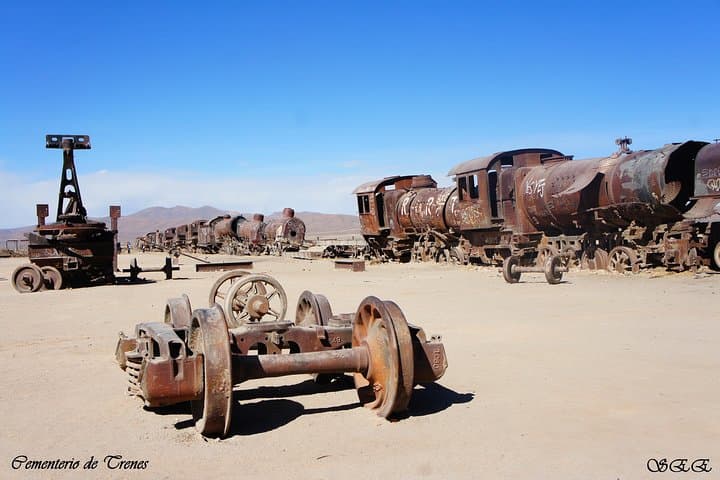
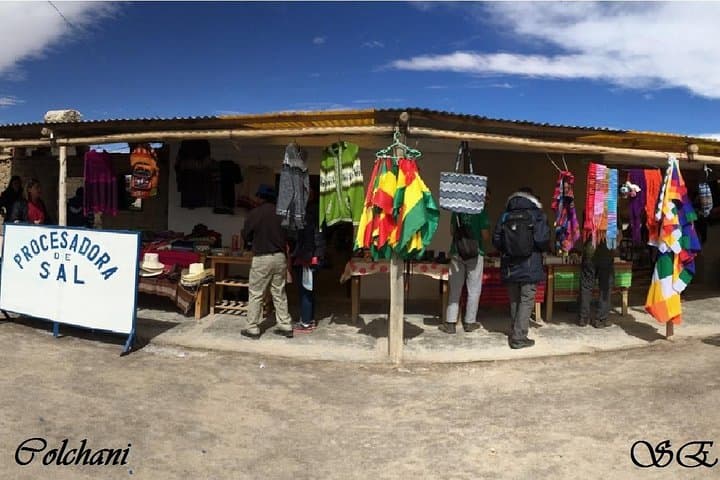
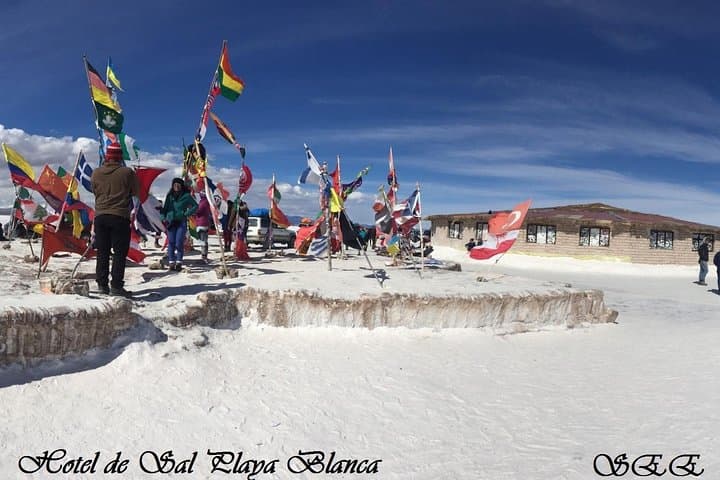
This full-day circuit from Uyuni threads together the Train Cemetery, Colchani salt-works, Ojos de Sal, Playa Blanca, and Isla Incahuasi before pausing for the Salar’s long, slow sunset. Geologically the flats are the remnant of a prehistoric lakebed—an almost perfectly level salt pan that expands across 10,000 square kilometers. Culturally, the area balances Aymara and Quechua communities’ traditional salt harvesting with the odd relic of 20th-century rail ambition at the cemetery.
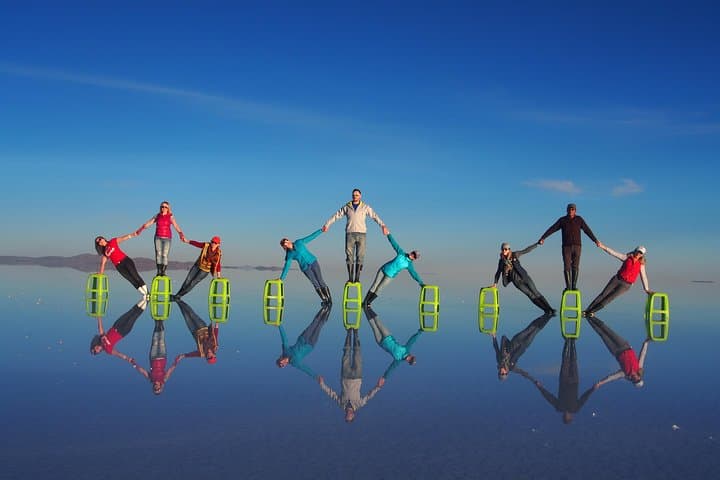
Expect short walks across salt crust, a climb of several dozen meters on Incahuasi to stand among giant cacti, and wide-open views where the sky and ground briefing each other. The mirror effect appears in the wet season when a thin sheen of water turns the salar into a vast reflector; the dry season exposes the textured hexagonal crust.
Practically: this is a long, mostly low-effort day—transport is private and included, and lunch is provided. Protect against altitude and sun: UV is fierce, the wind can be abrupt, and temperatures swing across the day. Bring layers, water, and a charged camera—composition changes with every angle. Guides keep the group on established tracks to protect the crust and local grazing areas. A one-day tour gives a compact but complete introduction to the Salar de Uyuni’s stark landscape and human history.
moderate.
8–9 hours.
Suitable for travelers with basic mobility and stamina to stand and walk short uneven sections; not technically demanding.
The tour runs approximately 8–9 hours (480–540 minutes), typically returning to Uyuni after sunset.
The mirror effect happens in the wet season (roughly December–March) when a thin layer of water covers the salar; dry-season tours show the hexagonal salt crust instead.
Yes—Uyuni sits above 3,600 m; shortness of breath and headaches are possible. Hydrate, avoid heavy exertion before the tour, and inform your guide of any symptoms.
Basic facilities are available at Colchani and Playa Blanca; lunch is included on the tour but bring snacks and water for personal needs.
The salar is a relic of prehistoric Lake Minchin and has long been used for salt extraction by indigenous communities; the Train Cemetery reflects Uyuni’s early 20th-century push to industrialize mineral transport.
The salt crust is fragile—stay on established routes, take all trash with you, and support local operators who follow waste-management and community-benefit practices.
Salt Eyes Expeditions operates guided outdoor trips and adventures with an emphasis on safety, stewardship, and memorable experiences.
The horizon here seems to roll like a white ocean; the salt crust crunches underfoot and the sun throws a hard, clean light that dares you to blink.
The horizon here seems to roll like a white ocean; the salt crust crunches underfoot and the sun throws a hard, clean light that dares you to blink.
This full-day circuit from Uyuni threads together the Train Cemetery, Colchani salt-works, Ojos de Sal, Playa Blanca, and Isla Incahuasi before pausing for the Salar’s long, slow sunset. Geologically the flats are the remnant of a prehistoric lakebed—an almost perfectly level salt pan that expands across 10,000 square kilometers. Culturally, the area balances Aymara and Quechua communities’ traditional salt harvesting with the odd relic of 20th-century rail ambition at the cemetery.
Expect short walks across salt crust, a climb of several dozen meters on Incahuasi to stand among giant cacti, and wide-open views where the sky and ground briefing each other. The mirror effect appears in the wet season when a thin sheen of water turns the salar into a vast reflector; the dry season exposes the textured hexagonal crust.
Practically: this is a long, mostly low-effort day—transport is private and included, and lunch is provided. Protect against altitude and sun: UV is fierce, the wind can be abrupt, and temperatures swing across the day. Bring layers, water, and a charged camera—composition changes with every angle. Guides keep the group on established tracks to protect the crust and local grazing areas. A one-day tour gives a compact but complete introduction to the Salar de Uyuni’s stark landscape and human history.