THE ADVENTURE COLLECTIVE® · Independent discovery and booking for outdoor travel

Spend a long, vivid day walking the Truso Valley from Stepantsminda: travertine pools, Keterisi Monastery, Kasari Canyon and the Zakagori Fortress. This easy-but-lengthy 22 km route delivers dramatic geology, mountain culture and picnic-ready natural pools.
Spend a long, vivid day walking the Truso Valley from Stepantsminda: travertine pools, Keterisi Monastery, Kasari Canyon and the Zakagori Fortress. This easy-but-lengthy 22 km route delivers dramatic geology, mountain culture and picnic-ready natural pools.
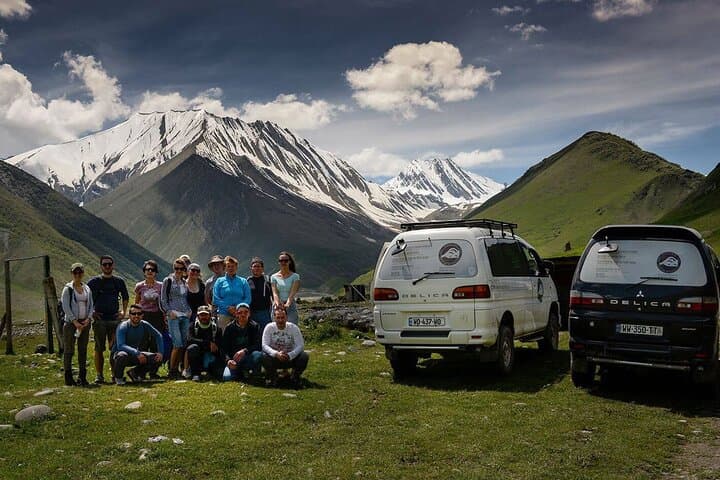
You climb into a 4x4 before dawn and the road pushes you up into stone and sky. By the time the valley opens, a braided river is daring you forward; mineral springs steam and the travertine steps glint like pale cliffs cut by time. The trail leaves villages behind and threads plains rimmed by volcanic ridges and jagged peaks.
Verified experiences and guided adventures in the surrounding area.
Operated by Mountain Freaks · Stepantsminda, Mtskheta-Mtianeti
You climb into a 4x4 before dawn and the road pushes you up into stone and sky. By the time the valley opens, a braided river is daring you forward; mineral springs steam and the travertine steps glint like pale cliffs cut by time. The trail leaves villages behind and threads plains rimmed by volcanic ridges and jagged peaks.
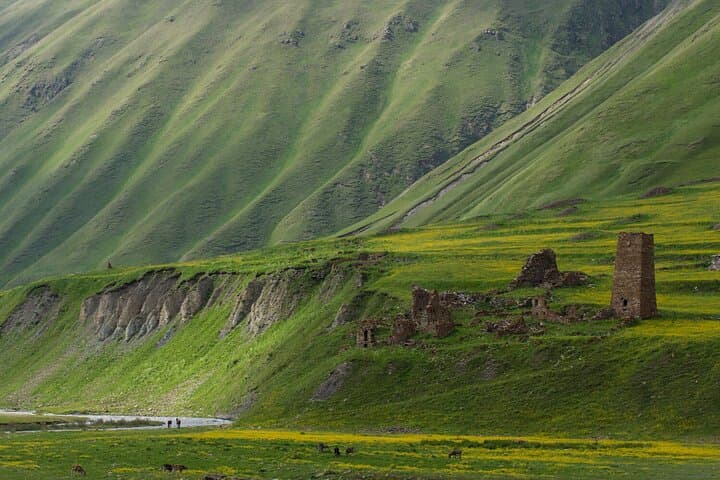
Truso has long been a corridor for shepherds and seasonal travelers; scattered ruins, Keterisi Monastery and the Zakagori Fortress speak to medieval border life and more recent military watchfulness along the Russian frontier. Geologically the valley is notable for travertine terraces formed as mineral-rich waters deposit calcium carbonate, and for a river that alternates between slow pools and quick, urgent channels.
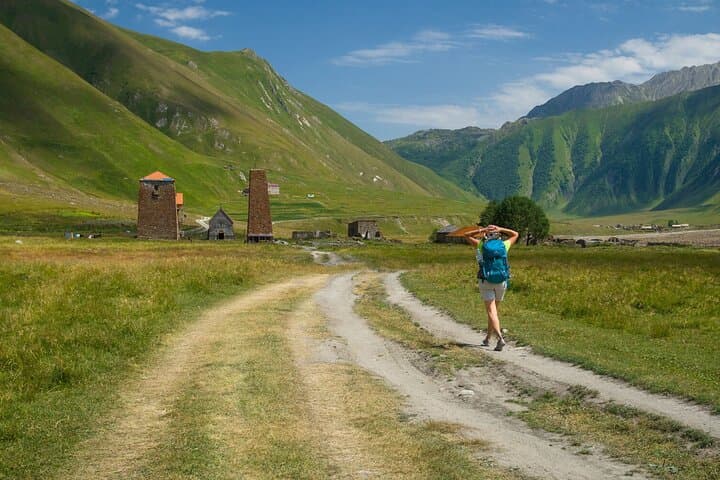
Culturally you'll meet shepherds tending flocks and find simple stone chapels; the abandoned villages reveal traditional stonework and seasonal Alpine pastures. The day tour covers roughly 22 km on mostly flat ground, about 7 hours of walking plus roughly an hour of driving each way from Stepantsminda. Expect a long, rewarding day: picnic at a natural pool, explore Keterisi and Kasari Canyon, and finish at the Zakagori viewpoint.
Practically, start early, bring 2–3 liters of water, layered rainproof clothing, sturdy trekking shoes and sun protection. The route is straightforward but exposed; weather changes fast and some sections pass close to military areas—observe signs and stay with the guide. If you want photos, plan stops for the travertine formations and the mineral lake when light is soft. This is a long, low-gradient walk that rewards endurance with open light and sweeping, uncompromised mountain scenery.
moderate.
7–8 hours.
Good endurance for a long day of walking; route is low-gradient but 22 km requires steady pacing
The walking portion is about 22 km and roughly 7 hours; terrain is mostly flat but the distance makes it moderately challenging—good endurance is needed.
No tourist permit is typically required for the Truso route, but parts approach military zones—follow guide instructions and posted signs.
Small children can come in carriers and some sections are stroller-accessible, but the full 22 km day is physically demanding for young kids.
Facilities are minimal; the tour includes a picnic stop so bring snacks and any dietary needs—drinkable water isn’t guaranteed on route.
Truso has served for centuries as a seasonal pasture corridor and borderland; Zakagori Fortress and local monasteries reflect medieval strategic and religious presence.
Travertine deposits are delicate—stay on trails to avoid breaking new formations, carry out all waste, and minimize disturbance to grazing areas.
Mountain Freaks operates guided outdoor trips and adventures with an emphasis on safety, stewardship, and memorable experiences.
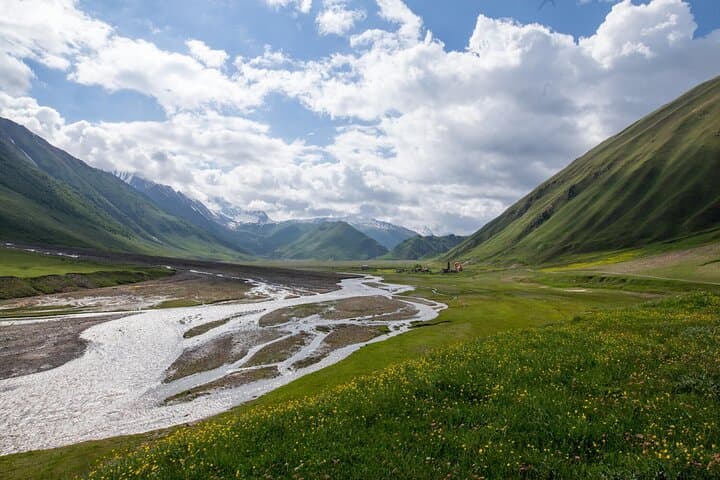
You climb into a 4x4 before dawn and the road pushes you up into stone and sky. By the time the valley opens, a braided river is daring you forward; mineral springs steam and the travertine steps glint like pale cliffs cut by time. The trail leaves villages behind and threads plains rimmed by volcanic ridges and jagged peaks.
You climb into a 4x4 before dawn and the road pushes you up into stone and sky. By the time the valley opens, a braided river is daring you forward; mineral springs steam and the travertine steps glint like pale cliffs cut by time. The trail leaves villages behind and threads plains rimmed by volcanic ridges and jagged peaks.
Truso has long been a corridor for shepherds and seasonal travelers; scattered ruins, Keterisi Monastery and the Zakagori Fortress speak to medieval border life and more recent military watchfulness along the Russian frontier. Geologically the valley is notable for travertine terraces formed as mineral-rich waters deposit calcium carbonate, and for a river that alternates between slow pools and quick, urgent channels.
Culturally you'll meet shepherds tending flocks and find simple stone chapels; the abandoned villages reveal traditional stonework and seasonal Alpine pastures. The day tour covers roughly 22 km on mostly flat ground, about 7 hours of walking plus roughly an hour of driving each way from Stepantsminda. Expect a long, rewarding day: picnic at a natural pool, explore Keterisi and Kasari Canyon, and finish at the Zakagori viewpoint.
Practically, start early, bring 2–3 liters of water, layered rainproof clothing, sturdy trekking shoes and sun protection. The route is straightforward but exposed; weather changes fast and some sections pass close to military areas—observe signs and stay with the guide. If you want photos, plan stops for the travertine formations and the mineral lake when light is soft. This is a long, low-gradient walk that rewards endurance with open light and sweeping, uncompromised mountain scenery.