THE ADVENTURE COLLECTIVE® · Independent discovery and booking for outdoor travel

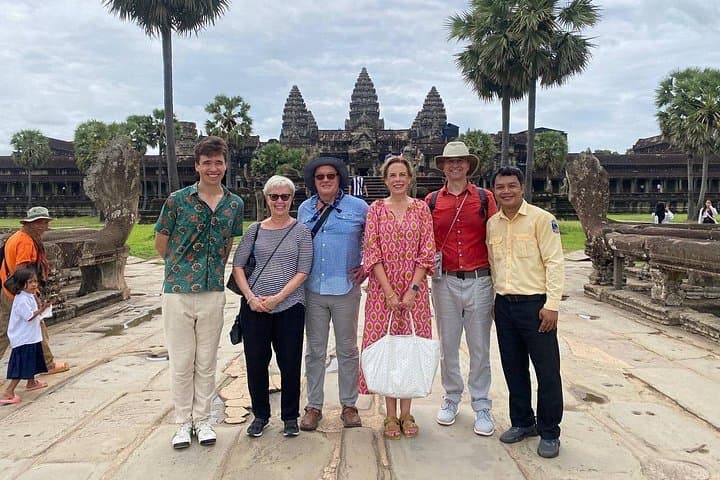
Watch Angkor Wat bloom at sunrise, then move through Bayon’s face‑lined galleries and Ta Prohm’s root‑choked sanctuaries on a private one‑day circuit. This tour packs the highlights into a single, manageable day for first‑time visitors.
Watch Angkor Wat bloom at sunrise, then move through Bayon’s face‑lined galleries and Ta Prohm’s root‑choked sanctuaries on a private one‑day circuit. This tour packs the highlights into a single, manageable day for first‑time visitors.
You stand at the edge of Angkor Wat’s reflecting pool at 4:30 a.m., the first light dragging the carved towers out of shadow while the moat breathes mist onto the stone. The guide times the silence: photographers lean in, monks in saffron move like punctuation, and the temple slowly takes shape against a pale sky.
Verified experiences and guided adventures in the surrounding area.
Operated by Siem Reap Private Tours · Siem Reap, Siem Reap Province
You stand at the edge of Angkor Wat’s reflecting pool at 4:30 a.m., the first light dragging the carved towers out of shadow while the moat breathes mist onto the stone. The guide times the silence: photographers lean in, monks in saffron move like punctuation, and the temple slowly takes shape against a pale sky.
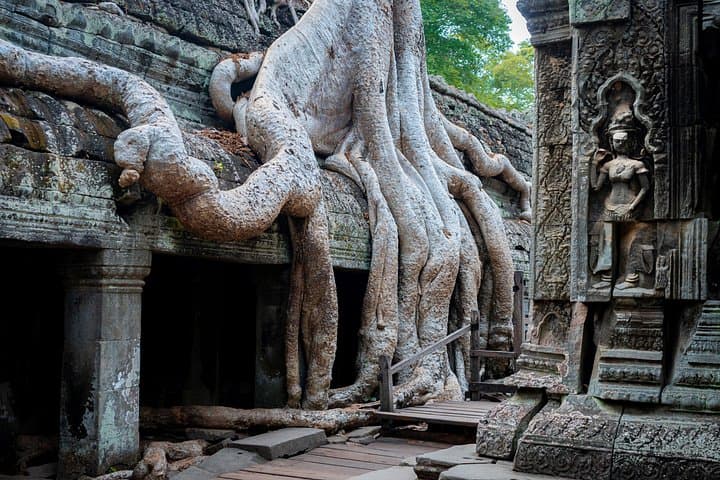
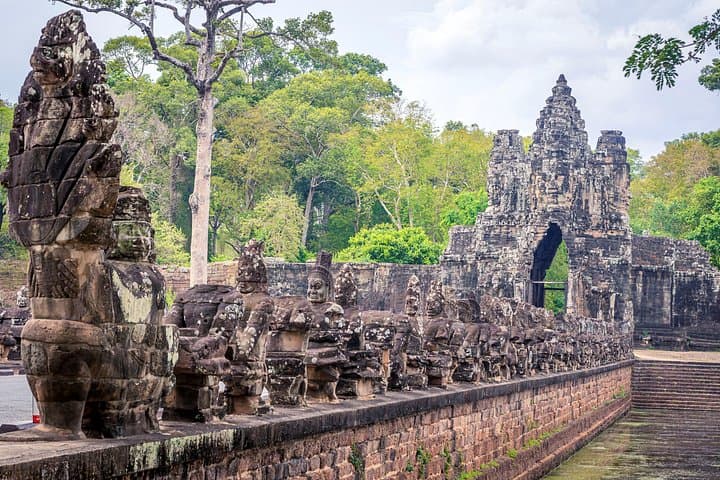
This private, full-day circuit stitches together Angkor Wat, the south gate of Angkor Thom and the Bayon’s forest of stone faces, Ta Prohm with its kapok roots draping galleries, and nearby village stops that show rural life along the Siem Reap plains. Geologically the plain is flat alluvium; the grandeur comes from human engineering—barays, causeways and sandstone quarried and embossed in the 12th century under Khmer kings.
Culturally the ruins are Buddhist and Hindu palimpsests: Bayon’s smiling faces were commissioned by Jayavarman VII; Angkor Wat’s bas-reliefs narrate myth and history. Local villages still weave silk, tend rice paddies and welcome brief visits from touring groups.
Practically, expect 7–8 hours on private transport with multiple short walks on packed earth and stone steps—minimal elevation change but many uneven surfaces. Bring a permit (Angkor pass), a change of modest clothing for temple etiquette, and plan lunch near the park. The morning is heavy with tourists; time your temple order to avoid the midday crush. Hydrate—cold water and towels are usually provided on private tours—and wear shoes that handle stone and sticky humidity. With the right prep, a one-day private tour gives a compact, sensory-first introduction to Angkor’s scale, craft and living cultural landscape.
moderate.
7–8 hours.
Requires moderate fitness for multiple short walks, stair climbs and standing; comfortable walking for several hours.
Yes — an Angkor pass (1‑day, 3‑day or 7‑day) is required for temple entry and is typically purchased at the official ticket center before entering the park.
Tours often start around 4:30 a.m. to reach Angkor Wat for sunrise when light and crowds are optimal; expect a 7–8 hour full day with breaks.
Walks are generally short on packed earth and stone with many stairs at temple galleries; no technical climbing is required but mobility on uneven surfaces is necessary.
Lunch is usually at a local restaurant near the park and may be included depending on the operator; confirm with your booking and advise dietary needs in advance.
Angkor was the heart of the Khmer Empire (9th–15th centuries); many major monuments date to the 12th century when stone architecture and hydraulic engineering reached their peak.
Tourism revenue helps fund the APSARA Authority’s conservation work, but visitors should stick to marked paths, avoid touching bas‑reliefs and support local businesses to reduce impact.
Siem Reap Private Tours operates guided outdoor trips and adventures with an emphasis on safety, stewardship, and memorable experiences.
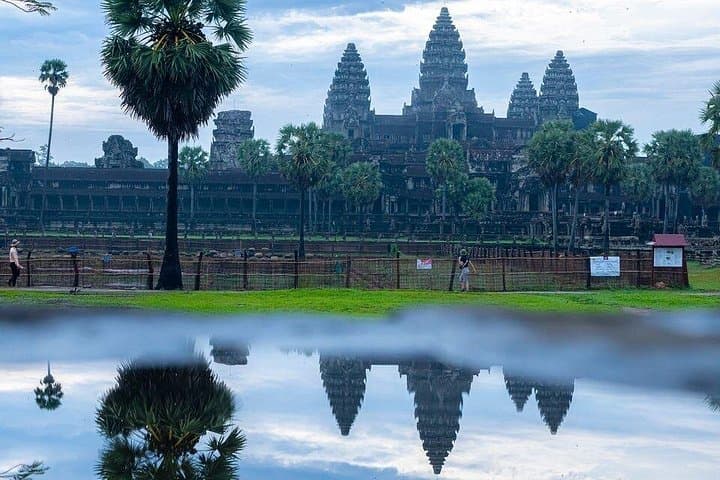
You stand at the edge of Angkor Wat’s reflecting pool at 4:30 a.m., the first light dragging the carved towers out of shadow while the moat breathes mist onto the stone. The guide times the silence: photographers lean in, monks in saffron move like punctuation, and the temple slowly takes shape against a pale sky.
You stand at the edge of Angkor Wat’s reflecting pool at 4:30 a.m., the first light dragging the carved towers out of shadow while the moat breathes mist onto the stone. The guide times the silence: photographers lean in, monks in saffron move like punctuation, and the temple slowly takes shape against a pale sky.
This private, full-day circuit stitches together Angkor Wat, the south gate of Angkor Thom and the Bayon’s forest of stone faces, Ta Prohm with its kapok roots draping galleries, and nearby village stops that show rural life along the Siem Reap plains. Geologically the plain is flat alluvium; the grandeur comes from human engineering—barays, causeways and sandstone quarried and embossed in the 12th century under Khmer kings.
Culturally the ruins are Buddhist and Hindu palimpsests: Bayon’s smiling faces were commissioned by Jayavarman VII; Angkor Wat’s bas-reliefs narrate myth and history. Local villages still weave silk, tend rice paddies and welcome brief visits from touring groups.
Practically, expect 7–8 hours on private transport with multiple short walks on packed earth and stone steps—minimal elevation change but many uneven surfaces. Bring a permit (Angkor pass), a change of modest clothing for temple etiquette, and plan lunch near the park. The morning is heavy with tourists; time your temple order to avoid the midday crush. Hydrate—cold water and towels are usually provided on private tours—and wear shoes that handle stone and sticky humidity. With the right prep, a one-day private tour gives a compact, sensory-first introduction to Angkor’s scale, craft and living cultural landscape.