THE ADVENTURE COLLECTIVE® · Independent discovery and booking for outdoor travel

Spend a single, well-paced day exploring Giza’s pyramids, the Step Pyramid at Saqqara, and the open-air museum at Memphis. This private tour pairs flexible pickup with guided context — great for first-time visitors who want history, scale, and efficient logistics.
Spend a single, well-paced day exploring Giza’s pyramids, the Step Pyramid at Saqqara, and the open-air museum at Memphis. This private tour pairs flexible pickup with guided context — great for first-time visitors who want history, scale, and efficient logistics.
The morning light slides across the limestone faces of the Giza Plateau, turning stone into a palette of ochre and gold. Visitors arrive by air-conditioned vehicle, stepping from the car to stand beneath the Great Pyramid’s monumental shadow and feel the desert wind press against the centuries-old blocks.
Verified experiences and guided adventures in the surrounding area.
Operated by Wonders of Egypt · Giza, Giza Governorate
The morning light slides across the limestone faces of the Giza Plateau, turning stone into a palette of ochre and gold. Visitors arrive by air-conditioned vehicle, stepping from the car to stand beneath the Great Pyramid’s monumental shadow and feel the desert wind press against the centuries-old blocks.
This looped day ties three epochs of ancient Egypt into a single route: Giza’s Old Kingdom giants — Khufu, Khafre and Menkaure — the lion-bodied Great Sphinx, then southward to Saqqara where Djoser’s Step Pyramid marks the birth of large-scale stone architecture. Memphis, Egypt’s first capital, closes the circuit with open-air remains and a colossal Ramses II statue that still looms like a memory of imperial ritual.
Geologically, the sites sit on a mix of Nile alluvial plains and Eocene limestone; quarry scars and reuse of stone across sites tell the story of continual recycling. Culturally, local guides interpret funerary practices, the role of the Nile in sustaining civilization, and modern Egyptian efforts to conserve fragile reliefs.
Practical advice: plan for a 7–8 hour day with periods of standing and uneven walking. Wear sturdy, closed shoes and a wide-brim hat; the sun will be assertive. Carry cash for site admissions, tips, and optional extras like museum entry or camel photos. Hydrate frequently — bottled water is usually provided but bring a refillable bottle if you prefer to reduce waste.
Timing matters: visit early to avoid the hottest hours and busiest crowds, and confirm pickup details with the operator. Respect roped-off areas and artifacts; treating fragile sites as working archaeological places helps keep them open for future travelers.
easy.
7 hours.
Suitable for most fitness levels; requires standing and walking on uneven ground for several hours in warm conditions.
Admission fees are generally not included; bring cash for tickets to the pyramids, Saqqara, and any optional museum entries unless your booking specifies otherwise.
Yes — the tour includes private, air-conditioned vehicle transport with hotel pickup and drop-off in Cairo or Giza.
Camel rides are offered locally but are not included in the standard tour; negotiate price on-site and be aware animal welfare and safety standards vary.
Infants can ride in strollers and are required to sit on an adult’s lap for transport, but expect uneven terrain at archaeological sites that may limit stroller access.
Giza’s pyramids are Old Kingdom royal tombs (Khufu’s Great Pyramid is the largest), Saqqara holds Djoser’s Step Pyramid—the earliest large stone construction—and Memphis served as Egypt’s administrative capital for millennia.
Sites face erosion, pollution, and visitor pressure; follow rope lines, avoid touching reliefs, and minimize single-use plastic to reduce your impact.
Wonders of Egypt operates guided outdoor trips and adventures with an emphasis on safety, stewardship, and memorable experiences.

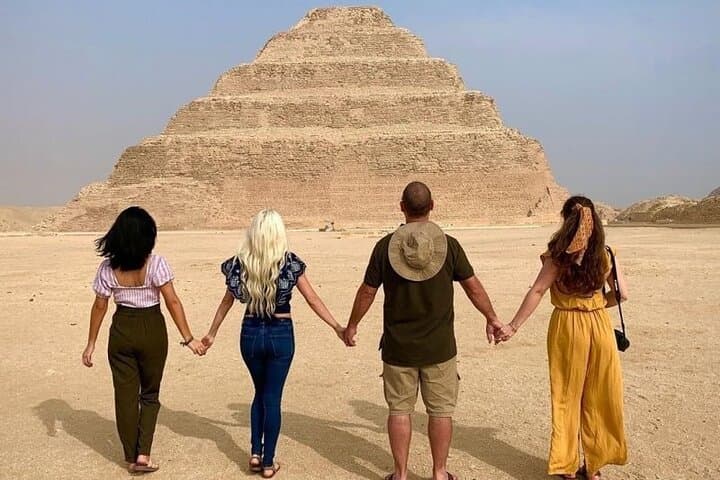
The morning light slides across the limestone faces of the Giza Plateau, turning stone into a palette of ochre and gold. Visitors arrive by air-conditioned vehicle, stepping from the car to stand beneath the Great Pyramid’s monumental shadow and feel the desert wind press against the centuries-old blocks.
The morning light slides across the limestone faces of the Giza Plateau, turning stone into a palette of ochre and gold. Visitors arrive by air-conditioned vehicle, stepping from the car to stand beneath the Great Pyramid’s monumental shadow and feel the desert wind press against the centuries-old blocks.
This looped day ties three epochs of ancient Egypt into a single route: Giza’s Old Kingdom giants — Khufu, Khafre and Menkaure — the lion-bodied Great Sphinx, then southward to Saqqara where Djoser’s Step Pyramid marks the birth of large-scale stone architecture. Memphis, Egypt’s first capital, closes the circuit with open-air remains and a colossal Ramses II statue that still looms like a memory of imperial ritual.
Geologically, the sites sit on a mix of Nile alluvial plains and Eocene limestone; quarry scars and reuse of stone across sites tell the story of continual recycling. Culturally, local guides interpret funerary practices, the role of the Nile in sustaining civilization, and modern Egyptian efforts to conserve fragile reliefs.
Practical advice: plan for a 7–8 hour day with periods of standing and uneven walking. Wear sturdy, closed shoes and a wide-brim hat; the sun will be assertive. Carry cash for site admissions, tips, and optional extras like museum entry or camel photos. Hydrate frequently — bottled water is usually provided but bring a refillable bottle if you prefer to reduce waste.
Timing matters: visit early to avoid the hottest hours and busiest crowds, and confirm pickup details with the operator. Respect roped-off areas and artifacts; treating fragile sites as working archaeological places helps keep them open for future travelers.