THE ADVENTURE COLLECTIVE® · Independent discovery and booking for outdoor travel

See two of Jordan’s greatest landscapes in a single, long day: walk through Petra’s Siq to the Treasury with a private guide, then watch Wadi Rum’s dunes erupt in color at sunset. This private tour packs history, geology and local Bedouin hospitality into a 14–15 hour itinerary.
See two of Jordan’s greatest landscapes in a single, long day: walk through Petra’s Siq to the Treasury with a private guide, then watch Wadi Rum’s dunes erupt in color at sunset. This private tour packs history, geology and local Bedouin hospitality into a 14–15 hour itinerary.
You step from the narrow, shadowed throat of the Siq and the sandstone opens like a theater curtain: the Treasury’s carved façade warms from pale rose to molten ochre in the morning light. This is Petra’s opening act—an hour here will feel like a lifetime of discovery as you and a private guide thread through Roman-era streets, climb to tombs cut into the cliff face, and listen to the canyon breathe around you.
Verified experiences and guided adventures in the surrounding area.
Operated by Petra Limo · Wadi Musa, Ma'an Governorate
You step from the narrow, shadowed throat of the Siq and the sandstone opens like a theater curtain: the Treasury’s carved façade warms from pale rose to molten ochre in the morning light. This is Petra’s opening act—an hour here will feel like a lifetime of discovery as you and a private guide thread through Roman-era streets, climb to tombs cut into the cliff face, and listen to the canyon breathe around you.
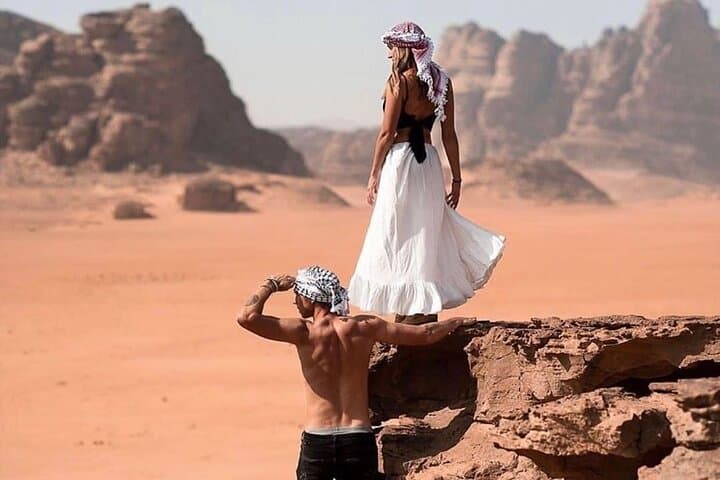
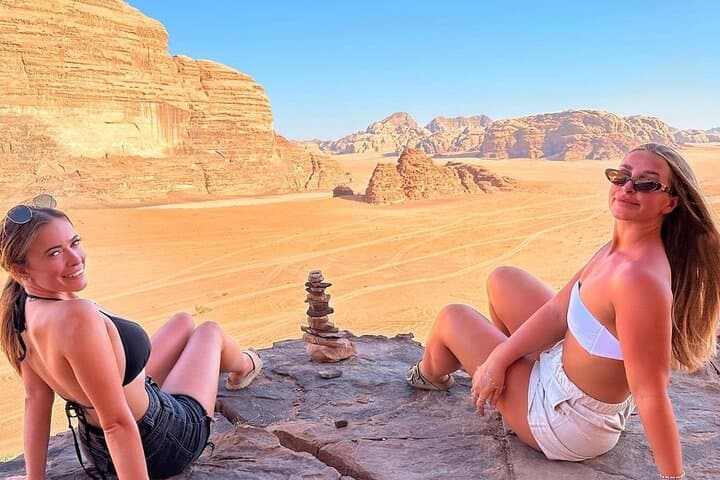
Petra and Wadi Rum sit on the edge of different geologic stories. Petra is the carved, rain-worn work of Nabataean engineers who chiseled water channels and façades out of Jurassic sandstone; Wadi Rum is a wind-sculpted sea of granite and sandstone towers where dunes shift like slow tides. The sites also carry layered human histories: Nabataeans who made Petra a trading hub, Roman occupiers who added theaters and columns, and the Bedouin of Wadi Rum whose knowledge of the desert shaped Lawrence of Arabia’s legend.
A one-day private tour from Amman compresses both worlds into a long, intentional day. Expect roughly three hours’ drive from Amman to Petra and about 1.5–2 hours to transfer from Petra to Wadi Rum; total trip time runs 14–15 hours door to door. At Petra, the Siq is about 1.2 km to the Treasury and visitors commonly walk 3–5 km exploring the Street of Facades, Roman theater and Royal Tombs—some sections include uneven stone, narrow steps and short scrambles. Wadi Rum’s flat, open vistas are easier on the feet, but the desert’s daytime heat demands planning.
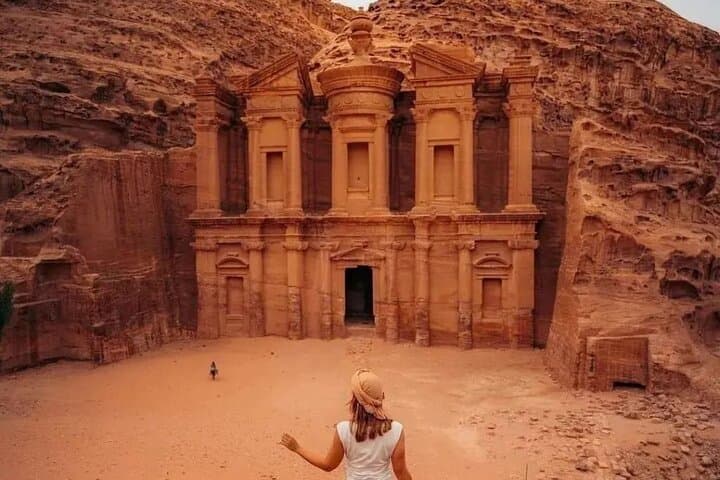
Local insight: Bedouin guides and camp operators offer perspectives older than the modern tour economy—ask about the High Place of Sacrifice in Petra for a quieter overlook, and seek out a brief tea stop at a Wadi Rum camp to hear local desert stories. Conservation is a live issue: stay on marked routes in Petra, avoid touching carved surfaces, and support community-run camps in the Rum to ensure tourism benefits local livelihoods.
Practical advice: start very early, bring 2–3 liters of water, wear sturdy shoes and sun protection, and carry local currency—the entrance fee isn’t included. If you plan to use the Jordan Pass (which covers Petra entry and can waive visa fees), buy it before arrival. Your private driver and guide will handle logistics, but comfortable pacing and realistic expectations about driving time will make the day rewarding rather than rushed. For photographers, morning light at the Treasury and sunset on Wadi Rum’s red dunes are the day’s bookends—pack batteries and be ready to switch from narrow canyon compositions to wide desert panoramas.
moderate.
14–15 hours.
Moderate fitness—able to walk 3–5 km on uneven terrain and tolerate long periods in a vehicle
No—admission to Petra and optional charges in Wadi Rum are not included; consider buying the Jordan Pass in advance to cover Petra.
Plan for about a 3-hour drive from Amman to Petra; transfers to Wadi Rum are typically 1.5–2 hours depending on route and traffic.
The tour is private and adaptable, but Petra involves uneven paths; participants should be comfortable walking and standing for several hours.
Some vehicle and site approaches can be accessible, but much of Petra’s interior has steps and rough surfaces—check specific accessibility needs with the supplier.
The tour includes private transportation only; plan to buy lunch in Petra and tea or snacks at a Wadi Rum camp—pack snacks if you prefer specific dietary choices.
Expect a very early pickup from Amman (often before sunrise) to maximize time at Petra and reach Wadi Rum for sunset.
Petra was the Nabataean capital and a trade crossroads; Wadi Rum’s Bedouin culture and its links to T.E. Lawrence give the desert a modern mythos.
Tourism revenue supports local Bedouin camps but heavy foot traffic threatens sandstone surfaces—stay on marked routes and avoid climbing façades.
Petra Limo operates guided outdoor trips and adventures with an emphasis on safety, stewardship, and memorable experiences.
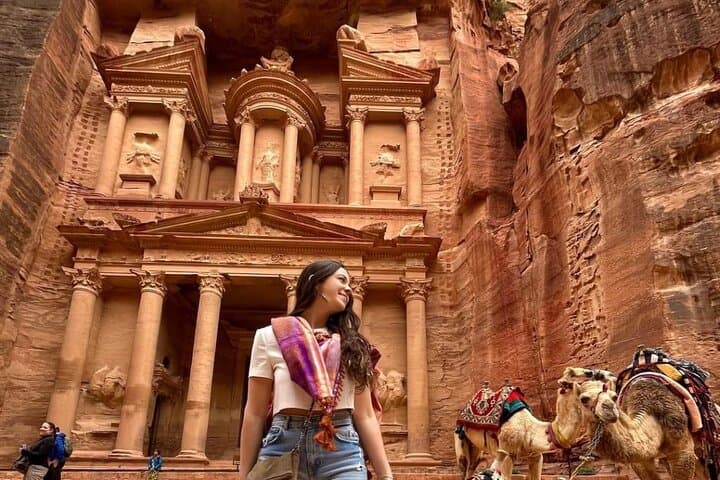
You step from the narrow, shadowed throat of the Siq and the sandstone opens like a theater curtain: the Treasury’s carved façade warms from pale rose to molten ochre in the morning light. This is Petra’s opening act—an hour here will feel like a lifetime of discovery as you and a private guide thread through Roman-era streets, climb to tombs cut into the cliff face, and listen to the canyon breathe around you.
You step from the narrow, shadowed throat of the Siq and the sandstone opens like a theater curtain: the Treasury’s carved façade warms from pale rose to molten ochre in the morning light. This is Petra’s opening act—an hour here will feel like a lifetime of discovery as you and a private guide thread through Roman-era streets, climb to tombs cut into the cliff face, and listen to the canyon breathe around you.
Petra and Wadi Rum sit on the edge of different geologic stories. Petra is the carved, rain-worn work of Nabataean engineers who chiseled water channels and façades out of Jurassic sandstone; Wadi Rum is a wind-sculpted sea of granite and sandstone towers where dunes shift like slow tides. The sites also carry layered human histories: Nabataeans who made Petra a trading hub, Roman occupiers who added theaters and columns, and the Bedouin of Wadi Rum whose knowledge of the desert shaped Lawrence of Arabia’s legend.
A one-day private tour from Amman compresses both worlds into a long, intentional day. Expect roughly three hours’ drive from Amman to Petra and about 1.5–2 hours to transfer from Petra to Wadi Rum; total trip time runs 14–15 hours door to door. At Petra, the Siq is about 1.2 km to the Treasury and visitors commonly walk 3–5 km exploring the Street of Facades, Roman theater and Royal Tombs—some sections include uneven stone, narrow steps and short scrambles. Wadi Rum’s flat, open vistas are easier on the feet, but the desert’s daytime heat demands planning.
Local insight: Bedouin guides and camp operators offer perspectives older than the modern tour economy—ask about the High Place of Sacrifice in Petra for a quieter overlook, and seek out a brief tea stop at a Wadi Rum camp to hear local desert stories. Conservation is a live issue: stay on marked routes in Petra, avoid touching carved surfaces, and support community-run camps in the Rum to ensure tourism benefits local livelihoods.
Practical advice: start very early, bring 2–3 liters of water, wear sturdy shoes and sun protection, and carry local currency—the entrance fee isn’t included. If you plan to use the Jordan Pass (which covers Petra entry and can waive visa fees), buy it before arrival. Your private driver and guide will handle logistics, but comfortable pacing and realistic expectations about driving time will make the day rewarding rather than rushed. For photographers, morning light at the Treasury and sunset on Wadi Rum’s red dunes are the day’s bookends—pack batteries and be ready to switch from narrow canyon compositions to wide desert panoramas.