THE ADVENTURE COLLECTIVE® · Independent discovery and booking for outdoor travel

Travel from Amman to Petra in a single day and step through Al Siq into the rose-red world of the Nabataeans. This guided tour includes transport, lunch and entrance — ideal for travelers short on time but keen to see Petra’s signature sites.
Travel from Amman to Petra in a single day and step through Al Siq into the rose-red world of the Nabataeans. This guided tour includes transport, lunch and entrance — ideal for travelers short on time but keen to see Petra’s signature sites.
Dust from the Desert Highway lifts as your vehicle drops you at the edge of Wadi Musa; the town's low buildings and fluttering prayer flags give way to red sandstone cliffs that seem to hold their breath. You enter Petra through Al Siq, a narrow fissure that funnels shade and light, and then the Treasury appears — carved rock meeting human intention — daring you forward.
Verified experiences and guided adventures in the surrounding area.
Operated by GO Aqaba Travel & Tourism · Wadi Musa, Ma'an
Dust from the Desert Highway lifts as your vehicle drops you at the edge of Wadi Musa; the town's low buildings and fluttering prayer flags give way to red sandstone cliffs that seem to hold their breath. You enter Petra through Al Siq, a narrow fissure that funnels shade and light, and then the Treasury appears — carved rock meeting human intention — daring you forward.
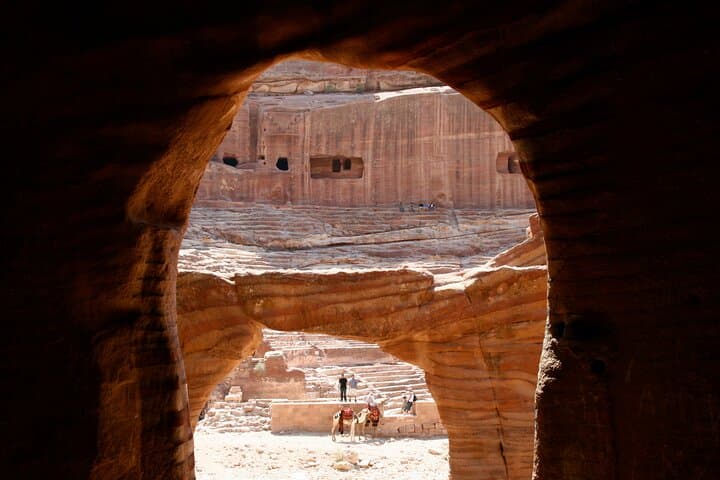
Petra was carved by the Nabataeans more than 2,000 years ago and served as a hub on ancient trade routes, including caravan links that fed the Silk Road. Geologically, the rose-red sandstone here records layered mineral bands and wind-polished faces; erosion keeps revealing chambers, steps and niches. Wadi Musa (Moses Valley) is the staging town for hotels and supplies, and nearby excavations at Beida and Basta show human presence in this region for millennia.
On a one-day tour from Amman (7–9 hours including drive), expect about three hours guided in the main archaeological area: walking uneven stone, climbing carved stairways to viewpoints, and threading Al Siq’s cool corridor. The pace is brisk—bring a daypack, at least 2 liters of water, sun protection and shoes with reliable grip. Aim for an early start to avoid midday heat and busier periods; the light in late afternoon is best for photos but some sites may close earlier.
Practical notes: entrance fee is included on this tour, lunch and private air-conditioned transport are provided, and guides vary by group size. Respect marked paths, carry local currency for small purchases, and allow extra time for the drive back to Amman if traffic or weather delays occur.
moderate.
7–9 hours.
Comfortable walking fitness with ability to manage several flights of stone steps and uneven terrain for a few hours.
The transfer is roughly 3–4 hours each way via the Desert Highway (about 240 km); timing varies with traffic and route chosen (King’s Highway is longer but more scenic).
Yes — this tour lists the Petra entrance fee as included along with lunch and private transport.
Expect about three hours of walking on uneven stone paths and carved steps; there are optional climbs to viewpoints that increase exertion.
Basic facilities and food vendors exist near main visitor areas; this tour includes an open-buffet lunch as noted in the itinerary.
Petra was developed by the Nabataeans over 2,000 years ago as a fortified caravan city and is a UNESCO World Heritage site tied to ancient trade networks.
Foot traffic and erosion threaten fragile sandstone; stick to marked routes, avoid touching carved facades and carry out all trash to reduce impact.
GO Aqaba Travel & Tourism operates guided outdoor trips and adventures with an emphasis on safety, stewardship, and memorable experiences.
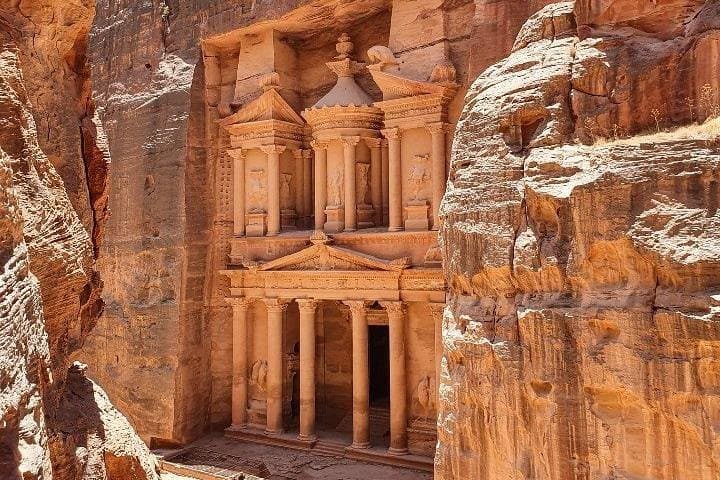
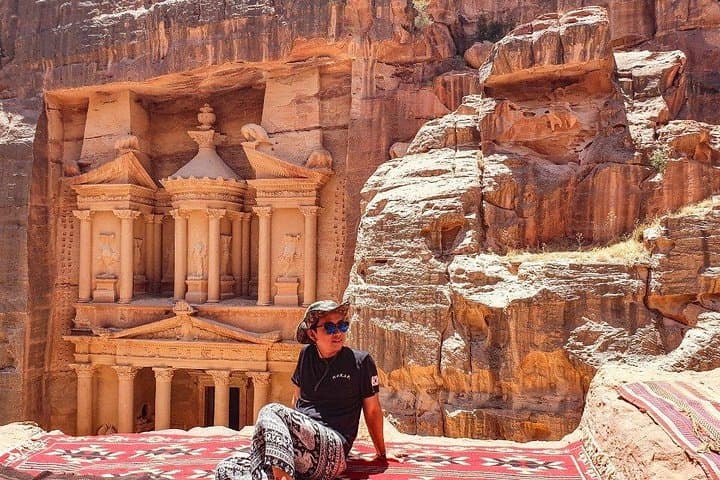
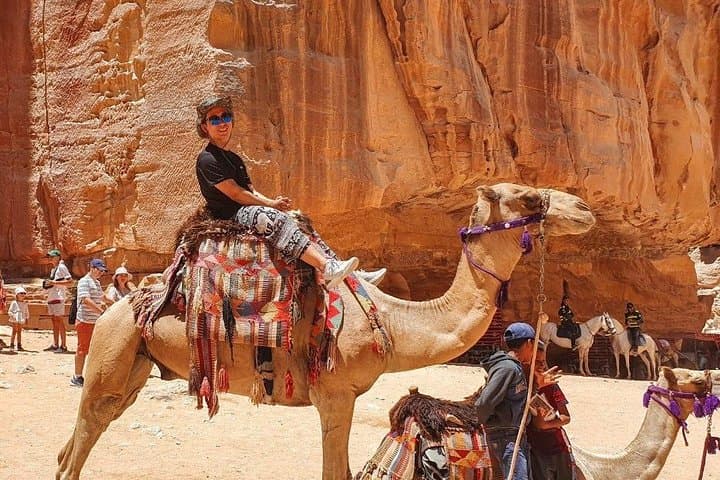
Dust from the Desert Highway lifts as your vehicle drops you at the edge of Wadi Musa; the town's low buildings and fluttering prayer flags give way to red sandstone cliffs that seem to hold their breath. You enter Petra through Al Siq, a narrow fissure that funnels shade and light, and then the Treasury appears — carved rock meeting human intention — daring you forward.
Dust from the Desert Highway lifts as your vehicle drops you at the edge of Wadi Musa; the town's low buildings and fluttering prayer flags give way to red sandstone cliffs that seem to hold their breath. You enter Petra through Al Siq, a narrow fissure that funnels shade and light, and then the Treasury appears — carved rock meeting human intention — daring you forward.
Petra was carved by the Nabataeans more than 2,000 years ago and served as a hub on ancient trade routes, including caravan links that fed the Silk Road. Geologically, the rose-red sandstone here records layered mineral bands and wind-polished faces; erosion keeps revealing chambers, steps and niches. Wadi Musa (Moses Valley) is the staging town for hotels and supplies, and nearby excavations at Beida and Basta show human presence in this region for millennia.
On a one-day tour from Amman (7–9 hours including drive), expect about three hours guided in the main archaeological area: walking uneven stone, climbing carved stairways to viewpoints, and threading Al Siq’s cool corridor. The pace is brisk—bring a daypack, at least 2 liters of water, sun protection and shoes with reliable grip. Aim for an early start to avoid midday heat and busier periods; the light in late afternoon is best for photos but some sites may close earlier.
Practical notes: entrance fee is included on this tour, lunch and private air-conditioned transport are provided, and guides vary by group size. Respect marked paths, carry local currency for small purchases, and allow extra time for the drive back to Amman if traffic or weather delays occur.