THE ADVENTURE COLLECTIVE® · Independent discovery and booking for outdoor travel

Combine Petra’s carved canyons with Wadi Rum’s desert panoramas on a single full-day private tour from Amman. Expect long walking stretches at Petra, a jeep-driven exploration of Wadi Rum, and essential tips for timing, tickets, and gear.
Combine Petra’s carved canyons with Wadi Rum’s desert panoramas on a single full-day private tour from Amman. Expect long walking stretches at Petra, a jeep-driven exploration of Wadi Rum, and essential tips for timing, tickets, and gear.
You step from an air-conditioned van into a corridor of stone: the Siq squeezes you between towering rose-red walls until the Treasury appears, baked and carved into the canyon like a memory made solid. Later, the desert opens—Wadi Rum’s sandstone ridges and wind-sculpted fins stretch to the horizon, and a jeep kicks up sand that dares you to look away.
Verified experiences and guided adventures in the surrounding area.
Operated by Jordan Gems Tours · Wadi Musa, Ma'an Governorate
You step from an air-conditioned van into a corridor of stone: the Siq squeezes you between towering rose-red walls until the Treasury appears, baked and carved into the canyon like a memory made solid. Later, the desert opens—Wadi Rum’s sandstone ridges and wind-sculpted fins stretch to the horizon, and a jeep kicks up sand that dares you to look away.
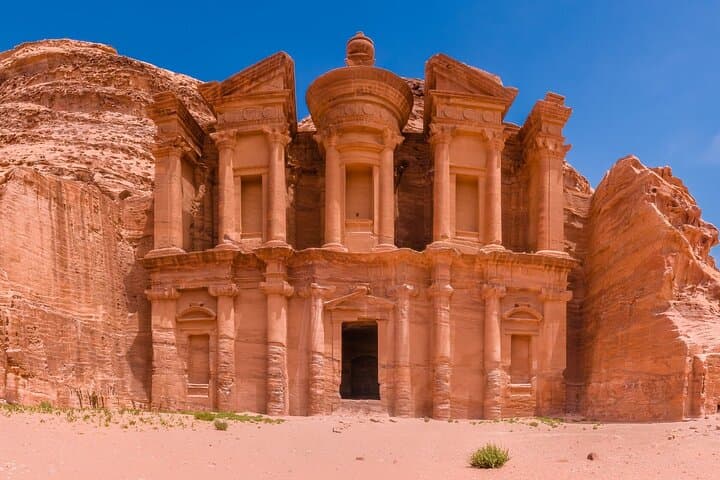
Petra was the Nabatean capital, a living archive of funerary facades and hydraulic ingenuity carved into Triassic sandstone. Wadi Rum’s landscape is younger in feel but older in geology: vast erosional forms, tafoni pockets and iron-rich strata that flare orange at sunset. Cultural threads bind both sites—ancient caravan routes in Petra and Bedouin hospitality in Wadi Rum—each offering a different chapter of Jordan’s human story.
Practicalities shape the day: expect a long itinerary (roughly 12–16 hours), with several hours of walking at Petra on uneven stone and a shorter, bouncy jeep loop in Wadi Rum. Petra admission is generally purchased separately (Jordan Pass recommended). Keep water, sun protection and sturdy shoes close; morning light favors the Treasury and late afternoon brings better color on the desert rock.
Timing matters—start early from Amman to avoid midday heat and crowds. Photography, respectful interaction with Bedouin hosts, and awareness of fragile archaeological sites make the experience richer for everyone. This is a full day of contrasts: carved silence in a canyon and the restless geology of the desert, joined by the practical rhythm of transit, ticketing, and simple local hospitality.
challenging.
12–16 hours.
Suitable for travelers with moderate to good fitness—able to walk several hours on uneven stone and tolerate long vehicle transfers.
Most operators do not include Petra entrance fees; buying a Jordan Pass ahead of time covers Petra admission and can save money.
Round-trip driving from Amman typically requires 3–4 hours each way depending on traffic; expect a full 12–16 hour day with sightseeing time included.
This tour includes bottled water and transport; meals are usually not included—there are restaurants in Wadi Musa (Petra) and simple options in Wadi Rum and along the route.
It can be suitable if participants have moderate mobility; Petra involves uneven terrain and many steps—discuss any mobility concerns with the operator during booking.
Petra was the Nabatean kingdom’s capital from the 4th century BCE, famed for its water management and rock-cut architecture; Wadi Rum has been inhabited and traversed by Bedouin tribes for millennia.
Both sites face pressures from tourism—stay on marked paths, avoid touching fragile facades, and follow local guidance to minimize impact.
Jordan Gems Tours operates guided outdoor trips and adventures with an emphasis on safety, stewardship, and memorable experiences.
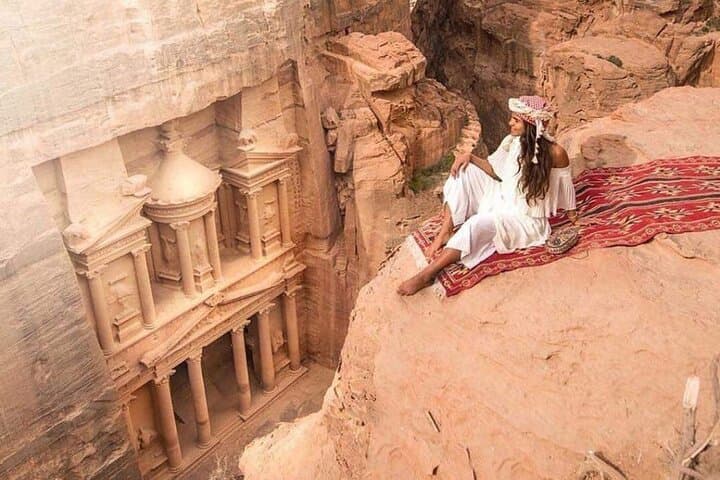
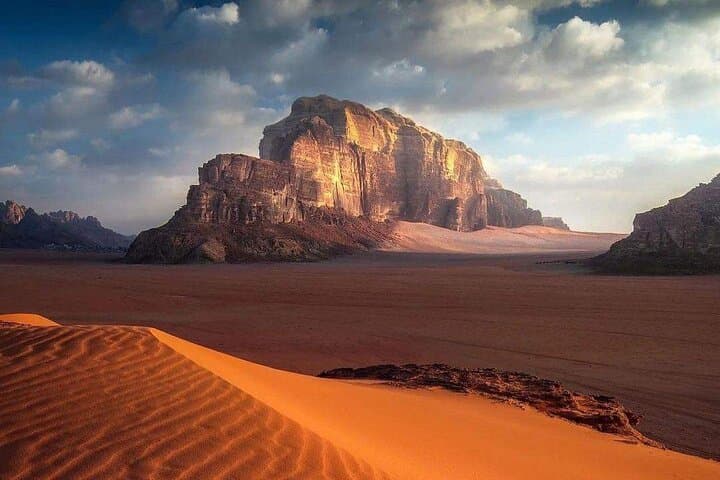
You step from an air-conditioned van into a corridor of stone: the Siq squeezes you between towering rose-red walls until the Treasury appears, baked and carved into the canyon like a memory made solid. Later, the desert opens—Wadi Rum’s sandstone ridges and wind-sculpted fins stretch to the horizon, and a jeep kicks up sand that dares you to look away.
You step from an air-conditioned van into a corridor of stone: the Siq squeezes you between towering rose-red walls until the Treasury appears, baked and carved into the canyon like a memory made solid. Later, the desert opens—Wadi Rum’s sandstone ridges and wind-sculpted fins stretch to the horizon, and a jeep kicks up sand that dares you to look away.
Petra was the Nabatean capital, a living archive of funerary facades and hydraulic ingenuity carved into Triassic sandstone. Wadi Rum’s landscape is younger in feel but older in geology: vast erosional forms, tafoni pockets and iron-rich strata that flare orange at sunset. Cultural threads bind both sites—ancient caravan routes in Petra and Bedouin hospitality in Wadi Rum—each offering a different chapter of Jordan’s human story.
Practicalities shape the day: expect a long itinerary (roughly 12–16 hours), with several hours of walking at Petra on uneven stone and a shorter, bouncy jeep loop in Wadi Rum. Petra admission is generally purchased separately (Jordan Pass recommended). Keep water, sun protection and sturdy shoes close; morning light favors the Treasury and late afternoon brings better color on the desert rock.
Timing matters—start early from Amman to avoid midday heat and crowds. Photography, respectful interaction with Bedouin hosts, and awareness of fragile archaeological sites make the experience richer for everyone. This is a full day of contrasts: carved silence in a canyon and the restless geology of the desert, joined by the practical rhythm of transit, ticketing, and simple local hospitality.