THE ADVENTURE COLLECTIVE® · Independent discovery and booking for outdoor travel

Spend a single, panoramic day moving from Petra’s narrow Siq and carved façades to the wide-open drama of Wadi Rum. This full-day tour from Aqaba combines guided history, a desert jeep ride, and sunset in the dunes—ideal for travelers who want a compact, high-impact Jordan experience.
Spend a single, panoramic day moving from Petra’s narrow Siq and carved façades to the wide-open drama of Wadi Rum. This full-day tour from Aqaba combines guided history, a desert jeep ride, and sunset in the dunes—ideal for travelers who want a compact, high-impact Jordan experience.
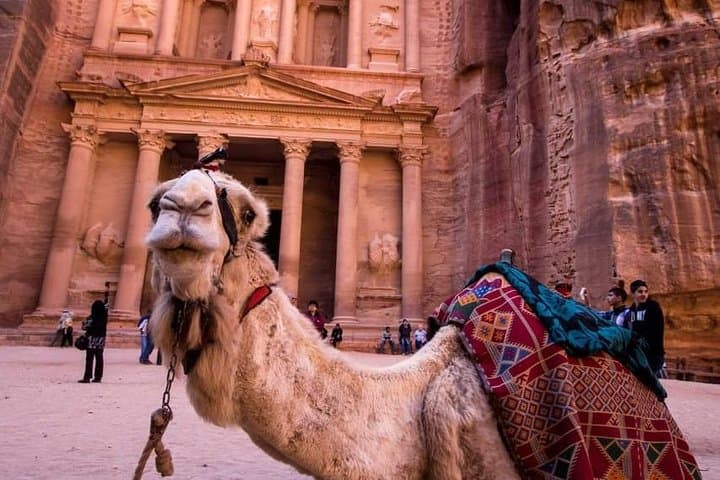
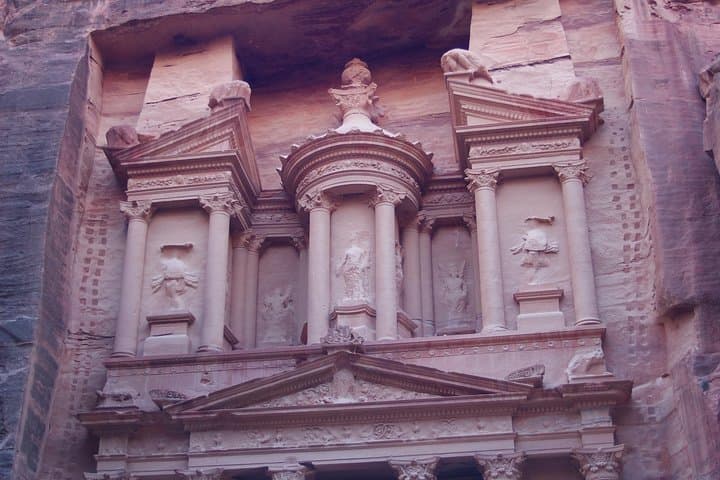
You step into Petra through a cool, narrow throat of stone—the Siq—while the desert sky above is still washing its blues into morning. The gorge tightens, colors shifting from ocher to deep rose, and then, almost without warning, the façade of Al-Khazneh (the Treasury) emerges: a carved face in a canyon that feels alive. That moment—a hush among visitors, cameras stilled, wind moving the sand like a slow exhale—is the start of a long, exacting day that pairs Petra’s carved cityscapes with Wadi Rum’s open, sculpted desert.
Verified experiences and guided adventures in the surrounding area.
Operated by Jordan Echo Tours · Petra, Ma'an Governorate
You step into Petra through a cool, narrow throat of stone—the Siq—while the desert sky above is still washing its blues into morning. The gorge tightens, colors shifting from ocher to deep rose, and then, almost without warning, the façade of Al-Khazneh (the Treasury) emerges: a carved face in a canyon that feels alive. That moment—a hush among visitors, cameras stilled, wind moving the sand like a slow exhale—is the start of a long, exacting day that pairs Petra’s carved cityscapes with Wadi Rum’s open, sculpted desert.
Petra is the work of the Nabataeans, a trading people who shaped the rock between the 1st century BCE and the 2nd century CE. They controlled incense and spice routes, carving monumental tombs, theaters, and temples directly into sandstone beds whose bands of iron and calcite create the site’s famous red-rose hues. Geologically, the region is a textbook in stratified sandstone—layers that peel, polish and hold brilliant color when light hits them at different angles.
After a guided sweep through the Treasury, Colonnaded Street, and Royal Tombs, travelers will often choose the steeper, stone-step march to the Monastery—an additional 2–2.5 hours round-trip for fitter guests—rewarded by a quieter façade and broad valley views.
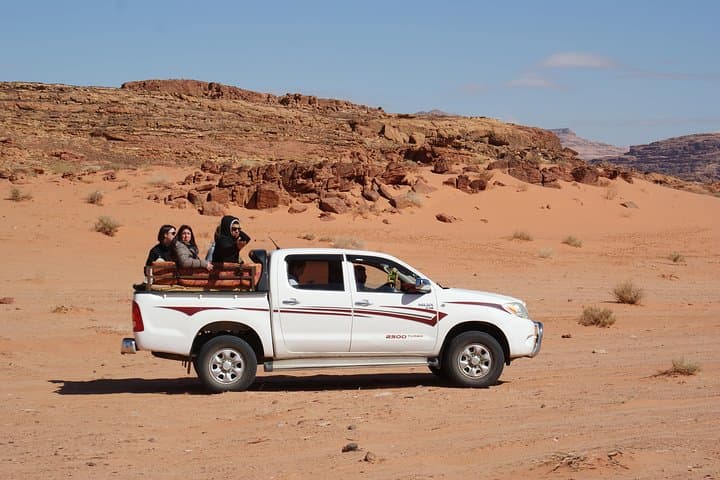
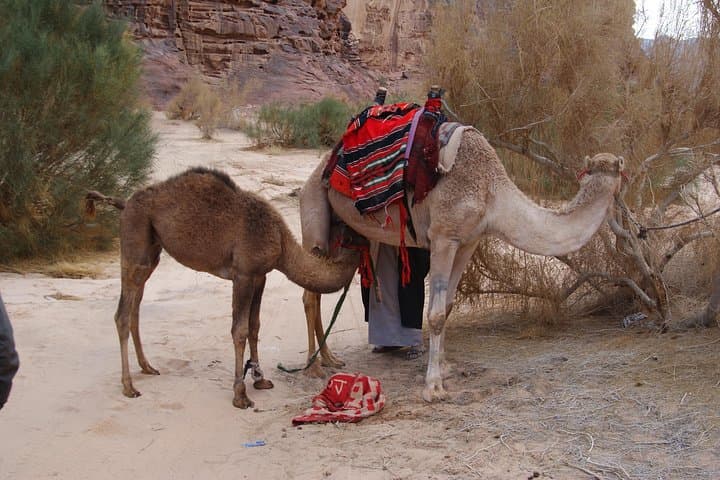
Post-Petra, the tour slides south through the Wadi Araba. Wadi Rum opens like a theater: vast plains punctuated by sugarloaf mountains and wind-carved domes. Here, Bedouin drivers lead a two-hour jeep tour into red dunes and narrow canyons where traces of ancient petroglyphs and the footprints of desert wildlife mark the sand. At sunset the desert colors intensify, and the jeep becomes a small, moving frame against an enormous sky.
Practical edge: this is a full 10–12 hour day from Aqaba with long stretches in sun and uneven stone underfoot. Wear sturdy walking shoes, layer for temperature swings, and bring 2–3 liters of water. Facilities at the Petra Visitor Center are the last reliable restrooms for several hours; cash (Jordanian dinar) is useful for extras and tips. The tour includes entrance fees, guided Petra walk, lunch buffet, and a two-hour Wadi Rum jeep ride.
Cultural note: Bedouin guides and drivers are central to the Wadi Rum experience—respectful tipping and curiosity about their life on the desert lands opens conversations and supports local livelihoods.
Timing matters: start early to see Petra in cooler light and finish Wadi Rum at sunset for the best colors and photography. If daylight is short in winter, operators will often reverse the itinerary—Wadi Rum first, Petra after—to fit the light.
This pairing is intense but balanced: Petra’s carved intimacy gives way to Wadi Rum’s expansive freedom, and both demand basic preparation and a willingness to walk, climb a few stone steps, and let the landscape set the pace.
moderate.
10–12 hours.
Good baseline fitness for walking on uneven stone, optional steep climbs (Monastery). Be prepared for several hours on your feet.
The full experience is approximately 10–12 hours, typically with pickup from Aqaba hotels, the port, airport, or arranged meeting points.
Pickup and transport are wheelchair accessible, but Petra’s carved routes and some sights have uneven stone steps that limit full accessibility once in the site.
Yes—the Monastery is an optional steep climb taking about 1–1.5 hours each way from the lower Petra area; include it only if you have extra time and fitness.
Yes—this tour includes entrance fees for Petra and Wadi Rum and an open buffet lunch as listed in the inclusions.
Tipping is customary; plan about 5–10 JOD per guide/driver per group member, adjusted for service and group size.
Spring and fall offer the most comfortable temperatures; early morning starts in summer avoid peak heat, and winter requires warmer layers for evening desert temperatures.
Petra was the Nabataeans’ capital and a hub on ancient trade routes; their stone-carving techniques and water-capture systems turned a harsh landscape into a prosperous city.
Visitors are encouraged to stay on marked paths in Petra to protect fragile sandstone; Wadi Rum management works with Bedouin communities to limit off-track driving and protect archaeological sites.
Jordan Echo Tours operates guided outdoor trips and adventures with an emphasis on safety, stewardship, and memorable experiences.
You step into Petra through a cool, narrow throat of stone—the Siq—while the desert sky above is still washing its blues into morning. The gorge tightens, colors shifting from ocher to deep rose, and then, almost without warning, the façade of Al-Khazneh (the Treasury) emerges: a carved face in a canyon that feels alive. That moment—a hush among visitors, cameras stilled, wind moving the sand like a slow exhale—is the start of a long, exacting day that pairs Petra’s carved cityscapes with Wadi Rum’s open, sculpted desert.
You step into Petra through a cool, narrow throat of stone—the Siq—while the desert sky above is still washing its blues into morning. The gorge tightens, colors shifting from ocher to deep rose, and then, almost without warning, the façade of Al-Khazneh (the Treasury) emerges: a carved face in a canyon that feels alive. That moment—a hush among visitors, cameras stilled, wind moving the sand like a slow exhale—is the start of a long, exacting day that pairs Petra’s carved cityscapes with Wadi Rum’s open, sculpted desert.
Petra is the work of the Nabataeans, a trading people who shaped the rock between the 1st century BCE and the 2nd century CE. They controlled incense and spice routes, carving monumental tombs, theaters, and temples directly into sandstone beds whose bands of iron and calcite create the site’s famous red-rose hues. Geologically, the region is a textbook in stratified sandstone—layers that peel, polish and hold brilliant color when light hits them at different angles.
After a guided sweep through the Treasury, Colonnaded Street, and Royal Tombs, travelers will often choose the steeper, stone-step march to the Monastery—an additional 2–2.5 hours round-trip for fitter guests—rewarded by a quieter façade and broad valley views.
Post-Petra, the tour slides south through the Wadi Araba. Wadi Rum opens like a theater: vast plains punctuated by sugarloaf mountains and wind-carved domes. Here, Bedouin drivers lead a two-hour jeep tour into red dunes and narrow canyons where traces of ancient petroglyphs and the footprints of desert wildlife mark the sand. At sunset the desert colors intensify, and the jeep becomes a small, moving frame against an enormous sky.
Practical edge: this is a full 10–12 hour day from Aqaba with long stretches in sun and uneven stone underfoot. Wear sturdy walking shoes, layer for temperature swings, and bring 2–3 liters of water. Facilities at the Petra Visitor Center are the last reliable restrooms for several hours; cash (Jordanian dinar) is useful for extras and tips. The tour includes entrance fees, guided Petra walk, lunch buffet, and a two-hour Wadi Rum jeep ride.
Cultural note: Bedouin guides and drivers are central to the Wadi Rum experience—respectful tipping and curiosity about their life on the desert lands opens conversations and supports local livelihoods.
Timing matters: start early to see Petra in cooler light and finish Wadi Rum at sunset for the best colors and photography. If daylight is short in winter, operators will often reverse the itinerary—Wadi Rum first, Petra after—to fit the light.
This pairing is intense but balanced: Petra’s carved intimacy gives way to Wadi Rum’s expansive freedom, and both demand basic preparation and a willingness to walk, climb a few stone steps, and let the landscape set the pace.