
One-Day Luxor from Cairo by Flight — Valley of the Kings, Karnak & Luxor Temple
Fly from Cairo to Luxor for a single day of Egypt’s greatest monuments: Valley of the Kings, Hatshepsut’s temple, Colossi of Memnon, Karnak and Luxor Temple. This full‑day private tour packs centuries of pharaonic history into a long, carefully timed itinerary.
An Adventure In Cairo.
Fly from Cairo to Luxor for a single day of Egypt’s greatest monuments: Valley of the Kings, Hatshepsut’s temple, Colossi of Memnon, Karnak and Luxor Temple. This full‑day private tour packs centuries of pharaonic history into a long, carefully timed itinerary.
Read the full experience
Before dawn a Cairo hotel lobby brightens with quiet activity: guides check manifests, drivers warm engines and a short domestic flight pulls the city’s rhythm toward the Nile-fed plain of Luxor. You step out into a landscape where limestone ridges hold tombs and avenues of stone columns crowd the horizon; the day moves fast but the monuments demand attention.
Before dawn a Cairo hotel lobby brightens with quiet activity: guides check manifests, drivers warm engines and a short domestic flight pulls the city’s rhythm toward the Nile-fed plain of Luxor. You step out into a landscape where limestone ridges hold tombs and avenues of stone columns crowd the horizon; the day moves fast but the monuments demand attention.
Luxor was ancient Thebes, the political and religious heart of Egypt’s New Kingdom. Geology here is limestone and sandstone carved by millennia of wind and river; the Valley of the Kings cuts into the West Bank’s hills where royal tombs were hewn beneath the desert’s baked crust. The Karnak complex on the East Bank grew over centuries—shrines, obelisks and hypostyle halls accrued like chapters of a long dynasty.
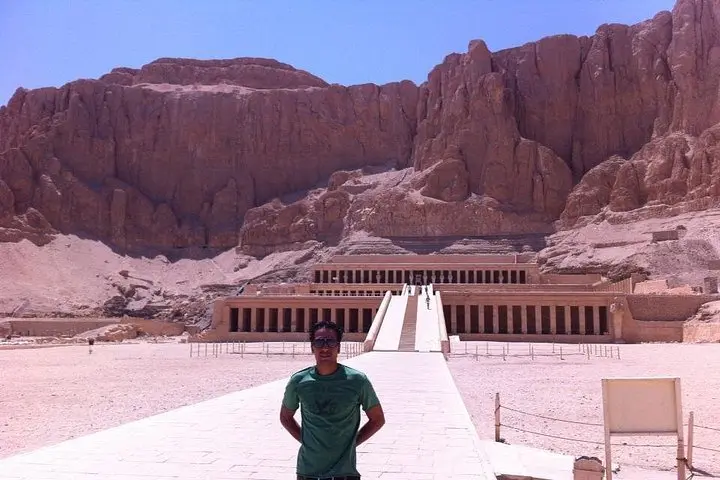
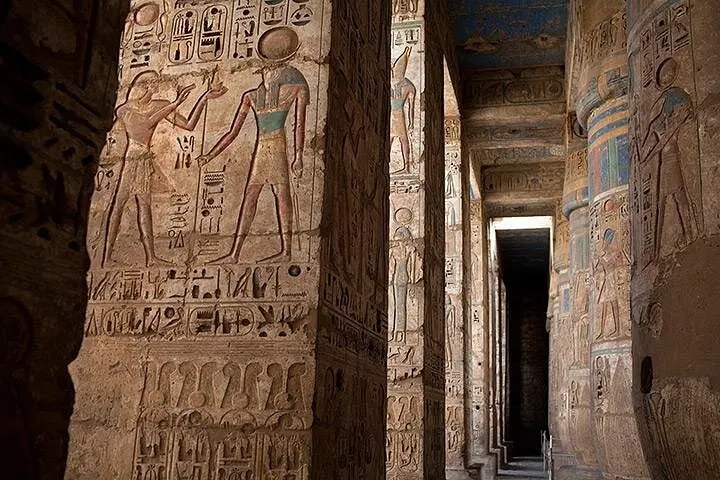
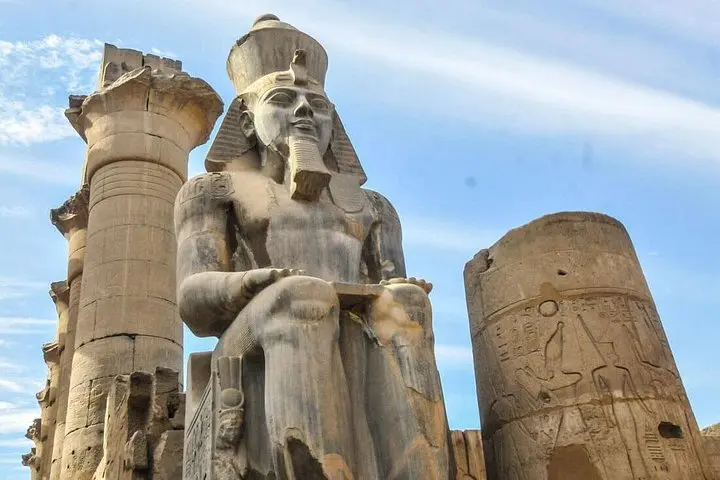
Culturally the route traces Egyptian funerary and state religion: royal tombs, Hatshepsut’s temple sculpted into rock, the silent Colossi, then Karnak’s forest of columns and Luxor Temple’s avenue of sphinxes. Expect Mausoleum silence in tomb corridors, the flash of painted reliefs, and the Nile’s steady pull seen from temple courtyards.
Practical notes: the full itinerary is a very long day—early pickup from Cairo (around 3:30 a.m.), round-trip flights (~1 hour each), multiple short transfers and several hours walking on uneven surfaces and steps. Bring a passport copy, closed-toe shoes, sun protection, and water. Allow time for ticket lines, and be prepared for restricted touching of carvings; carry small cash for extras and tips.
Frequently asked questions
Direct domestic flights are about 1 to 1.25 hours each way; the full excursion including transfers runs roughly 15 hours.
Some options include entrance fees but they may depend on the chosen tour package—confirm at booking and carry cash or card for optional entry tickets.
The tour is family-friendly but involves walking on uneven ground and many steps; it is not recommended for travelers with serious mobility or spinal problems.
Access to specific tombs varies with site regulations and ticketing; your guide can prioritize popular tombs but availability may change due to preservation policies.
About This Experience
EMO TOURS EGYPT operates guided outdoor trips and adventures with an emphasis on safety, stewardship, and memorable experiences.
Adventure tips
Recommended gear
- Passport & copy: Needed for booking, domestic flight check-in and ID at museums or ticket booths.
- Closed-toe walking shoes: Provides grip and protection on uneven tomb steps and temple stones.
- Sun protection (hat, sunscreen, sunglasses): Temple complexes are exposed; sun protection prevents heat-related discomfort.
- Reusable water bottle: Staying hydrated is essential—bottled water is usually provided but carrying your own is practical.
Photos of the experience
Related adventures & guides
Read the full experience
Before dawn a Cairo hotel lobby brightens with quiet activity: guides check manifests, drivers warm engines and a short domestic flight pulls the city’s rhythm toward the Nile-fed plain of Luxor. You step out into a landscape where limestone ridges hold tombs and avenues of stone columns crowd the horizon; the day moves fast but the monuments demand attention.
Before dawn a Cairo hotel lobby brightens with quiet activity: guides check manifests, drivers warm engines and a short domestic flight pulls the city’s rhythm toward the Nile-fed plain of Luxor. You step out into a landscape where limestone ridges hold tombs and avenues of stone columns crowd the horizon; the day moves fast but the monuments demand attention.
Luxor was ancient Thebes, the political and religious heart of Egypt’s New Kingdom. Geology here is limestone and sandstone carved by millennia of wind and river; the Valley of the Kings cuts into the West Bank’s hills where royal tombs were hewn beneath the desert’s baked crust. The Karnak complex on the East Bank grew over centuries—shrines, obelisks and hypostyle halls accrued like chapters of a long dynasty.
Culturally the route traces Egyptian funerary and state religion: royal tombs, Hatshepsut’s temple sculpted into rock, the silent Colossi, then Karnak’s forest of columns and Luxor Temple’s avenue of sphinxes. Expect Mausoleum silence in tomb corridors, the flash of painted reliefs, and the Nile’s steady pull seen from temple courtyards.
Practical notes: the full itinerary is a very long day—early pickup from Cairo (around 3:30 a.m.), round-trip flights (~1 hour each), multiple short transfers and several hours walking on uneven surfaces and steps. Bring a passport copy, closed-toe shoes, sun protection, and water. Allow time for ticket lines, and be prepared for restricted touching of carvings; carry small cash for extras and tips.
Make a day of it nearby.
Verified experiences and guided adventures in the surrounding area.