THE ADVENTURE COLLECTIVE® · Independent discovery and booking for outdoor travel

Cover Kathmandu’s UNESCO sites in a single private-car day trip: Swayambhunath’s hilltop views, Boudhanath’s thangka-draped stupa, the carved courtyards of Durbar Square, and the ritual banks of Pashupatinath. Expect 6–7 hours of walking, short climbs, and culturally rich stops with an English guide.
Cover Kathmandu’s UNESCO sites in a single private-car day trip: Swayambhunath’s hilltop views, Boudhanath’s thangka-draped stupa, the carved courtyards of Durbar Square, and the ritual banks of Pashupatinath. Expect 6–7 hours of walking, short climbs, and culturally rich stops with an English guide.
You step out of a private car and the valley opens: prayer flags flick like small flags of command, rooftop shrines punctuate the skyline, and the hill above the city — Swayambhunath — watches over traffic and pedestrians alike.
Verified experiences and guided adventures in the surrounding area.
Operated by Couch Adventure Nepal (CAN) · Kathmandu, Bagmati Province
You step out of a private car and the valley opens: prayer flags flick like small flags of command, rooftop shrines punctuate the skyline, and the hill above the city — Swayambhunath — watches over traffic and pedestrians alike.
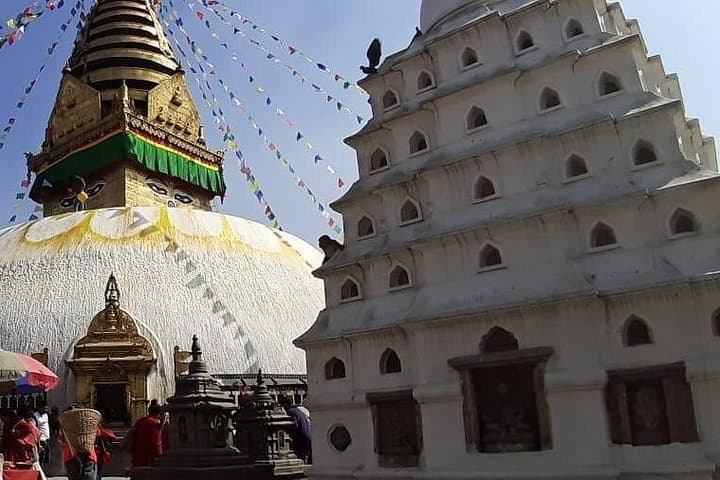
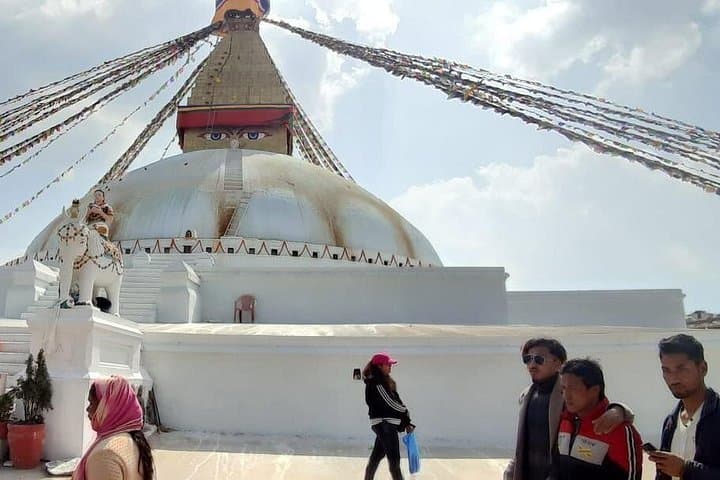
This one-day loop takes you through Kathmandu’s layered history: the hill-top Stupa where Buddhist pilgrims rotate prayer wheels; the circular form and Tibetan links of Boudhanath Stupa; the carved courtyards of Kathmandu Durbar Square that recall the Malla kings; and Pashupatinath’s ghats where the Bagmati River carries offerings downstream. Geologically the valley sits in an intermontane basin framed by the lower Himalaya; air can be hazy but on clear days the distant ridgelines cut a crisp silhouette.
Culturally the route reveals Newar craftsmanship, living ritual, and the city’s blended Hindu-Buddhist traditions. Guides often explain iconography carved into wood and stone and the etiquette around stupas and temples.
Practical guide: plan 6–7 hours, start early to avoid mid-day traffic and the worst of the crowds. Most sites have modest entry fees paid on arrival; bring small change. The private car and English-speaking guide included in this tour let you cover ground efficiently, but expect some short walks and steps at each site — Swayambhunath has a steep approach. Stay hydrated (Kathmandu sits around 1,400 m elevation), wear comfortable walking shoes, and carry a packable layer for wind or smog.
This day delivers architecture, ritual, and valley vistas — compact, interpretive, and easy to customize to your pace.
easy.
6–7 hours.
Suitable for travelers in basic to moderate fitness — involves multiple short walks and some stair climbs.
The itinerary runs about 6–7 hours (360–420 minutes) with hotel pickup and drop-off included; timing varies with traffic and how long you spend at each site.
Entrance fees are generally not included and are paid on arrival at individual monuments; bring small local currency for admissions and donations.
The tour is listed as wheelchair accessible for vehicle transfers, but some monuments (Swayambhunath, older courtyards) have steps—confirm accessibility needs when booking so guides can adapt the route.
A guide provides historical context, local etiquette guidance, and easier navigation through crowded sites; the tour includes an English-speaking guide and private car for convenience.
Kathmandu Valley’s monuments date largely from the medieval Malla period and reflect centuries of Hindu-Buddhist practice; the valley is a UNESCO World Heritage Site with living cultural traditions.
Many sites are fragile and recovery from the 2015 earthquakes is ongoing; visitors should avoid touching fragile carvings, stay on marked paths, and support local conservation fees when offered.
Couch Adventure Nepal (CAN) operates guided outdoor trips and adventures with an emphasis on safety, stewardship, and memorable experiences.
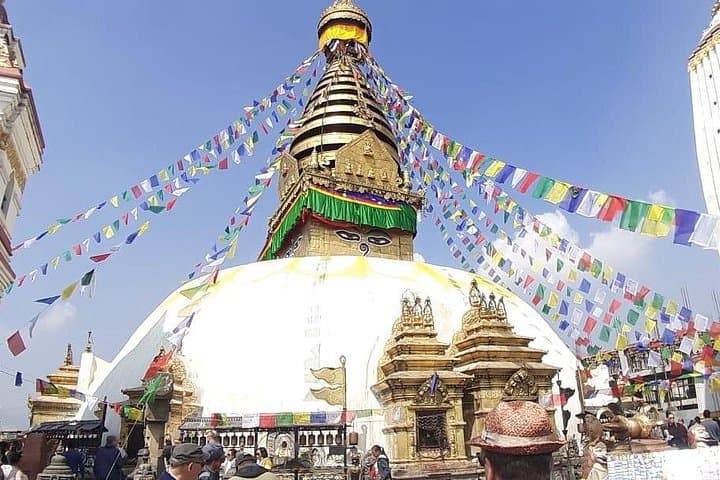
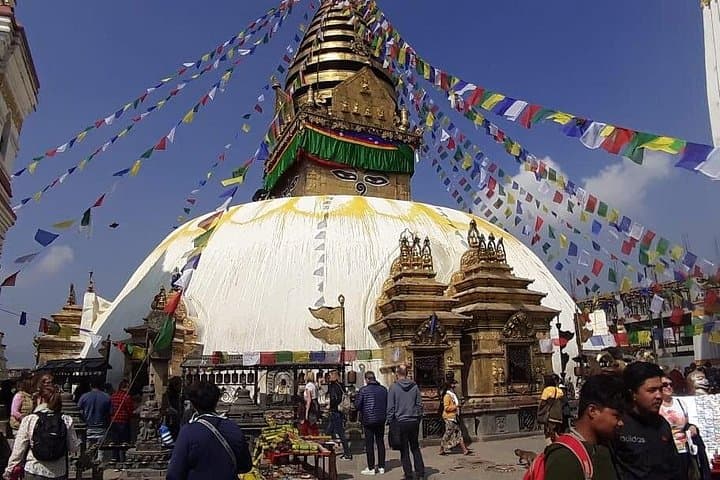
You step out of a private car and the valley opens: prayer flags flick like small flags of command, rooftop shrines punctuate the skyline, and the hill above the city — Swayambhunath — watches over traffic and pedestrians alike.
You step out of a private car and the valley opens: prayer flags flick like small flags of command, rooftop shrines punctuate the skyline, and the hill above the city — Swayambhunath — watches over traffic and pedestrians alike.
This one-day loop takes you through Kathmandu’s layered history: the hill-top Stupa where Buddhist pilgrims rotate prayer wheels; the circular form and Tibetan links of Boudhanath Stupa; the carved courtyards of Kathmandu Durbar Square that recall the Malla kings; and Pashupatinath’s ghats where the Bagmati River carries offerings downstream. Geologically the valley sits in an intermontane basin framed by the lower Himalaya; air can be hazy but on clear days the distant ridgelines cut a crisp silhouette.
Culturally the route reveals Newar craftsmanship, living ritual, and the city’s blended Hindu-Buddhist traditions. Guides often explain iconography carved into wood and stone and the etiquette around stupas and temples.
Practical guide: plan 6–7 hours, start early to avoid mid-day traffic and the worst of the crowds. Most sites have modest entry fees paid on arrival; bring small change. The private car and English-speaking guide included in this tour let you cover ground efficiently, but expect some short walks and steps at each site — Swayambhunath has a steep approach. Stay hydrated (Kathmandu sits around 1,400 m elevation), wear comfortable walking shoes, and carry a packable layer for wind or smog.
This day delivers architecture, ritual, and valley vistas — compact, interpretive, and easy to customize to your pace.