THE ADVENTURE COLLECTIVE® · Independent discovery and booking for outdoor travel

See Athens’ essentials in a single, efficient day: climb the Acropolis, explore the Acropolis Museum, and stroll Plaka with a licensed guide. This private 7‑hour walking tour balances iconic sights with practical local insight.
See Athens’ essentials in a single, efficient day: climb the Acropolis, explore the Acropolis Museum, and stroll Plaka with a licensed guide. This private 7‑hour walking tour balances iconic sights with practical local insight.
You step out into a bright Athenian morning and the city pulls you forward—the limestone of the Acropolis catching the first light while an Aegean breeze seems to dare you up the hill.
Verified experiences and guided adventures in the surrounding area.
Operated by Greeking.me · Athens, Attica
You step out into a bright Athenian morning and the city pulls you forward—the limestone of the Acropolis catching the first light while an Aegean breeze seems to dare you up the hill.
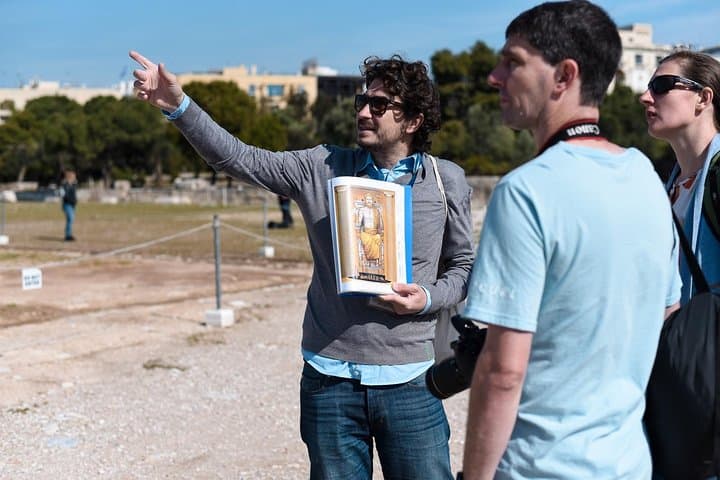
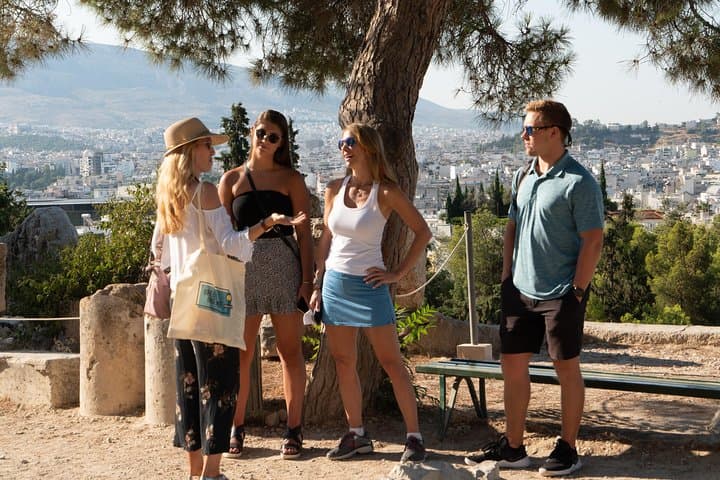
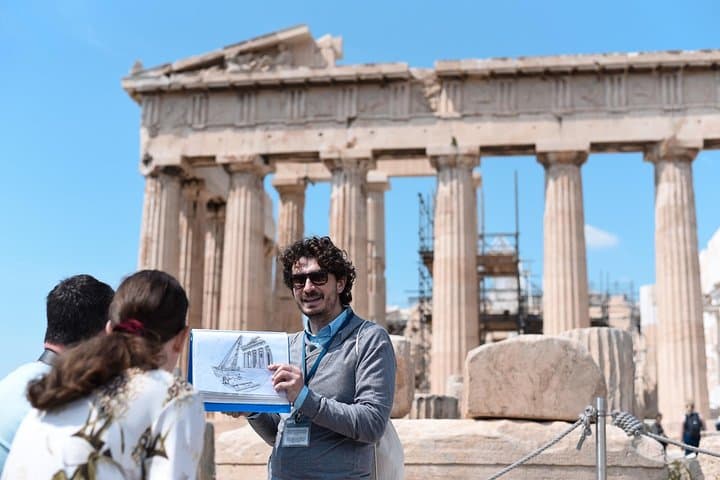
This seven‑hour private walking tour threads 2,500 years of history into a single day. Start on the sacred rock of the Acropolis where the Parthenon, Erechtheion and Propylaea reveal Classical Athens’ civic and religious ambitions. The story moves downhill to the modern Acropolis Museum, whose glassed galleries display sculptures and everyday objects that make the ancient city feel immediate again. From there the route winds through Plaka’s narrow streets with their 19th‑century neoclassical façades and the Choragic Monument of Lysicrates, then past the Roman Agora, Monastiraki market and the columned Temple of Olympian Zeus.
Beyond monuments, the walk touches civic life: Syntagma’s Evzones, the leafy National Garden and the marble bowl of the Panathenaic Stadium. Geologically, the Acropolis is a limestone outcrop shaped by millennia of uplift and human quarrying; culturally, the route mirrors Athens’ layers—ancient, Roman, Byzantine and modern.
Practical guidance: expect about 3–4 miles (5–7 km) of walking on uneven, sometimes steep stone paths; bring tickets for museum and Acropolis if you want admission included; wear grippy shoes and sun protection; budget time for queues even with a guide. The pace is steady but unhurried—designed to give context as much as views.
moderate.
7 hours.
Moderate fitness is required — you should be comfortable walking several miles over uneven, stepped terrain.
Admission is not included by default—bring pre‑purchased tickets or plan to buy them on the day; queues can form even with a guide.
Expect roughly 3–4 miles (5–7 km) of walking over a variety of surfaces including uphill stone paths and city pavements across about 7 hours.
The tour includes steep, uneven sections on the Acropolis; it is not recommended for those with significant mobility limitations or serious cardiovascular issues.
The Evzones perform guard changes regularly; while hourly mini‑changes happen, the full ceremonial change has a fixed schedule—ask your guide for timing to plan a stop.
Athens grew from a Bronze Age settlement into the Classical polis whose institutions and architecture shaped Western political and artistic ideas; the Acropolis served as its religious and symbolic center.
High visitation stresses archaeological sites and urban green spaces—follow marked paths, don’t climb on ruins, and use local services to support sustainable tourism.
Greeking.me operates guided outdoor trips and adventures with an emphasis on safety, stewardship, and memorable experiences.

You step out into a bright Athenian morning and the city pulls you forward—the limestone of the Acropolis catching the first light while an Aegean breeze seems to dare you up the hill.
You step out into a bright Athenian morning and the city pulls you forward—the limestone of the Acropolis catching the first light while an Aegean breeze seems to dare you up the hill.
This seven‑hour private walking tour threads 2,500 years of history into a single day. Start on the sacred rock of the Acropolis where the Parthenon, Erechtheion and Propylaea reveal Classical Athens’ civic and religious ambitions. The story moves downhill to the modern Acropolis Museum, whose glassed galleries display sculptures and everyday objects that make the ancient city feel immediate again. From there the route winds through Plaka’s narrow streets with their 19th‑century neoclassical façades and the Choragic Monument of Lysicrates, then past the Roman Agora, Monastiraki market and the columned Temple of Olympian Zeus.
Beyond monuments, the walk touches civic life: Syntagma’s Evzones, the leafy National Garden and the marble bowl of the Panathenaic Stadium. Geologically, the Acropolis is a limestone outcrop shaped by millennia of uplift and human quarrying; culturally, the route mirrors Athens’ layers—ancient, Roman, Byzantine and modern.
Practical guidance: expect about 3–4 miles (5–7 km) of walking on uneven, sometimes steep stone paths; bring tickets for museum and Acropolis if you want admission included; wear grippy shoes and sun protection; budget time for queues even with a guide. The pace is steady but unhurried—designed to give context as much as views.