THE ADVENTURE COLLECTIVE® · Independent discovery and booking for outdoor travel

Spend a day trading Marrakech’s berber bustle for Agadir’s Atlantic breeze. Climb the kasbah ruins, wander the marina, and walk a 10‑km beach on a compact coastal excursion.
Spend a day trading Marrakech’s berber bustle for Agadir’s Atlantic breeze. Climb the kasbah ruins, wander the marina, and walk a 10‑km beach on a compact coastal excursion.
You step off the vehicle onto a stretch of sand that runs like a quiet promise along Agadir’s bay — wind pushing salt-laced air across the 10‑km beach while the ruined kasbah crowns the ridge above, its stone silhouette daring you to climb for the view.
Verified experiences and guided adventures in the surrounding area.
Operated by Morocco Travel Desert Tours · Agadir, Souss-Massa
You step off the vehicle onto a stretch of sand that runs like a quiet promise along Agadir’s bay — wind pushing salt-laced air across the 10‑km beach while the ruined kasbah crowns the ridge above, its stone silhouette daring you to climb for the view.
Agadir’s story is visible in its streets: a 16th‑century fortress gave the city its name, and the catastrophic 1960 earthquake flattened the old medina, prompting a modern rebuild with wide avenues and a low‑rise seaside resort plan. Geologically, the coastal plain here opens out from the Atlas foothills; the beach is backed by dunes and boulevards that funnel Atlantic breezes perfect for windsurfing and sailing. Culture here is straightforward — fish markets, a busy marina lined with cafés, and bargaining at local souks where leather and woven goods trade hands.
On a typical one‑day visit you’ll see the Marina, pause at the kasbah viewpoint, stroll city gardens (and the small hilltop church and Tabourjte Mosque), then choose between a dip in the Atlantic or an optional short boat trip. The rhythm is urban and coastal, not a wilderness outing: you’ll swap city noise for surf and gulls.
Practicalities: expect a longish drive if departing Marrakech (roughly 3–4 hours each way), so pack sun protection, reusable water, comfortable shoes for cobbled streets and sand, and small bills for markets and tips. Plan arrival in mid‑morning to avoid the hottest hours on the sand and leave time for the kasbah light at sunset. Respect local dress customs at religious sites and minimize plastic use on the beach to support the coastline’s health.
easy.
8–9 hours.
Suitable for most fitness levels — expect light walking, stairs up the kasbah, and time on your feet in markets
Drive time is typically 3–4 hours one way via the A7/A3 — allow extra for traffic; the tour is usually an 8–9 hour day in total.
Swimming is optional; many tours allow free time to swim at supervised beaches, but check local conditions and heed lifeguard advice.
Most standard day trips do not include lunch — plan to buy fresh seafood or a café meal in the marina or bring snacks.
Guides often speak English, French, and sometimes Spanish; confirm language availability when booking.
Agadir takes its name from a 16th‑century fortress; a massive 1960 earthquake destroyed much of the old city, leading to the modern low‑rise seaside rebuild.
Rapid coastal development and beach tourism strain shore ecosystems — stick to marked areas, avoid single‑use plastics, and support responsible local vendors.
Morocco Travel Desert Tours operates guided outdoor trips and adventures with an emphasis on safety, stewardship, and memorable experiences.
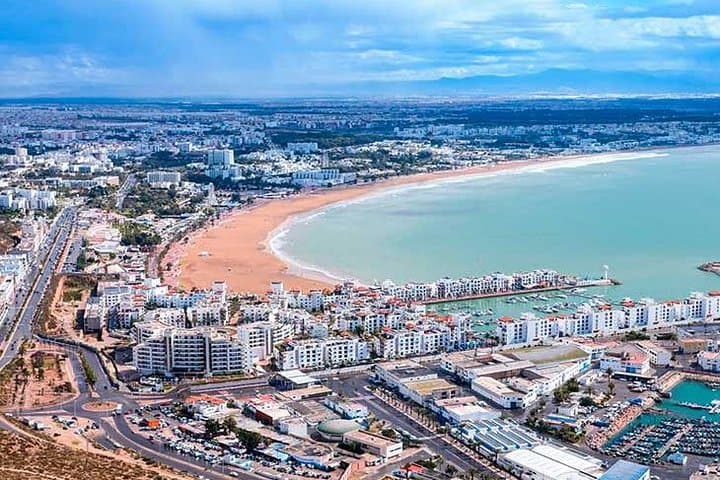
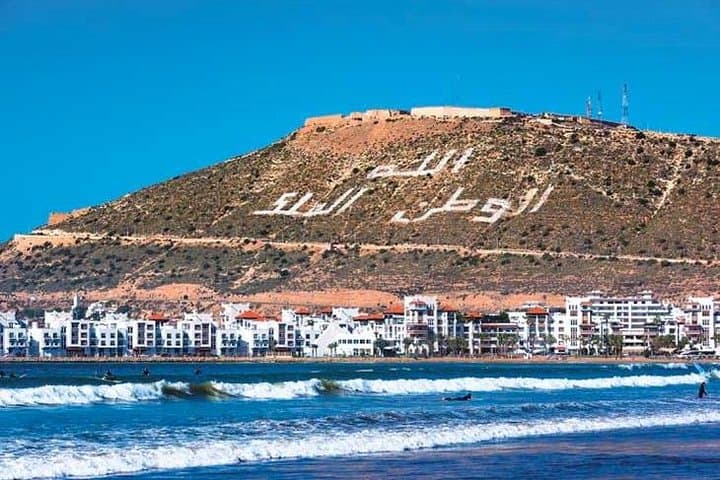
You step off the vehicle onto a stretch of sand that runs like a quiet promise along Agadir’s bay — wind pushing salt-laced air across the 10‑km beach while the ruined kasbah crowns the ridge above, its stone silhouette daring you to climb for the view.
You step off the vehicle onto a stretch of sand that runs like a quiet promise along Agadir’s bay — wind pushing salt-laced air across the 10‑km beach while the ruined kasbah crowns the ridge above, its stone silhouette daring you to climb for the view.
Agadir’s story is visible in its streets: a 16th‑century fortress gave the city its name, and the catastrophic 1960 earthquake flattened the old medina, prompting a modern rebuild with wide avenues and a low‑rise seaside resort plan. Geologically, the coastal plain here opens out from the Atlas foothills; the beach is backed by dunes and boulevards that funnel Atlantic breezes perfect for windsurfing and sailing. Culture here is straightforward — fish markets, a busy marina lined with cafés, and bargaining at local souks where leather and woven goods trade hands.
On a typical one‑day visit you’ll see the Marina, pause at the kasbah viewpoint, stroll city gardens (and the small hilltop church and Tabourjte Mosque), then choose between a dip in the Atlantic or an optional short boat trip. The rhythm is urban and coastal, not a wilderness outing: you’ll swap city noise for surf and gulls.
Practicalities: expect a longish drive if departing Marrakech (roughly 3–4 hours each way), so pack sun protection, reusable water, comfortable shoes for cobbled streets and sand, and small bills for markets and tips. Plan arrival in mid‑morning to avoid the hottest hours on the sand and leave time for the kasbah light at sunset. Respect local dress customs at religious sites and minimize plastic use on the beach to support the coastline’s health.