THE ADVENTURE COLLECTIVE® · Independent discovery and booking for outdoor travel

Walk a concentrated slice of Kilimanjaro on the Marangu day hike to Mandara Hut. In a single long day you’ll pass rainforest, spot monkeys, and reach a crater rim with wide views — a practical, accessible introduction to the mountain.
Walk a concentrated slice of Kilimanjaro on the Marangu day hike to Mandara Hut. In a single long day you’ll pass rainforest, spot monkeys, and reach a crater rim with wide views — a practical, accessible introduction to the mountain.
Dawn on Kilimanjaro feels like an invitation: mist peels off the rainforest and the trail hums with bird calls as your group threads upward through ferns and draped moss. On the Marangu day hike you walk a corridor of living geology — volcanic slopes softened by deep soil and sculpted by centuries of rain — toward Mandara Hut at roughly 2,700 m.
Verified experiences and guided adventures in the surrounding area.
Operated by Mountain Warriors Tours and Safaris · Moshi, Kilimanjaro Region
Dawn on Kilimanjaro feels like an invitation: mist peels off the rainforest and the trail hums with bird calls as your group threads upward through ferns and draped moss. On the Marangu day hike you walk a corridor of living geology — volcanic slopes softened by deep soil and sculpted by centuries of rain — toward Mandara Hut at roughly 2,700 m.
The route has long been a gateway for climbers and for the Chagga people who live on the mountain’s lower flanks. Stones and ancient paths record a human history of cultivation and storytelling; guides will explain how Chagga agriculture shaped the forest edge and how local legends read the mountain’s weather as signposts.
Geologically, Kilimanjaro is a dormant stratovolcano whose changing ecosystems shift fast with altitude: dense montane rainforest gives way to heather and moorland as you climb. Wildlife is active in the canopy — colobus and blue monkeys move like punctuation marks through the leaves — and the views from the Maundi Crater rim can stretch toward Tanzania’s plains and even into Kenya on clear days.
Practically, expect a long day: 10–12 hours on varied footing, from muddy rainforest track to steeper, rockier steps near the hut. Start early to avoid afternoon clouds, carry layered clothing for wind and sun, and plan for steady hydration; bottled water is usually provided. Park fees and a brief cultural stop at Marangu village are typical inclusions. The hike is accessible to fit walkers but takes endurance — it’s a concentrated taste of Kilimanjaro’s landscapes without the full summit commitment.
moderate.
10–12 hours.
Good endurance for a long day hike; able to walk 8–12 hours with breaks and handle steady uphill sections.
It’s rated moderate: the trail is well-established but the day is long (10–12 hours) and reaches 2,700 m, so expect sustained uphill walking and changing terrain.
Yes — Kilimanjaro National Park fees are required and typically included in organized day hikes; confirm with your operator before departure.
Full acclimatization isn’t required for most people on a single-day visit, but take the pace easy and hydrate; those sensitive to altitude should consult a doctor.
Common sightings include colobus and blue monkeys and a variety of montane birds; animals are most active in the early morning and late afternoon.
The Marangu route has long been used by the Chagga people and later became the first commercial ascent path; Mandara Hut is a historic rest point for climbers.
Kilimanjaro’s ecosystems are fragile and warming has shrunk its ice cap; stick to trails, carry out waste, and support operators who contribute park fees to local conservation.
Mountain Warriors Tours and Safaris operates guided outdoor trips and adventures with an emphasis on safety, stewardship, and memorable experiences.
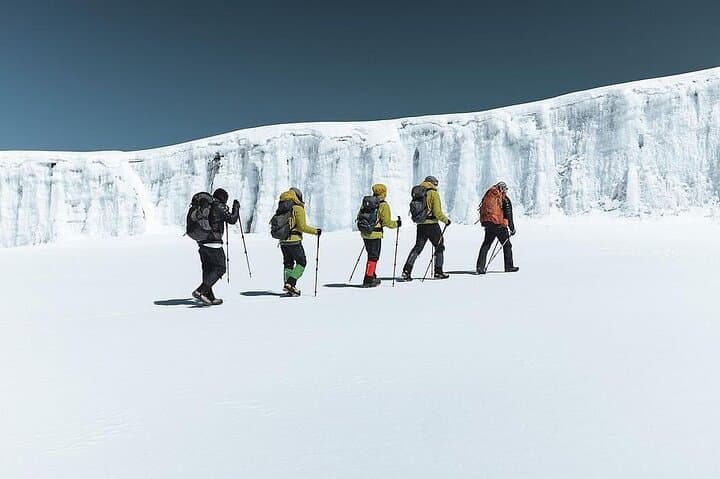
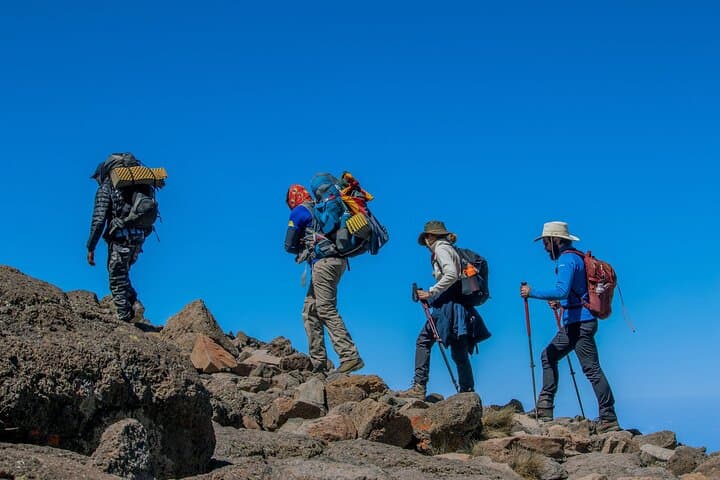
Dawn on Kilimanjaro feels like an invitation: mist peels off the rainforest and the trail hums with bird calls as your group threads upward through ferns and draped moss. On the Marangu day hike you walk a corridor of living geology — volcanic slopes softened by deep soil and sculpted by centuries of rain — toward Mandara Hut at roughly 2,700 m.
Dawn on Kilimanjaro feels like an invitation: mist peels off the rainforest and the trail hums with bird calls as your group threads upward through ferns and draped moss. On the Marangu day hike you walk a corridor of living geology — volcanic slopes softened by deep soil and sculpted by centuries of rain — toward Mandara Hut at roughly 2,700 m.
The route has long been a gateway for climbers and for the Chagga people who live on the mountain’s lower flanks. Stones and ancient paths record a human history of cultivation and storytelling; guides will explain how Chagga agriculture shaped the forest edge and how local legends read the mountain’s weather as signposts.
Geologically, Kilimanjaro is a dormant stratovolcano whose changing ecosystems shift fast with altitude: dense montane rainforest gives way to heather and moorland as you climb. Wildlife is active in the canopy — colobus and blue monkeys move like punctuation marks through the leaves — and the views from the Maundi Crater rim can stretch toward Tanzania’s plains and even into Kenya on clear days.
Practically, expect a long day: 10–12 hours on varied footing, from muddy rainforest track to steeper, rockier steps near the hut. Start early to avoid afternoon clouds, carry layered clothing for wind and sun, and plan for steady hydration; bottled water is usually provided. Park fees and a brief cultural stop at Marangu village are typical inclusions. The hike is accessible to fit walkers but takes endurance — it’s a concentrated taste of Kilimanjaro’s landscapes without the full summit commitment.