THE ADVENTURE COLLECTIVE® · Independent discovery and booking for outdoor travel

Walk through Bab Bou Jeloud into the living maze of Fes el-Bali on a private guided day tour. See Bou Inania and Al-Attarine madrasas, the University of al-Qarawiyyin, the Nejjarine Museum, traditional tanneries, and a panorama from Bab Ftouh.
Walk through Bab Bou Jeloud into the living maze of Fes el-Bali on a private guided day tour. See Bou Inania and Al-Attarine madrasas, the University of al-Qarawiyyin, the Nejjarine Museum, traditional tanneries, and a panorama from Bab Ftouh.
You step through Bab Bou Jeloud and the city rearranges itself: narrow lanes funnel light into shaded alleys, spice stalls lean their colors toward you, and the murmur of prayers and vendors weaves into a steady city heartbeat.
Verified experiences and guided adventures in the surrounding area.
Operated by hiexperiencetour · Fez, Fès-Meknès
You step through Bab Bou Jeloud and the city rearranges itself: narrow lanes funnel light into shaded alleys, spice stalls lean their colors toward you, and the murmur of prayers and vendors weaves into a steady city heartbeat.
This full-day guided route moves through Fes el-Bali, the core of a medieval capital founded in the 9th century. Stone madrasa facades—Bou Inania and Al-Attarine—display intricate zellij tilework and carved cedar that speak to centuries of artisan craft. The University of al-Qarawiyyin, one of the world’s oldest continuously operating universities, anchors the medina’s intellectual history. At the Nejjarine Museum, a restored caravanserai houses woodworking and musical artifacts that trace the city’s trade networks.
After a medina lunch, the tannery pits reveal a sensory, centuries-old industry: vats of dye and lime where hides are worked by hand, and the Fez River once directed effluent and labor alike. A short drive brings a sweeping panorama from the Bab Ftouh cemetery—an opportunity to read the medina’s roofline and its compact, organic street plan from above.
Practical guidance: expect 5–7 hours with 3–5 km of walking on uneven cobbles, minimal elevation change but many steps. Wear closed, grippy shoes, dress modestly for religious sites, and carry a refillable water bottle; a good guide will ease entry to busy landmarks and advise on photography etiquette. The day blends history, craft, and active urban exploration—ideal for travelers who want direct contact with city life and living traditions.
easy.
5–7 hours.
Suitable for most fitness levels; you should be comfortable walking several kilometers on uneven surfaces.
Expect roughly 3–5 km of walking spread across 5–7 hours, mostly on narrow, uneven medina streets with some short stair sections.
Yes—tanneries are a standard tourist stop; expect strong odors and uneven surfaces, and follow your guide’s route and safety advice.
The listing notes wheelchair-accessible transportation, but the medina’s streets and steps can limit accessibility inside the old quarter—check specific needs with the operator in advance.
Guides often speak English, French, and Arabic; confirm language availability when booking to ensure a comfortable experience.
Fez was established as a major urban center in the 9th century and its medina, Fes el-Bali, preserves layers of Andalusian, Berber and Islamic craft traditions; the area is a UNESCO World Heritage site.
Tourism supports local artisans but also pressures narrow streets and water use at tanneries; choose operators who encourage respectful photography and local purchasing.
hiexperiencetour operates guided outdoor trips and adventures with an emphasis on safety, stewardship, and memorable experiences.
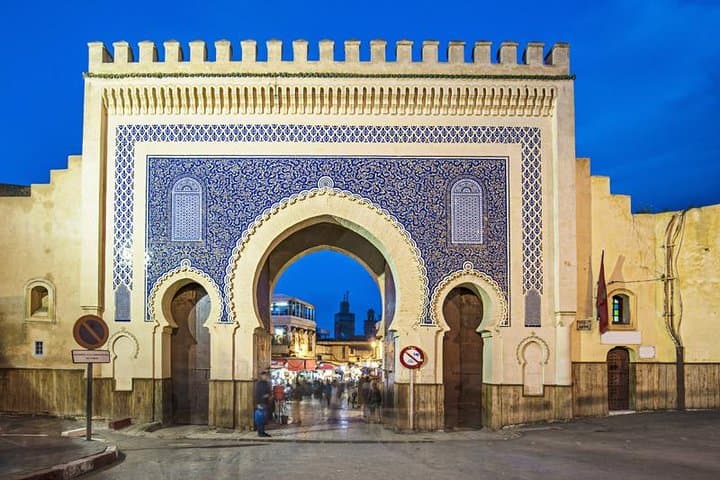

You step through Bab Bou Jeloud and the city rearranges itself: narrow lanes funnel light into shaded alleys, spice stalls lean their colors toward you, and the murmur of prayers and vendors weaves into a steady city heartbeat.
You step through Bab Bou Jeloud and the city rearranges itself: narrow lanes funnel light into shaded alleys, spice stalls lean their colors toward you, and the murmur of prayers and vendors weaves into a steady city heartbeat.
This full-day guided route moves through Fes el-Bali, the core of a medieval capital founded in the 9th century. Stone madrasa facades—Bou Inania and Al-Attarine—display intricate zellij tilework and carved cedar that speak to centuries of artisan craft. The University of al-Qarawiyyin, one of the world’s oldest continuously operating universities, anchors the medina’s intellectual history. At the Nejjarine Museum, a restored caravanserai houses woodworking and musical artifacts that trace the city’s trade networks.
After a medina lunch, the tannery pits reveal a sensory, centuries-old industry: vats of dye and lime where hides are worked by hand, and the Fez River once directed effluent and labor alike. A short drive brings a sweeping panorama from the Bab Ftouh cemetery—an opportunity to read the medina’s roofline and its compact, organic street plan from above.
Practical guidance: expect 5–7 hours with 3–5 km of walking on uneven cobbles, minimal elevation change but many steps. Wear closed, grippy shoes, dress modestly for religious sites, and carry a refillable water bottle; a good guide will ease entry to busy landmarks and advise on photography etiquette. The day blends history, craft, and active urban exploration—ideal for travelers who want direct contact with city life and living traditions.