THE ADVENTURE COLLECTIVE® · Independent discovery and booking for outdoor travel

In one long but rewarding day you can stand above ancient Mtskheta, walk the carved streets of Uplistsikhe and sip Borjomi’s famed mineral water — all with private transport from Tbilisi. Read on for what to expect and how to prepare.
In one long but rewarding day you can stand above ancient Mtskheta, walk the carved streets of Uplistsikhe and sip Borjomi’s famed mineral water — all with private transport from Tbilisi. Read on for what to expect and how to prepare.
The engine hums, the city thins and the Caucasus horizon sharpens — in a single day you trade Tbilisi traffic for hilltop monasteries, carved rock streets and mineral springs.
Verified experiences and guided adventures in the surrounding area.
Operated by Friendly.ge: Transfers & Tours in Georgia · Tbilisi, Tbilisi
The engine hums, the city thins and the Caucasus horizon sharpens — in a single day you trade Tbilisi traffic for hilltop monasteries, carved rock streets and mineral springs.
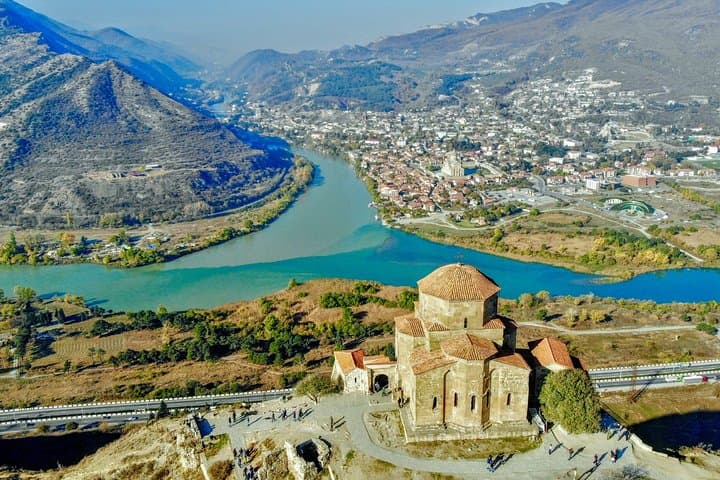
Start above the confluence of rivers at Jvari Monastery, where a short climb rewards you with a 360° view of Mtskheta’s red-tiled roofs and the braided Mtkvari. From there the road rolls west toward Uplistsikhe: an ancient cave town hollowed from soft sandstone and tuff, its weathered facades and vaulted halls revealing 3,000 years of human layering — trade, worship, siege and craft.
Geology here is literal scaffolding: eroded volcanic deposits and river terraces that made rock-cut architecture possible. Cultural threads run from pre-Christian Kartli at Uplistsikhe to medieval Christian centers in Mtskheta, and into the spa-town traditions of Borjomi, where naturally carbonated mineral springs shaped local industry and leisure in the 19th–20th centuries.
Expect varied walking: paved plaza approaches, uneven carved stairways and open-air viewpoints. A visit to Borjomi’s mineral park offers flat promenades, spring taps and trails that connect to the larger Borjomi-Kharagauli forests.
Practical notes: this private, 10–12 hour tour includes door-to-door transport and onboard Wi‑Fi, but you’ll spend most time walking short, sometimes steep sections (bring solid footwear). Carry a refillable bottle, sun protection and a light layer for hilltop wind. The itinerary is family-friendly but not suitable for serious back problems; plan a full day and leave evening plans free.
easy.
10–12 hours.
Suitable for people in regular, everyday fitness; involves repeated short walks, stairs and some hill climbs.
The tour runs about 10–12 hours with short guided stops: typically 30–90 minutes per site and driving between locations; it’s full-day but not strenuous.
Admission to Uplistsikhe and Borjomi attractions may not be included — check booking details or prepare small local cash for tickets.
Yes; the tour is family-friendly and infant seats are available, though some walking at sites is on uneven ground.
Not recommended for travelers with significant spinal or severe mobility issues because of steps and uneven surfaces at historic sites.
Uplistsikhe was an important pre-Christian political and religious center from the Late Bronze Age through the Middle Ages; nearby Mtskheta later became Georgia’s spiritual heart with medieval cathedrals and monasteries.
Borjomi sits adjacent to Borjomi-Kharagauli National Park; stick to trails, avoid single-use plastics and follow park signage to reduce visitor impact.
Friendly.ge: Transfers & Tours in Georgia operates guided outdoor trips and adventures with an emphasis on safety, stewardship, and memorable experiences.
The engine hums, the city thins and the Caucasus horizon sharpens — in a single day you trade Tbilisi traffic for hilltop monasteries, carved rock streets and mineral springs.
The engine hums, the city thins and the Caucasus horizon sharpens — in a single day you trade Tbilisi traffic for hilltop monasteries, carved rock streets and mineral springs.
Start above the confluence of rivers at Jvari Monastery, where a short climb rewards you with a 360° view of Mtskheta’s red-tiled roofs and the braided Mtkvari. From there the road rolls west toward Uplistsikhe: an ancient cave town hollowed from soft sandstone and tuff, its weathered facades and vaulted halls revealing 3,000 years of human layering — trade, worship, siege and craft.
Geology here is literal scaffolding: eroded volcanic deposits and river terraces that made rock-cut architecture possible. Cultural threads run from pre-Christian Kartli at Uplistsikhe to medieval Christian centers in Mtskheta, and into the spa-town traditions of Borjomi, where naturally carbonated mineral springs shaped local industry and leisure in the 19th–20th centuries.
Expect varied walking: paved plaza approaches, uneven carved stairways and open-air viewpoints. A visit to Borjomi’s mineral park offers flat promenades, spring taps and trails that connect to the larger Borjomi-Kharagauli forests.
Practical notes: this private, 10–12 hour tour includes door-to-door transport and onboard Wi‑Fi, but you’ll spend most time walking short, sometimes steep sections (bring solid footwear). Carry a refillable bottle, sun protection and a light layer for hilltop wind. The itinerary is family-friendly but not suitable for serious back problems; plan a full day and leave evening plans free.