THE ADVENTURE COLLECTIVE® · Independent discovery and booking for outdoor travel

Trace Chongqing’s vertical cityscape on a focused one-day walking tour that links Liziba’s rail-through-building spectacle, E'ling Park’s river overlook, chaotic wholesale markets and the cliffside layers of Hongya Cave. Expect seven hours of easy walking, local transit hops and insider urban insights.
Trace Chongqing’s vertical cityscape on a focused one-day walking tour that links Liziba’s rail-through-building spectacle, E'ling Park’s river overlook, chaotic wholesale markets and the cliffside layers of Hongya Cave. Expect seven hours of easy walking, local transit hops and insider urban insights.
Morning light filters between concrete ridges and river mist as you meet beneath the red sign of Chongqing People’s Assembly Hall. The city climbs — narrow alleys carving into steep hills, light rail threading buildings like a mechanical seam. This one-day walking tour moves at an urban pace: social-media-famous Liziba Station, panoramic E'ling Park, the mountainside Shancheng Alley, Chaotianmen’s river views and the cliffside tiers of Hongya Cave.
Verified experiences and guided adventures in the surrounding area.
Operated by Trippest Travel · Chongqing, Chongqing
Morning light filters between concrete ridges and river mist as you meet beneath the red sign of Chongqing People’s Assembly Hall. The city climbs — narrow alleys carving into steep hills, light rail threading buildings like a mechanical seam. This one-day walking tour moves at an urban pace: social-media-famous Liziba Station, panoramic E'ling Park, the mountainside Shancheng Alley, Chaotianmen’s river views and the cliffside tiers of Hongya Cave.
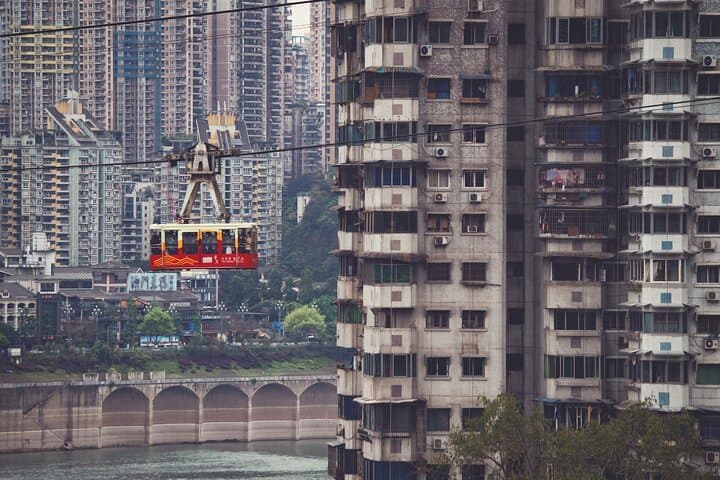
Chongqing’s topography is raw: a confluence of the Yangtze and Jialing rivers squeezed by karst hills that pushed human settlements up into terraces. The cableway that ferries commuters across the Yangtze since 1987 speaks to the city’s pragmatic inventiveness; the wholesale market and “bangbang men” recall Chongqing’s working-port legacy. Walk the sloped lanes and you’ll see layers of modern megacity engineering atop older stone streets where local life continues — tea houses, wok smoke, and vendors whose rhythms shape the neighborhood.
Practical guidance: expect roughly 7 hours of mostly easy walking with short taxi or metro hops. Wear grippy shoes for slate-paved alleys and pack a lightweight rain shell — weather can shift fast near the river. Bring local currency for market stalls and small taxis; an English-speaking guide will point out transit quirks and the best viewpoints for the cableway and river confluence.
The route is an urban hike — part infrastructure study, part cultural immersion — ideal for travelers who want to feel the city’s vertical motion while learning how Chongqing’s geography and history shaped daily life.
easy.
6–7 hours.
Suitable for anyone with basic walking endurance; you should be comfortable on stairs and short uphill sections.
The tour covers about seven hours with mostly easy walking; there are stairs and uphill sections in alleys and parks but taxis or metro hops shorten some transfers.
Yes — the pace is gentle and suitable for a wide range of ages, but those with mobility limits should note stairs and sloped streets and may prefer more vehicle transfers.
The tour includes admissions listed in the itinerary and public transportation fees; small optional purchases or snacks are not covered.
The tour offers an English-speaking local guide who provides cultural and practical insights throughout the day.
Chongqing’s modern climb grew from a thousand-year pattern of riverside trade and wartime industry; the cableway and wholesale docks are living echoes of the city’s transport-first development.
Rapid urban development pressures hillside neighborhoods; visitors can reduce impact by staying on established paths, using public transit, and supporting local businesses rather than informal hillside vendors.
Trippest Travel operates guided outdoor trips and adventures with an emphasis on safety, stewardship, and memorable experiences.

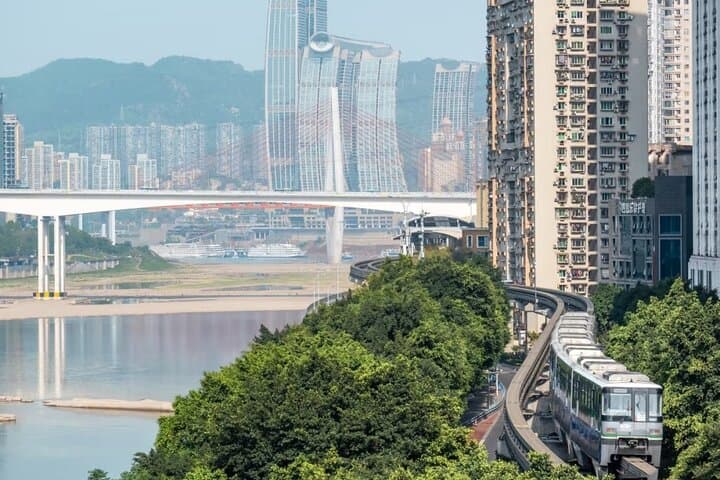
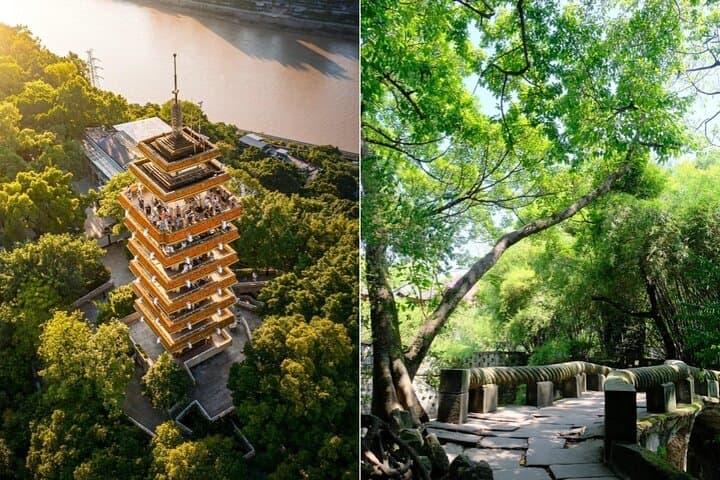
Morning light filters between concrete ridges and river mist as you meet beneath the red sign of Chongqing People’s Assembly Hall. The city climbs — narrow alleys carving into steep hills, light rail threading buildings like a mechanical seam. This one-day walking tour moves at an urban pace: social-media-famous Liziba Station, panoramic E'ling Park, the mountainside Shancheng Alley, Chaotianmen’s river views and the cliffside tiers of Hongya Cave.
Morning light filters between concrete ridges and river mist as you meet beneath the red sign of Chongqing People’s Assembly Hall. The city climbs — narrow alleys carving into steep hills, light rail threading buildings like a mechanical seam. This one-day walking tour moves at an urban pace: social-media-famous Liziba Station, panoramic E'ling Park, the mountainside Shancheng Alley, Chaotianmen’s river views and the cliffside tiers of Hongya Cave.
Chongqing’s topography is raw: a confluence of the Yangtze and Jialing rivers squeezed by karst hills that pushed human settlements up into terraces. The cableway that ferries commuters across the Yangtze since 1987 speaks to the city’s pragmatic inventiveness; the wholesale market and “bangbang men” recall Chongqing’s working-port legacy. Walk the sloped lanes and you’ll see layers of modern megacity engineering atop older stone streets where local life continues — tea houses, wok smoke, and vendors whose rhythms shape the neighborhood.
Practical guidance: expect roughly 7 hours of mostly easy walking with short taxi or metro hops. Wear grippy shoes for slate-paved alleys and pack a lightweight rain shell — weather can shift fast near the river. Bring local currency for market stalls and small taxis; an English-speaking guide will point out transit quirks and the best viewpoints for the cableway and river confluence.
The route is an urban hike — part infrastructure study, part cultural immersion — ideal for travelers who want to feel the city’s vertical motion while learning how Chongqing’s geography and history shaped daily life.