THE ADVENTURE COLLECTIVE® · Independent discovery and booking for outdoor travel

See Cairo’s essentials in a single private day: the Giza Pyramids, iconic artifacts at the Egyptian Museum, and the bustling alleys of Khan el-Khalili. This guided loop balances big sights with practical logistics—perfect for first-time visitors who want depth without the guesswork.
See Cairo’s essentials in a single private day: the Giza Pyramids, iconic artifacts at the Egyptian Museum, and the bustling alleys of Khan el-Khalili. This guided loop balances big sights with practical logistics—perfect for first-time visitors who want depth without the guesswork.
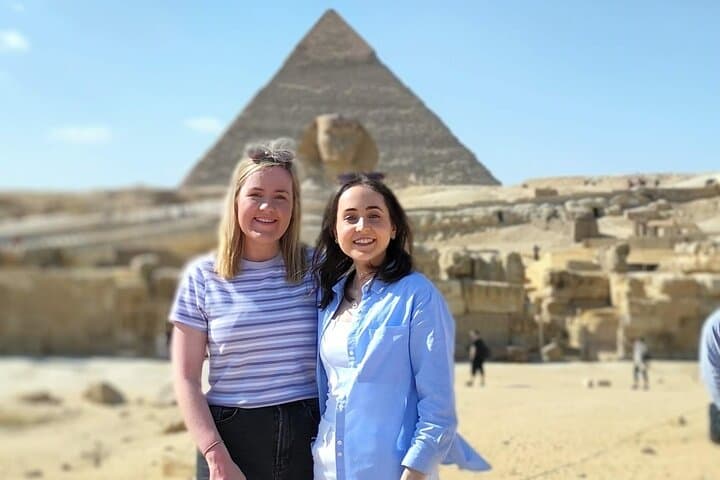
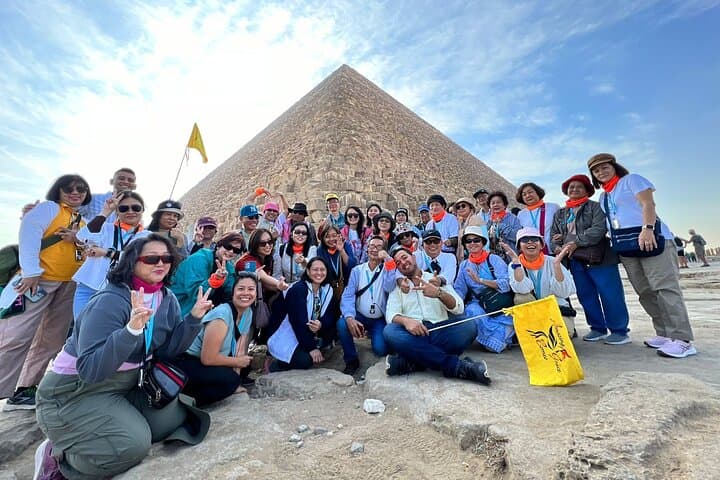
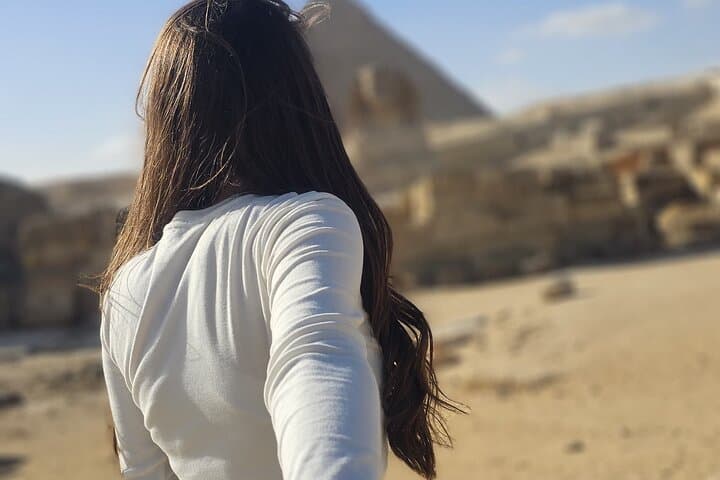
You arrive at the Giza Plateau with the wind carrying grit and history; the Great Pyramid looms, its edges a straight, ancient geometry against the sky. The Sphinx watches traffic and tourists alike, a slow, quiet presence that dares you to imagine millennia.
Verified experiences and guided adventures in the surrounding area.
Operated by Zoya tours · Cairo, Cairo Governorate
You arrive at the Giza Plateau with the wind carrying grit and history; the Great Pyramid looms, its edges a straight, ancient geometry against the sky. The Sphinx watches traffic and tourists alike, a slow, quiet presence that dares you to imagine millennia.
The day folds through Egypt’s long story: cut limestone and quarried blocks at Giza that reflect Bronze Age engineering; artifacts at the Egyptian Museum that trace royal life from Narmer to Tutankhamun; and the narrow alleys of Khan el-Khalili where spice scents and metalsmiths keep a living trade. Geologically, the plateau sits on Pleistocene limestone—stable bedrock that allowed monuments to hold their shape for thousands of years. Culturally, the route moves from funerary landscape to civic museum to bazaar life, offering a cross-section of Cairo’s public face.
Expect guided walking segments on well-trodden paths, short transfers in an air-conditioned vehicle, and queue-management at museum entries. Practicalities matter: sun exposure at Giza is intense, surfaces vary from compacted gravel to tiled alleys, and time at each stop is limited by a private-tour schedule. Bring hydration and comfortable shoes; plan for security checks and modest dress in religious or conservative neighborhoods. Midday light is best for photography at the pyramids; late afternoon eases the heat and the crowds. Your guide handles tickets and logistics, but being prepared—good shoes, water, a hat, and patience—makes the day run smoothly.
easy.
4–7 hours.
Suitable for most fitness levels; requires moderate walking and standing for museum and outdoor sites.
The private tour runs approximately 4–7 hours depending on traffic, time spent at each site, and whether you add optional stops.
Yes; the itinerary lists admissions to the Giza Plateau, Egyptian Museum exhibits, and Khan el-Khalili visits as included in the tour price.
Many areas are wheelchair accessible and transport is adapted, but some outdoor paths at Giza and narrow bazaar alleys can be uneven—notify the operator when booking for specific arrangements.
Tipping is customary; plan to give a modest tip to your guide and driver if you’re satisfied with the service—local norms vary, but roughly 5–10% of the tour cost split between them is common.
The Giza pyramids date to Egypt’s Fourth Dynasty (c. 2600–2500 BCE) and the Egyptian Museum in Tahrir holds tens of thousands of artifacts that map pharaonic, Greco-Roman, and Coptic histories.
Tourism places wear on ancient sites—stay on signed paths, avoid touching carved stone, and follow your guide to minimize impact on fragile archaeology.
Zoya tours operates guided outdoor trips and adventures with an emphasis on safety, stewardship, and memorable experiences.
You arrive at the Giza Plateau with the wind carrying grit and history; the Great Pyramid looms, its edges a straight, ancient geometry against the sky. The Sphinx watches traffic and tourists alike, a slow, quiet presence that dares you to imagine millennia.
You arrive at the Giza Plateau with the wind carrying grit and history; the Great Pyramid looms, its edges a straight, ancient geometry against the sky. The Sphinx watches traffic and tourists alike, a slow, quiet presence that dares you to imagine millennia.
The day folds through Egypt’s long story: cut limestone and quarried blocks at Giza that reflect Bronze Age engineering; artifacts at the Egyptian Museum that trace royal life from Narmer to Tutankhamun; and the narrow alleys of Khan el-Khalili where spice scents and metalsmiths keep a living trade. Geologically, the plateau sits on Pleistocene limestone—stable bedrock that allowed monuments to hold their shape for thousands of years. Culturally, the route moves from funerary landscape to civic museum to bazaar life, offering a cross-section of Cairo’s public face.
Expect guided walking segments on well-trodden paths, short transfers in an air-conditioned vehicle, and queue-management at museum entries. Practicalities matter: sun exposure at Giza is intense, surfaces vary from compacted gravel to tiled alleys, and time at each stop is limited by a private-tour schedule. Bring hydration and comfortable shoes; plan for security checks and modest dress in religious or conservative neighborhoods. Midday light is best for photography at the pyramids; late afternoon eases the heat and the crowds. Your guide handles tickets and logistics, but being prepared—good shoes, water, a hat, and patience—makes the day run smoothly.