THE ADVENTURE COLLECTIVE® · Independent discovery and booking for outdoor travel

See Busan’s coastal contrasts in a single day: cliffside temples, seaside promenades, painted alleys and bustling fish markets. This private bus loop packs the city’s essential views into an 8–9 hour, accessible itinerary.
See Busan’s coastal contrasts in a single day: cliffside temples, seaside promenades, painted alleys and bustling fish markets. This private bus loop packs the city’s essential views into an 8–9 hour, accessible itinerary.
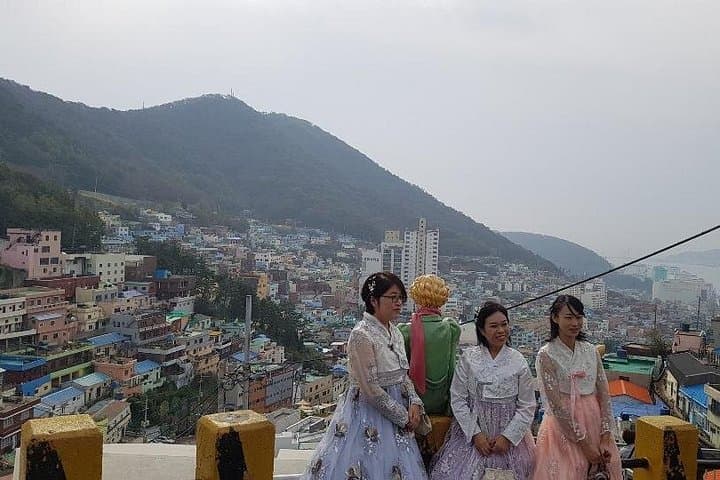
Morning light splits the horizon over Haeundae Beach as the bus eases into the rhythm of the city—waves pushing against the shore, bridges arching like atolls of steel. This private full-day loop stitches together Busan’s coastal geometry: Nurimaru APEC House perched above Haeundae, the cliffside temple of Haedong Yonggungsa that meets the sea, the layered alleys of Gamcheon Culture Village, and market life at Jagalchi and Gukje.
Verified experiences and guided adventures in the surrounding area.
Operated by James Ahn · Busan, Busan
Morning light splits the horizon over Haeundae Beach as the bus eases into the rhythm of the city—waves pushing against the shore, bridges arching like atolls of steel. This private full-day loop stitches together Busan’s coastal geometry: Nurimaru APEC House perched above Haeundae, the cliffside temple of Haedong Yonggungsa that meets the sea, the layered alleys of Gamcheon Culture Village, and market life at Jagalchi and Gukje.
History and culture sit beside geology here: Busan grew where river plains meet a rugged, indented coastline, and decades of trade shaped its salt-and-sea identity. Nurimaru recalls modern diplomacy and offers sweeping views of Gwangan Bridge; Haedong Yonggungsa is uncommon among Korean temples for its oceanfront siting, where tides and temple architecture converse. Gamcheon’s painted facades tell a story of postwar resettlement turned community art project, while Jagalchi’s stalls still sing of the city’s fishing heritage.
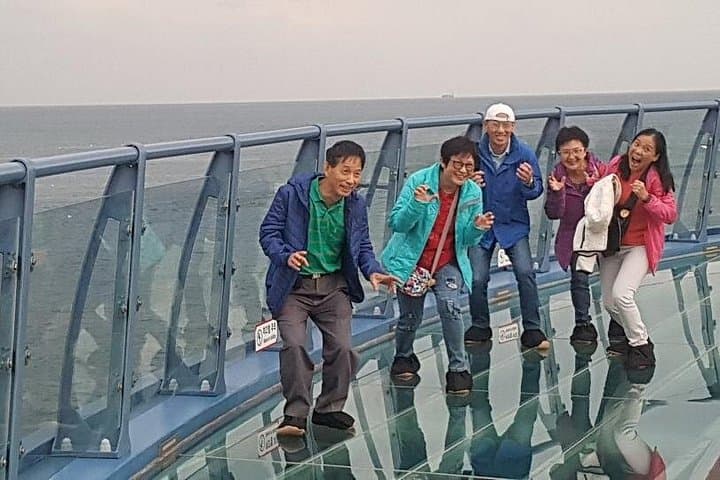
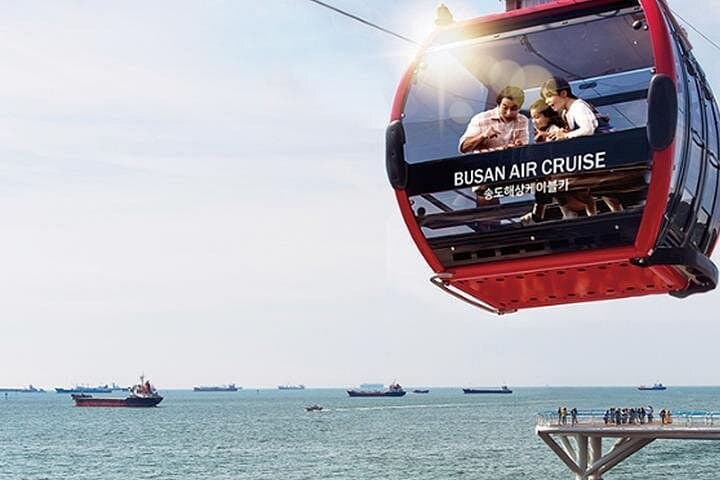
Practical guidance: expect an 8–9 hour day with multiple short stops—some attractions include admission and some don’t—so carry small bills. Wear comfortable walking shoes for uneven alleys and a light wind layer by the coast; the Songdo Skywalk and Daritdol Observatory expose you to wind and spray. Mobility-accessible transportation is available but verify pickup details at booking. Plan to arrive early in high season to avoid crowds at viewpoints; markets are busiest midday. Hydrate, protect against sun and spray, and keep your camera handy—Busan’s shoreline is constantly in motion, daring you to look again.
easy.
8–9 hours.
Suitable for travelers with basic mobility; expect multiple short walks and stairs in village and market areas.
Some stops list admission included (e.g., select temple or cultural sites) while others do not—check the specific itinerary and bring cash for entries that aren’t covered.
Meals are not listed as included; plan to sample market food or bring snacks and budget for lunch at a local restaurant or market stalls.
Transportation options are noted as wheelchair accessible—confirm accessibility needs and pickup details with the operator at booking.
The tour confirms instant booking; standard cancellation typically allows a full refund if canceled at least 24 hours before departure—confirm specifics at purchase.
Busan developed as a major port and gateway to the Korean Peninsula; its modern growth accelerated during the 20th century with maritime trade and postwar urbanization.
Coastal erosion and marine debris are local concerns—support vendors who reduce single-use plastics and follow local signage on protected coastal areas.
James Ahn operates guided outdoor trips and adventures with an emphasis on safety, stewardship, and memorable experiences.
Morning light splits the horizon over Haeundae Beach as the bus eases into the rhythm of the city—waves pushing against the shore, bridges arching like atolls of steel. This private full-day loop stitches together Busan’s coastal geometry: Nurimaru APEC House perched above Haeundae, the cliffside temple of Haedong Yonggungsa that meets the sea, the layered alleys of Gamcheon Culture Village, and market life at Jagalchi and Gukje.
Morning light splits the horizon over Haeundae Beach as the bus eases into the rhythm of the city—waves pushing against the shore, bridges arching like atolls of steel. This private full-day loop stitches together Busan’s coastal geometry: Nurimaru APEC House perched above Haeundae, the cliffside temple of Haedong Yonggungsa that meets the sea, the layered alleys of Gamcheon Culture Village, and market life at Jagalchi and Gukje.
History and culture sit beside geology here: Busan grew where river plains meet a rugged, indented coastline, and decades of trade shaped its salt-and-sea identity. Nurimaru recalls modern diplomacy and offers sweeping views of Gwangan Bridge; Haedong Yonggungsa is uncommon among Korean temples for its oceanfront siting, where tides and temple architecture converse. Gamcheon’s painted facades tell a story of postwar resettlement turned community art project, while Jagalchi’s stalls still sing of the city’s fishing heritage.
Practical guidance: expect an 8–9 hour day with multiple short stops—some attractions include admission and some don’t—so carry small bills. Wear comfortable walking shoes for uneven alleys and a light wind layer by the coast; the Songdo Skywalk and Daritdol Observatory expose you to wind and spray. Mobility-accessible transportation is available but verify pickup details at booking. Plan to arrive early in high season to avoid crowds at viewpoints; markets are busiest midday. Hydrate, protect against sun and spray, and keep your camera handy—Busan’s shoreline is constantly in motion, daring you to look again.