THE ADVENTURE COLLECTIVE® · Independent discovery and booking for outdoor travel

A demanding single-day journey from Kigali that climbs through bamboo and volcanic terrain to Bisoke’s crater lake. Expect changing trail conditions, strong summit views, and a full day of hiking and travel.
A demanding single-day journey from Kigali that climbs through bamboo and volcanic terrain to Bisoke’s crater lake. Expect changing trail conditions, strong summit views, and a full day of hiking and travel.
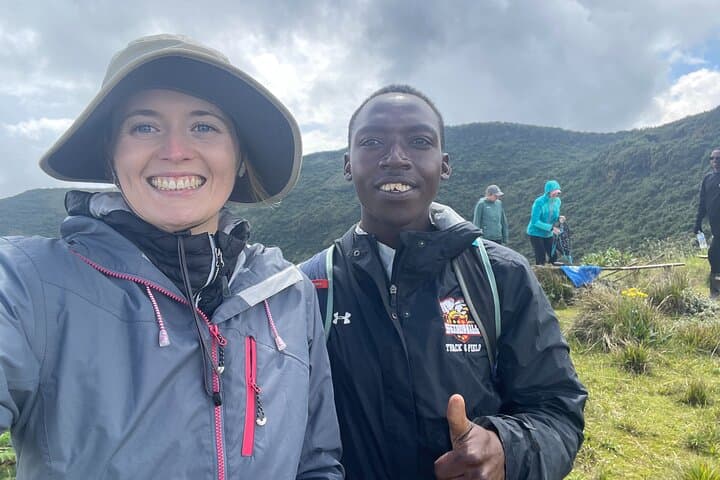
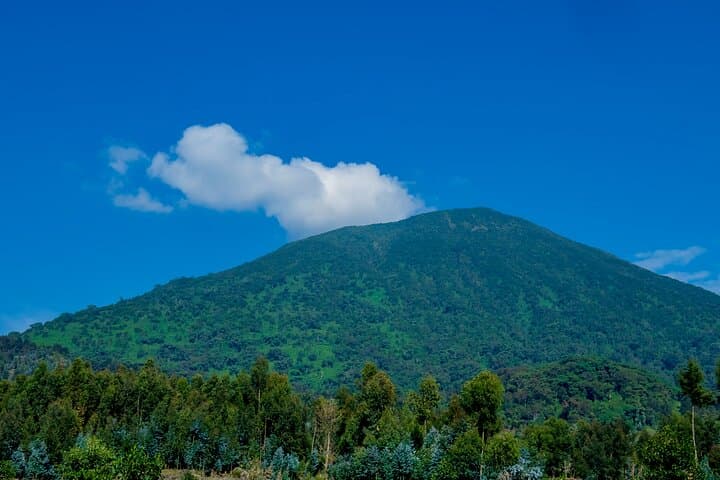
Mist lifts off the forest as you step onto the volcanic trail, cool air pressing against the first steep switchbacks. Rwandan hills roll away to the east while the crater of Bisoke narrows ahead, a green-blue lake cupped in basalt. The path threads through moss-draped trees, a bamboo band that rattles like a live instrument, then opens to heath and volcanic scree where each breath feels thinner and the summit’s rim demands attention.
Verified experiences and guided adventures in the surrounding area.
Operated by Hope Tours Africa · Musanze (Ruhengeri), Northern Province
Mist lifts off the forest as you step onto the volcanic trail, cool air pressing against the first steep switchbacks. Rwandan hills roll away to the east while the crater of Bisoke narrows ahead, a green-blue lake cupped in basalt. The path threads through moss-draped trees, a bamboo band that rattles like a live instrument, then opens to heath and volcanic scree where each breath feels thinner and the summit’s rim demands attention.
Bisoke is one of the Virunga chain’s active stratovolcanoes—part of the Albertine Rift—and its summit lake has been an alpine fixture for millennia. The region’s conservation story is closely tied to research and protection efforts begun by early primatologists; local communities in Musanze supply guides and hospitality that sustain park stewardship. Geologically, expect volcanic rock underfoot and fertile soils that support bamboo, Lobelia, and Hagenia as you climb.
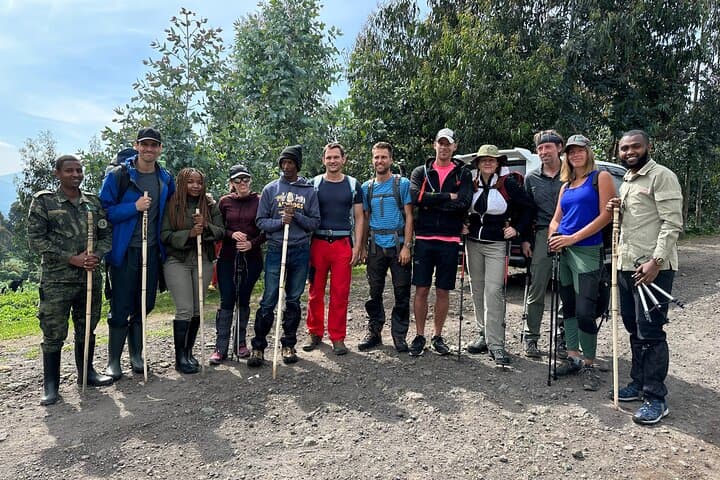
Practically, this is a full day: an early drive from Kigali, a guided ascent, time at the crater, and descent. Trail conditions shift from packed dirt to muddy roots to loose lava rock near the rim; poles and solid boots make the difference. Hydrate before and during the hike, layer for fast weather changes, and allow extra time for steep sections. Guides manage permits and local rules—listen to their pacing and conservation guidance. If you’re moderately fit and comfortable on uneven, sustained climbs, Bisoke delivers a compact, high-altitude reward: a crater lake view that anchors the Virunga range and a tactile sense of active earth beneath your boots.
moderate.
10–12 hours (door-to-door).
Suitable for hikers with good cardiovascular fitness and prior experience on sustained ascents; able to manage 600–1,200 m of elevation change.
The guided outing is typically a full-day experience including travel from Kigali; plan on 4–6 hours of hiking round trip plus driving and briefing time for a 10–12 hour day.
Entrance fees and park permissions are required and are usually arranged by the tour operator; confirm what’s included before booking.
Mount Bisoke’s summit is about 3,700 m (approximately 12,100 ft); expect thinner air and cooler temperatures near the crater rim.
Moderately fit beginners who have experience with full-day hikes and good footwear can complete it, but it’s not recommended for those with heart conditions or pregnancy.
The Virunga volcanoes have long been a focus for primate research and conservation; Dian Fossey’s work nearby helped catalyze modern protection efforts in the park.
Volcanoes National Park is managed with strict rules to reduce human impact—stay on trails, minimize noise, and carry out all litter to support fragile alpine habitats.
Hope Tours Africa operates guided outdoor trips and adventures with an emphasis on safety, stewardship, and memorable experiences.
Mist lifts off the forest as you step onto the volcanic trail, cool air pressing against the first steep switchbacks. Rwandan hills roll away to the east while the crater of Bisoke narrows ahead, a green-blue lake cupped in basalt. The path threads through moss-draped trees, a bamboo band that rattles like a live instrument, then opens to heath and volcanic scree where each breath feels thinner and the summit’s rim demands attention.
Mist lifts off the forest as you step onto the volcanic trail, cool air pressing against the first steep switchbacks. Rwandan hills roll away to the east while the crater of Bisoke narrows ahead, a green-blue lake cupped in basalt. The path threads through moss-draped trees, a bamboo band that rattles like a live instrument, then opens to heath and volcanic scree where each breath feels thinner and the summit’s rim demands attention.
Bisoke is one of the Virunga chain’s active stratovolcanoes—part of the Albertine Rift—and its summit lake has been an alpine fixture for millennia. The region’s conservation story is closely tied to research and protection efforts begun by early primatologists; local communities in Musanze supply guides and hospitality that sustain park stewardship. Geologically, expect volcanic rock underfoot and fertile soils that support bamboo, Lobelia, and Hagenia as you climb.
Practically, this is a full day: an early drive from Kigali, a guided ascent, time at the crater, and descent. Trail conditions shift from packed dirt to muddy roots to loose lava rock near the rim; poles and solid boots make the difference. Hydrate before and during the hike, layer for fast weather changes, and allow extra time for steep sections. Guides manage permits and local rules—listen to their pacing and conservation guidance. If you’re moderately fit and comfortable on uneven, sustained climbs, Bisoke delivers a compact, high-altitude reward: a crater lake view that anchors the Virunga range and a tactile sense of active earth beneath your boots.