THE ADVENTURE COLLECTIVE® · Independent discovery and booking for outdoor travel

Spend a full day moving from dawn at Angkor Wat to the jungle-strangled corridors of Ta Prohm. This guided circuit covers Bayon, Baphuon and royal terraces with hotel pickup and an included lunch break.
Spend a full day moving from dawn at Angkor Wat to the jungle-strangled corridors of Ta Prohm. This guided circuit covers Bayon, Baphuon and royal terraces with hotel pickup and an included lunch break.
You arrive at sunrise to the moat’s glassy rim and the western façade of Angkor Wat easing into light—the stones cool beneath your palms, carved bas-reliefs holding a thousand years of rain and worship.
Verified experiences and guided adventures in the surrounding area.
Operated by Happy Angkor Wat Tour · Siem Reap, Siem Reap Province
You arrive at sunrise to the moat’s glassy rim and the western façade of Angkor Wat easing into light—the stones cool beneath your palms, carved bas-reliefs holding a thousand years of rain and worship.
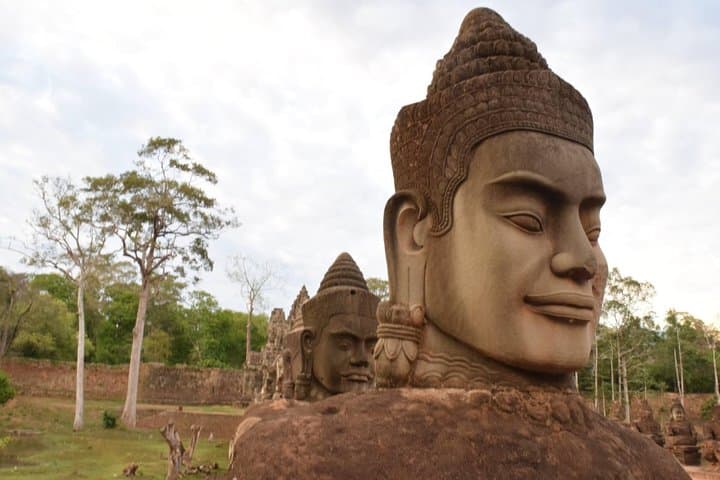
The day moves north into Angkor Thom where the Bayon’s smiling faces peer from terraces hewn of laterite and sandstone, an urban core built by Jayavarman VII in the late 12th–early 13th century. Nearby Baphuon and the royal enclosure show different phases of Khmer kingship: rising pyramids, collapsed libraries, and edited palaces. Geologically the site sits on a lowland of alluvial plains with seasonal inundation that once fed the complex’s ingenious baray reservoirs.
Ta Prohm closes the loop—fig roots like slow hands gripping lintels, the jungle daring you to read the story of ruin and repair. Cultural notes: these temples were Hindu then Buddhist centers; many inscriptions and iconography reflect shifting religious life. Local guides and vendors are part of the living landscape—bring local currency for small purchases.
Practical guidance: start at first light to avoid crowds and heat; the circuit is eight hours with moderate walking on uneven stone and packed earth. Follow dress rules for places of worship—shoulders and knees covered—carry sun protection, a refillable water bottle, and comfortable shoes with good traction. Expect an air-conditioned vehicle between sites and a mid-day lunch break. Respect ropes and do not climb fragile masonry; tipping guides and drivers is customary. With some planning this full-day loop delivers history, geology, and the raw, tactile drama of Angkor’s stones.
moderate.
7–8 hours.
Moderate fitness: able to walk several kilometers over uneven terrain and climb short steep steps repeatedly.
Yes. Entry to the Angkor Archaeological Park requires a valid Angkor pass, typically purchased at the official ticket center near the park entrance; passes are available for various durations.
Yes. Shoulders and knees must be covered for both men and women to enter many temple buildings; lightweight coverings work well in the heat.
The itinerary notes stroller accessibility for parts of the day, but expect uneven terrain and steps at many temples; infants are usually required to sit on laps during transport.
The tour includes a lunch break and bottled water as listed, and vegetarian options are available if requested at booking.
Angkor was the heart of the Khmer Empire from the 9th to 15th centuries; successive kings expanded temple complexes reflecting Hindu and later Buddhist beliefs.
High visitor numbers stress fragile masonry and ecosystems—stay on marked paths, avoid touching bas-reliefs, and support licensed local guides to fund conservation.
Happy Angkor Wat Tour operates guided outdoor trips and adventures with an emphasis on safety, stewardship, and memorable experiences.
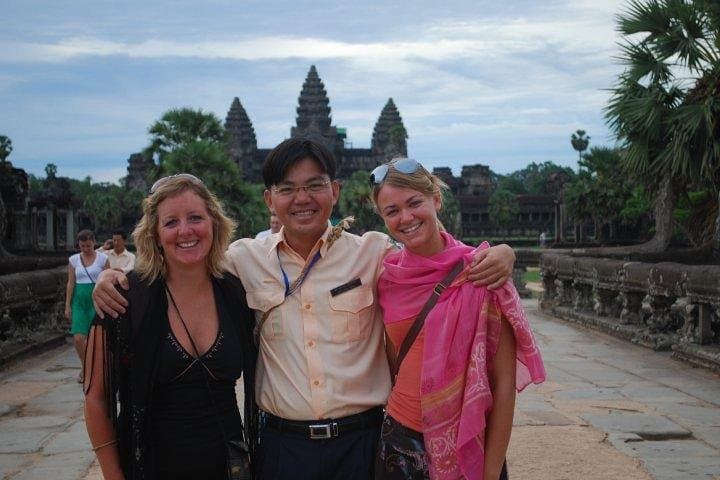
You arrive at sunrise to the moat’s glassy rim and the western façade of Angkor Wat easing into light—the stones cool beneath your palms, carved bas-reliefs holding a thousand years of rain and worship.
You arrive at sunrise to the moat’s glassy rim and the western façade of Angkor Wat easing into light—the stones cool beneath your palms, carved bas-reliefs holding a thousand years of rain and worship.
The day moves north into Angkor Thom where the Bayon’s smiling faces peer from terraces hewn of laterite and sandstone, an urban core built by Jayavarman VII in the late 12th–early 13th century. Nearby Baphuon and the royal enclosure show different phases of Khmer kingship: rising pyramids, collapsed libraries, and edited palaces. Geologically the site sits on a lowland of alluvial plains with seasonal inundation that once fed the complex’s ingenious baray reservoirs.
Ta Prohm closes the loop—fig roots like slow hands gripping lintels, the jungle daring you to read the story of ruin and repair. Cultural notes: these temples were Hindu then Buddhist centers; many inscriptions and iconography reflect shifting religious life. Local guides and vendors are part of the living landscape—bring local currency for small purchases.
Practical guidance: start at first light to avoid crowds and heat; the circuit is eight hours with moderate walking on uneven stone and packed earth. Follow dress rules for places of worship—shoulders and knees covered—carry sun protection, a refillable water bottle, and comfortable shoes with good traction. Expect an air-conditioned vehicle between sites and a mid-day lunch break. Respect ropes and do not climb fragile masonry; tipping guides and drivers is customary. With some planning this full-day loop delivers history, geology, and the raw, tactile drama of Angkor’s stones.