THE ADVENTURE COLLECTIVE® · Independent discovery and booking for outdoor travel

Spend a day exploring Angkor Wat, Ta Prohm and Angkor Thom, finishing with sunset at Phnom Bakheng. This private tour mixes guided history with quieter vantage points away from the largest crowds.
Spend a day exploring Angkor Wat, Ta Prohm and Angkor Thom, finishing with sunset at Phnom Bakheng. This private tour mixes guided history with quieter vantage points away from the largest crowds.
Morning light slices across the causeway as travelers step from an air-conditioned minivan into the stone geometry of Angkor Wat. The complex smells faintly of sun-warmed laterite and old incense; faces in relief watch you move through corridors where history and stone meet.
Verified experiences and guided adventures in the surrounding area.
Operated by Premier Angkor Tours · Siem Reap, Siem Reap Province
Morning light slices across the causeway as travelers step from an air-conditioned minivan into the stone geometry of Angkor Wat. The complex smells faintly of sun-warmed laterite and old incense; faces in relief watch you move through corridors where history and stone meet.
This full-day tour threads major Angkorian sites built during the Khmer Empire (9th–13th centuries). Angkor Wat’s bas-reliefs narrate ancient cosmology while Ta Prohm’s strangler figs push roots through lintels—a living negotiation between tree and temple. Angkor Thom’s Bayon offers 200 carved faces that turn with the light; Phnom Bakheng, a hill-temple from the 9th century, rewards the climb with a wide vista over West Baray and Tonle Sap as the sun lowers.
Geology here is simple but decisive: sandstone blocks quarried and stacked on compacted clay and laterite, weathering into the soft edges you see today. Local guides explain ritual, royal power, and restoration choices while steering visitors toward less-crowded angles for photos.
Practical guidance: expect 8–9 hours of walking on uneven stone and packed earth; wear closed, grippy shoes and modest clothing that covers shoulders and knees. Carry water, sun protection, and Cambodian riel or card for the temple pass and lunch. Start early to avoid peak heat and midday crowds; time at Phnom Bakheng is best planned to arrive an hour before sunset to secure a view. The route is ideal for those with moderate fitness and curiosity about architecture, archaeology, and living cultural landscapes.
moderate.
8–9 hours.
Suitable for travelers with moderate fitness who can walk several hours over uneven ground and climb short stone stairways.
Yes. All visitors must purchase an Angkor Archaeological Park pass at the ticket center; the guide typically coordinates the stop to buy passes before entering the temples.
Children under 12 may be free with an adult (per operator policy), but seniors or those with mobility issues should note uneven steps and extended walking; private tours can be adjusted for pace.
Major vendors and the ticket center accept cards, but small local restaurants and market stalls may be cash-only—carry some riel or US dollars for flexibility.
Arrive 45–60 minutes before sunset to secure a viewing spot; the platform fills quickly and the climb is steeper than it appears.
The Angkor complex grew under the Khmer Empire between the 9th and 13th centuries; its temples served as both religious centers and statements of royal power.
Ongoing conservation balances tourism with preservation—follow guide instructions, avoid touching carvings, and use marked paths to limit erosion and root damage.
Premier Angkor Tours operates guided outdoor trips and adventures with an emphasis on safety, stewardship, and memorable experiences.
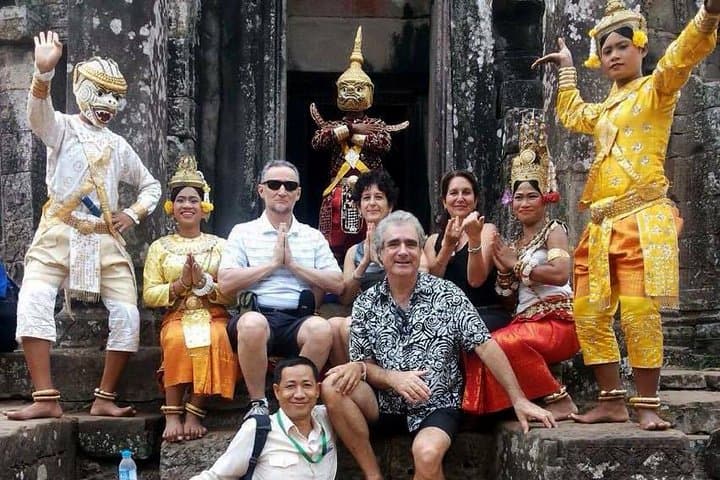
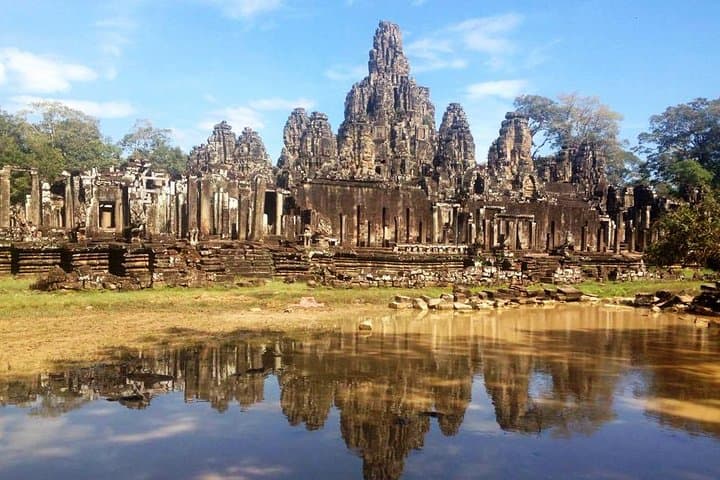

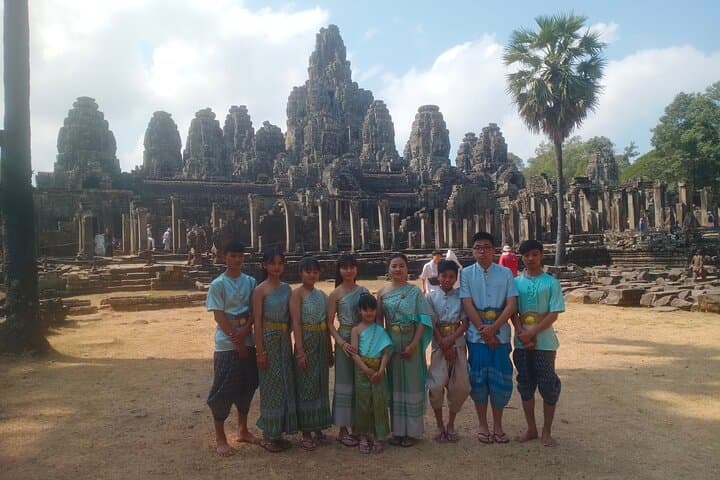
Morning light slices across the causeway as travelers step from an air-conditioned minivan into the stone geometry of Angkor Wat. The complex smells faintly of sun-warmed laterite and old incense; faces in relief watch you move through corridors where history and stone meet.
Morning light slices across the causeway as travelers step from an air-conditioned minivan into the stone geometry of Angkor Wat. The complex smells faintly of sun-warmed laterite and old incense; faces in relief watch you move through corridors where history and stone meet.
This full-day tour threads major Angkorian sites built during the Khmer Empire (9th–13th centuries). Angkor Wat’s bas-reliefs narrate ancient cosmology while Ta Prohm’s strangler figs push roots through lintels—a living negotiation between tree and temple. Angkor Thom’s Bayon offers 200 carved faces that turn with the light; Phnom Bakheng, a hill-temple from the 9th century, rewards the climb with a wide vista over West Baray and Tonle Sap as the sun lowers.
Geology here is simple but decisive: sandstone blocks quarried and stacked on compacted clay and laterite, weathering into the soft edges you see today. Local guides explain ritual, royal power, and restoration choices while steering visitors toward less-crowded angles for photos.
Practical guidance: expect 8–9 hours of walking on uneven stone and packed earth; wear closed, grippy shoes and modest clothing that covers shoulders and knees. Carry water, sun protection, and Cambodian riel or card for the temple pass and lunch. Start early to avoid peak heat and midday crowds; time at Phnom Bakheng is best planned to arrive an hour before sunset to secure a view. The route is ideal for those with moderate fitness and curiosity about architecture, archaeology, and living cultural landscapes.