THE ADVENTURE COLLECTIVE® · Independent discovery and booking for outdoor travel

Spend a full day exploring Angkor’s major temples with a private, air-conditioned driver. This flexible tour covers Angkor Wat, Ta Phrom and Bayon with cooling comforts and local insight—ideal for travelers who want a focused, low-effort cultural day.
Spend a full day exploring Angkor’s major temples with a private, air-conditioned driver. This flexible tour covers Angkor Wat, Ta Phrom and Bayon with cooling comforts and local insight—ideal for travelers who want a focused, low-effort cultural day.
The morning light falls across the moat and causes the reflected towers of Angkor Wat to shimmer; a private, air-conditioned car pulls up and a driver steps out with cold water and a chilled towel. Visitors move from the ordered stones of Angkor Wat to the root-entangled corridors of Ta Phrom, then to the carved faces of Bayon—each stop a different mood of the same vast archaeological park.
Verified experiences and guided adventures in the surrounding area.
Operated by Siem Reap Angkor Travel and Tour · Siem Reap, Siem Reap Province
The morning light falls across the moat and causes the reflected towers of Angkor Wat to shimmer; a private, air-conditioned car pulls up and a driver steps out with cold water and a chilled towel. Visitors move from the ordered stones of Angkor Wat to the root-entangled corridors of Ta Phrom, then to the carved faces of Bayon—each stop a different mood of the same vast archaeological park.
Angkor’s stones were laid between the 9th and 13th centuries under the Khmer Empire; sandstone blocks quarried nearby hold bas-reliefs that record kings, myth and daily life. The site's geology is simple—soft, erodible sandstone over laterite foundations—so weather and roots affect the ruins. The culture around Siem Reap is informed by this legacy: temple rituals, rice farming rhythms and a growing tourism economy that still centres local guides and small restaurants.
Expect a day of short walks, stairs and uneven surfaces, with long flat sections around the main temples. Start early to avoid the heat and crowds; midday is best for a shaded lunch in town. Dress respectfully—shoulders and knees must be covered to enter Angkor Wat’s central tower. Bring a refillable water bottle; drivers typically provide bottled water but refills reduce plastic.
Practical tips: negotiate a flexible temple order with your driver, plan rest breaks, and buy your Angkor Park pass in advance. With a private driver you get pace control—linger where you want, skip what you don’t. The day balances cultural immersion with simple logistics: walking, photography and steady, low-impact exploration.
easy.
8 hours.
Suitable for travelers in average health who can manage several short walks, stairs and uneven surfaces throughout the day.
No; the entrance pass is not included—buy a 1-day, 3-day or 7-day pass at the park ticket office before your tour.
Yes; the tour is private and flexible—tell your driver which temples you prefer and they can reorder stops accordingly.
Basic facilities and small stalls/restaurants are available near major temples, but options are limited inside the park—pack snacks if needed.
Transportation is wheelchair-accessible per the operator, but many temple areas have steps and uneven ground that limit access to some interiors.
Angkor was the capital of the Khmer Empire; its monuments—built mainly from the 9th to 13th centuries—reflect state religion, hydraulic engineering and royal power.
Angkor faces erosion from weather and visitor pressure; follow designated paths, avoid climbing fragile carvings and support local conservation fees that fund restoration.
Siem Reap Angkor Travel and Tour operates guided outdoor trips and adventures with an emphasis on safety, stewardship, and memorable experiences.
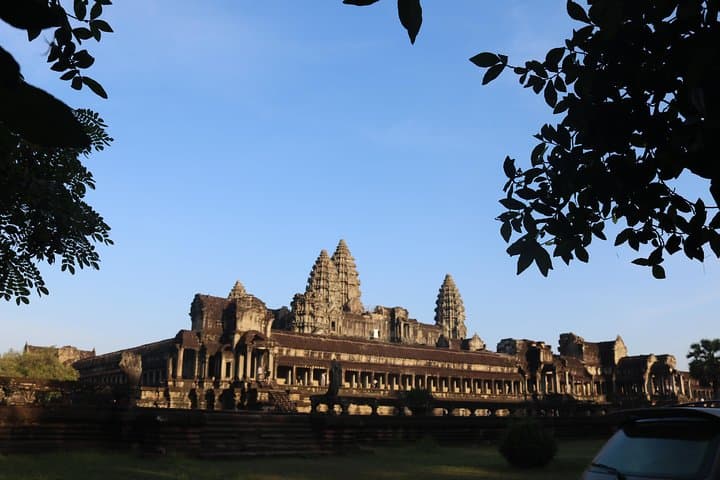
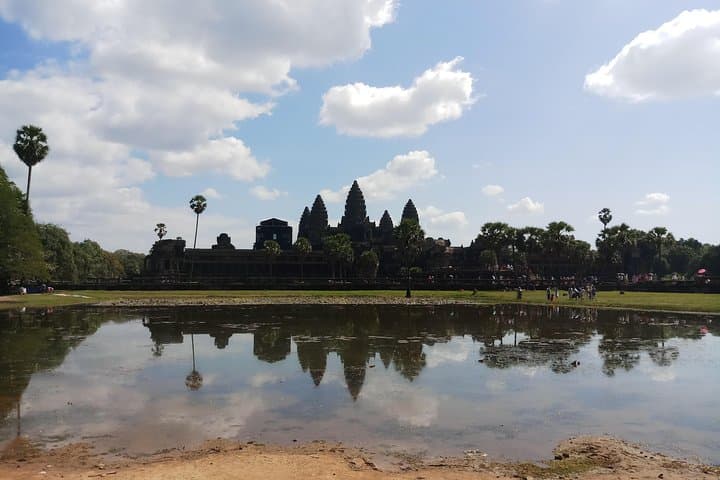
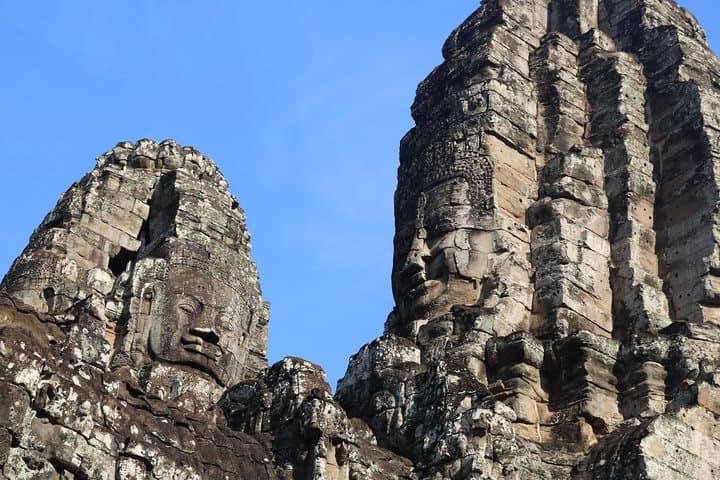
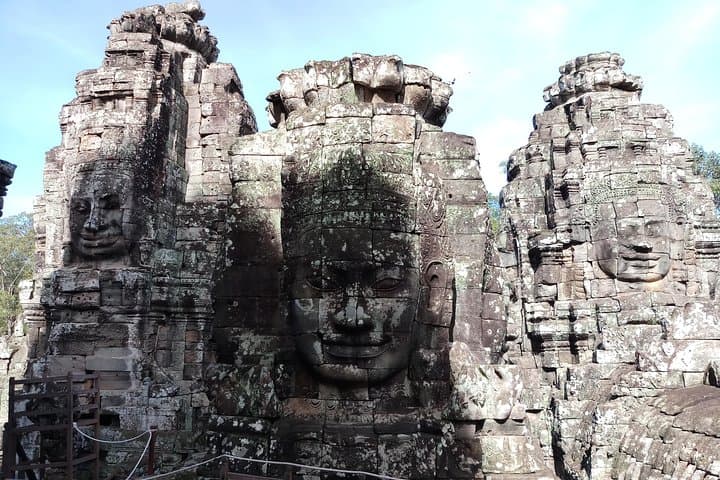
The morning light falls across the moat and causes the reflected towers of Angkor Wat to shimmer; a private, air-conditioned car pulls up and a driver steps out with cold water and a chilled towel. Visitors move from the ordered stones of Angkor Wat to the root-entangled corridors of Ta Phrom, then to the carved faces of Bayon—each stop a different mood of the same vast archaeological park.
The morning light falls across the moat and causes the reflected towers of Angkor Wat to shimmer; a private, air-conditioned car pulls up and a driver steps out with cold water and a chilled towel. Visitors move from the ordered stones of Angkor Wat to the root-entangled corridors of Ta Phrom, then to the carved faces of Bayon—each stop a different mood of the same vast archaeological park.
Angkor’s stones were laid between the 9th and 13th centuries under the Khmer Empire; sandstone blocks quarried nearby hold bas-reliefs that record kings, myth and daily life. The site's geology is simple—soft, erodible sandstone over laterite foundations—so weather and roots affect the ruins. The culture around Siem Reap is informed by this legacy: temple rituals, rice farming rhythms and a growing tourism economy that still centres local guides and small restaurants.
Expect a day of short walks, stairs and uneven surfaces, with long flat sections around the main temples. Start early to avoid the heat and crowds; midday is best for a shaded lunch in town. Dress respectfully—shoulders and knees must be covered to enter Angkor Wat’s central tower. Bring a refillable water bottle; drivers typically provide bottled water but refills reduce plastic.
Practical tips: negotiate a flexible temple order with your driver, plan rest breaks, and buy your Angkor Park pass in advance. With a private driver you get pace control—linger where you want, skip what you don’t. The day balances cultural immersion with simple logistics: walking, photography and steady, low-impact exploration.