THE ADVENTURE COLLECTIVE® · Independent discovery and booking for outdoor travel

Make a full-day run from Delhi to Agra to see the Taj Mahal, Agra Fort, Itmad-Ud-Daulah and Mehtab Bagh. This guided, private day tour blends history, marble craft, and compact logistics for travelers short on time.
Make a full-day run from Delhi to Agra to see the Taj Mahal, Agra Fort, Itmad-Ud-Daulah and Mehtab Bagh. This guided, private day tour blends history, marble craft, and compact logistics for travelers short on time.
The day begins before dawn as the highway unfurls toward the Yamuna plain and the Taj Mahal first appears as a pale silhouette against a rising sky. Travelers step from the car into marble coolness, guided through corridors of inlay work and stories handed down by local guides.
Verified experiences and guided adventures in the surrounding area.
Operated by Luxury India Tour Packages · Agra, Uttar Pradesh
The day begins before dawn as the highway unfurls toward the Yamuna plain and the Taj Mahal first appears as a pale silhouette against a rising sky. Travelers step from the car into marble coolness, guided through corridors of inlay work and stories handed down by local guides.
Agra sits on the Indo-Gangetic plains where river deposition shaped the soft alluvial soils that made large-scale Mughal construction possible. Shah Jahan’s Taj Mahal (mid-17th century) and Akbar’s red sandstone Agra Fort speak to imperial ambition and the region’s access to marble and artisanship. Itmad-Ud-Daulah—often called the “Baby Taj”—shows the transition to delicate pietra dura inlay that would define later monuments.
The city’s culture blends courtly heritage with markets still run by families who carve marble and stitch zardozi. Mehtab Bagh, across the Yamuna, gives a reflective back view of the mausoleum and a quieter perspective away from the crowds.
Practical guidance: expect a 12-hour round trip from Delhi with several short walks and stair sections inside monuments. Arrive at Taj Mahal at opening to avoid heat and lines; security is strict—large bags, tripods, and drones are restricted. Bring sun protection, comfortable closed-toe shoes for walking on uneven pathways, and local currency for small purchases.
This itinerary is heavy on cultural sights rather than strenuous terrain, but the long day, city traffic, and monument queues reward early starts and realistic pacing.
easy.
10–12 hours.
Suitable for most fitness levels; expect several short walks, stairs inside monuments, and a long day in transit
Expect roughly 3–4 hours each way on the Yamuna Expressway depending on traffic; total trip time is about 10–12 hours.
Yes—entrance tickets for the Taj Mahal, Agra Fort, and Itmad-Ud-Daulah are included as stated in the tour inclusions.
Yes—physical demands are light, but expect walking and some stair climbing; the tour notes infants must sit on laps and advises those with cardiovascular issues exercise caution.
Personal cameras and phones are allowed, but large tripods, drones, and flash setups may be restricted—follow on-site security instructions.
Agra rose to prominence under the Mughal Empire—Akbar, Jahangir and Shah Jahan shaped its major monuments between the 16th and 17th centuries.
Visitor impact is managed through timed entries and restrictions on certain items; support local conservation by using reusable water and respecting restricted zones.
Luxury India Tour Packages operates guided outdoor trips and adventures with an emphasis on safety, stewardship, and memorable experiences.

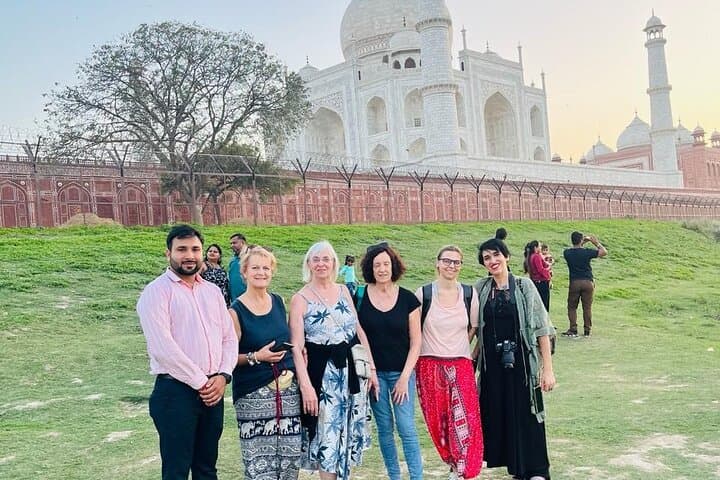

The day begins before dawn as the highway unfurls toward the Yamuna plain and the Taj Mahal first appears as a pale silhouette against a rising sky. Travelers step from the car into marble coolness, guided through corridors of inlay work and stories handed down by local guides.
The day begins before dawn as the highway unfurls toward the Yamuna plain and the Taj Mahal first appears as a pale silhouette against a rising sky. Travelers step from the car into marble coolness, guided through corridors of inlay work and stories handed down by local guides.
Agra sits on the Indo-Gangetic plains where river deposition shaped the soft alluvial soils that made large-scale Mughal construction possible. Shah Jahan’s Taj Mahal (mid-17th century) and Akbar’s red sandstone Agra Fort speak to imperial ambition and the region’s access to marble and artisanship. Itmad-Ud-Daulah—often called the “Baby Taj”—shows the transition to delicate pietra dura inlay that would define later monuments.
The city’s culture blends courtly heritage with markets still run by families who carve marble and stitch zardozi. Mehtab Bagh, across the Yamuna, gives a reflective back view of the mausoleum and a quieter perspective away from the crowds.
Practical guidance: expect a 12-hour round trip from Delhi with several short walks and stair sections inside monuments. Arrive at Taj Mahal at opening to avoid heat and lines; security is strict—large bags, tripods, and drones are restricted. Bring sun protection, comfortable closed-toe shoes for walking on uneven pathways, and local currency for small purchases.
This itinerary is heavy on cultural sights rather than strenuous terrain, but the long day, city traffic, and monument queues reward early starts and realistic pacing.