THE ADVENTURE COLLECTIVE® · Independent discovery and booking for outdoor travel

Explore three distinct valleys outside Marrakech in one long day—Berber villages, an argan cooperative, waterfalls, and a sunset over the Agafay stony desert. Expect vehicle transfers with short walks, home-cooked lunch, and cultural stops.
Explore three distinct valleys outside Marrakech in one long day—Berber villages, an argan cooperative, waterfalls, and a sunset over the Agafay stony desert. Expect vehicle transfers with short walks, home-cooked lunch, and cultural stops.
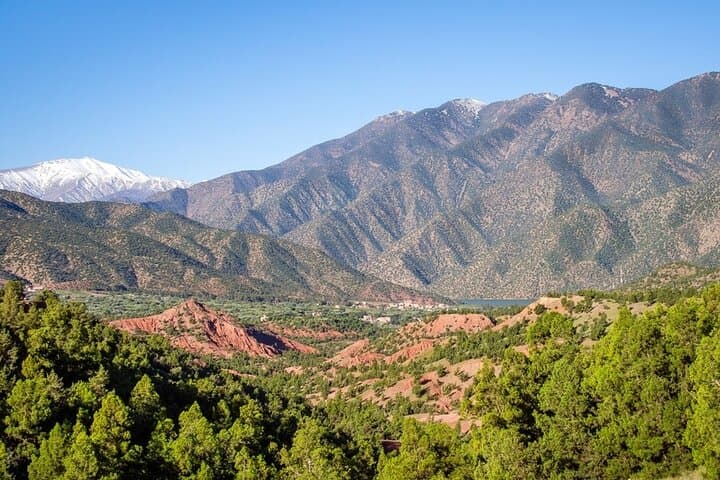
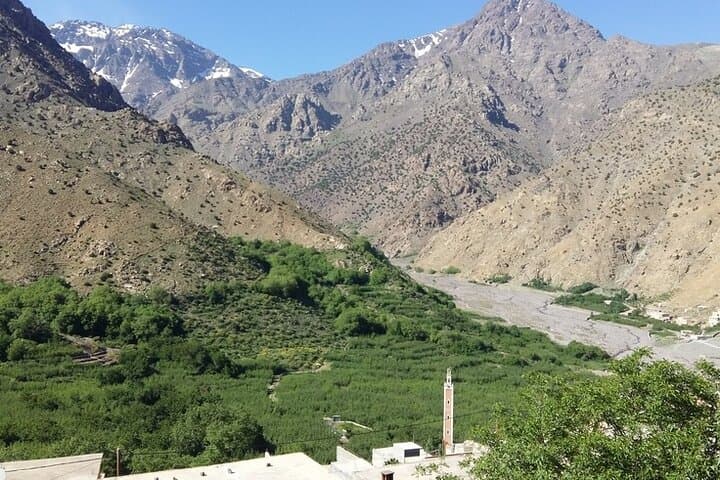
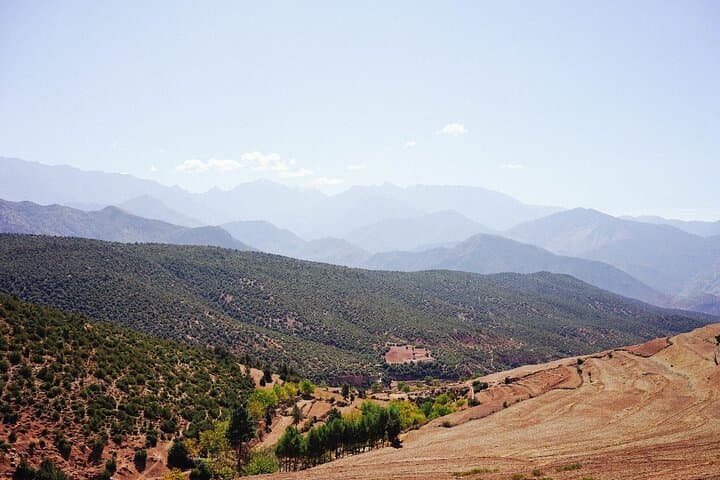
Driving out of Marrakech at first light, the road climbs and the city noise thins until the red walls are a distant memory. The vehicle threads switchbacks beneath the Atlas shoulder and unfolds a succession of valleys—rock faces catching sun, terraced fields, and a handful of stone villages where goats pick their way toward narrow lanes.
Verified experiences and guided adventures in the surrounding area.
Operated by PRIVATE MARRAKECH TRIPS · Marrakech, Marrakech-Safi
Driving out of Marrakech at first light, the road climbs and the city noise thins until the red walls are a distant memory. The vehicle threads switchbacks beneath the Atlas shoulder and unfolds a succession of valleys—rock faces catching sun, terraced fields, and a handful of stone villages where goats pick their way toward narrow lanes.
This route follows routes long used by Amazigh (Berber) communities, crossing foothills shaped by tectonic uplift and erosion that reveal ochres and slate in sudden bands. Local argan cooperatives, often run by women, are living cultural enterprises; nearby streams carve small waterfalls and collect into green pockets that sustain olive and pomegranate trees.
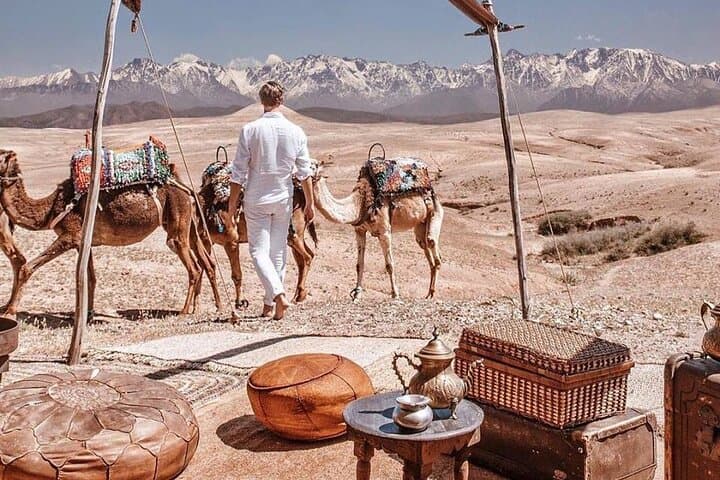
The itinerary mixes short walks—waterfall viewpoints and village lanes—with cultural stops: a cooperative demonstration of argan pressing, a family-hosted lunch of tagine and bread, and a mint-tea pause in Amizmiz Valley. Late afternoon brings Agafay’s stony desert: not Saharan dunes but a lunar field of gravel and low scrub where the sunset lays long shadows and offers wide western skies.
Practical guidance: expect a 7–8 hour day with mostly vehicle transfers and brief on-foot sections; wear grippy shoes for uneven village paths and light layers for changing temperatures. Bring water, sun protection, and an open attitude for photo stops and simple hospitality. The tour is accessible to most fitness levels and is best scheduled for cooler months or early starts in summer to avoid peak heat.
easy.
7–8 hours.
Light fitness—suitable for most travelers able to walk short distances on uneven ground and tolerate several hours in a vehicle.
The excursion lasts about 7–8 hours and typically starts with hotel pickup in Marrakech; return to the city is included.
A traditional Berber lunch and hot drinks such as mint tea are included; extra snacks and bottled water are recommended in summer.
Yes — the itinerary is described as easy; there are mostly short walks and vehicle transfers, but inform the operator of mobility needs for appropriate pickup arrangements.
Yes — the visit to an argan cooperative offers locally produced oil and handmade goods; bring cash for purchases and small bills for convenience.
The valleys have been traversed by Amazigh (Berber) communities for centuries; villages retain traditional substances of life—terraced agriculture, olive and argan production, and communal hospitality.
Support local cooperatives and family meals to channel revenue into communities; avoid single-use plastics and follow guides’ instructions to protect fragile desert and riparian habitats.
PRIVATE MARRAKECH TRIPS operates guided outdoor trips and adventures with an emphasis on safety, stewardship, and memorable experiences.
Driving out of Marrakech at first light, the road climbs and the city noise thins until the red walls are a distant memory. The vehicle threads switchbacks beneath the Atlas shoulder and unfolds a succession of valleys—rock faces catching sun, terraced fields, and a handful of stone villages where goats pick their way toward narrow lanes.
Driving out of Marrakech at first light, the road climbs and the city noise thins until the red walls are a distant memory. The vehicle threads switchbacks beneath the Atlas shoulder and unfolds a succession of valleys—rock faces catching sun, terraced fields, and a handful of stone villages where goats pick their way toward narrow lanes.
This route follows routes long used by Amazigh (Berber) communities, crossing foothills shaped by tectonic uplift and erosion that reveal ochres and slate in sudden bands. Local argan cooperatives, often run by women, are living cultural enterprises; nearby streams carve small waterfalls and collect into green pockets that sustain olive and pomegranate trees.
The itinerary mixes short walks—waterfall viewpoints and village lanes—with cultural stops: a cooperative demonstration of argan pressing, a family-hosted lunch of tagine and bread, and a mint-tea pause in Amizmiz Valley. Late afternoon brings Agafay’s stony desert: not Saharan dunes but a lunar field of gravel and low scrub where the sunset lays long shadows and offers wide western skies.
Practical guidance: expect a 7–8 hour day with mostly vehicle transfers and brief on-foot sections; wear grippy shoes for uneven village paths and light layers for changing temperatures. Bring water, sun protection, and an open attitude for photo stops and simple hospitality. The tour is accessible to most fitness levels and is best scheduled for cooler months or early starts in summer to avoid peak heat.