THE ADVENTURE COLLECTIVE® · Independent discovery and booking for outdoor travel

Move from Jinka to Arba Minch across six days of tribal markets, river crossings and lakeside wildlife. This multi-day tour connects travelers with Hamar, Mursi, Kara and Konso communities while showcasing the Omo River’s essential role in regional life.
Move from Jinka to Arba Minch across six days of tribal markets, river crossings and lakeside wildlife. This multi-day tour connects travelers with Hamar, Mursi, Kara and Konso communities while showcasing the Omo River’s essential role in regional life.
Dust rises off the rutted road as the minibus rolls out of Jinka at dawn; red earth smears the tires and the Omo River waits ahead, wide and restless. Travelers on a six-day Omo Valley tour move between markets and rivers, meeting Hamar, Mursi, Kara, Dassanech and Konso communities whose traditions remain visibly alive — body paint, lip plates, woven houses and ceremonial gatherings.
Verified experiences and guided adventures in the surrounding area.
Operated by Top Omo Valley Tours · Jinka, Southern Nations, Nationalities, and Peoples' Region
Dust rises off the rutted road as the minibus rolls out of Jinka at dawn; red earth smears the tires and the Omo River waits ahead, wide and restless. Travelers on a six-day Omo Valley tour move between markets and rivers, meeting Hamar, Mursi, Kara, Dassanech and Konso communities whose traditions remain visibly alive — body paint, lip plates, woven houses and ceremonial gatherings.
The Rift Valley’s geology frames the journey: pumice-strewn plateaus give way to alluvial plains carved by the Omo River, the lifeblood that feeds Lake Chamo and the wetlands where hippos and crocodiles congregate. Cultural history here stretches from ancestral grave markers at Konso (a UNESCO site) to living traditions of spearing, bull-jumping, and coffee ceremonies in riverside huts. Guides fluent in local languages mediate respectful interaction and explain social protocols.
Expect a pace that alternates between long road transfers and concentrated village time. Markets are sensory: livestock calls, bargaining voices, and bright body paint. Boat trips on Lake Chamo put wildlife in close view; canoe crossings of the Omo River are practical and elemental.
Practical guidance: pack sun protection, durable footwear, and modest clothing for village visits. Bring cash for market purchases and small community fees; electronic payments are rare. Hydrate frequently and follow your guide’s lead for photography permissions and etiquette.
The trip is equal parts cultural immersion and landscape travel — a hands-on glimpse into communities shaped by river, rock and season, best experienced slowly and with curiosity.
easy.
6 days.
Suitable for travelers in average physical condition; involves short walks, market standing and occasional river canoe crossings.
Consult a travel health clinic before travel—typhoid and hepatitis A are commonly recommended, and malaria prophylaxis is advised for many visitors.
Photography is permitted but always ask first and be prepared to offer a small tip; some ceremonies are private and off-limits.
Expect several long transfers between Jinka, Turmi, Konso and Arba Minch; days mix driving with on-foot visits to markets and villages.
Dry months (December–February and September–November) provide more reliable road conditions and clearer skies for travel and wildlife viewing.
The Omo Valley is a cultural crossroads where diverse ethnic groups have preserved distinct ceremonial practices and agricultural systems for centuries.
Visitor impact is significant—follow guide instructions, avoid single-use plastics, and support community-based tourism to channel income to local conservation and cultural preservation efforts.
Top Omo Valley Tours operates guided outdoor trips and adventures with an emphasis on safety, stewardship, and memorable experiences.


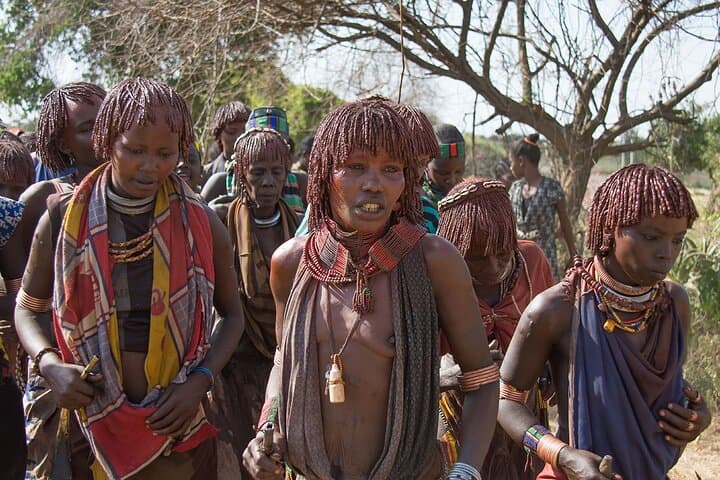
Dust rises off the rutted road as the minibus rolls out of Jinka at dawn; red earth smears the tires and the Omo River waits ahead, wide and restless. Travelers on a six-day Omo Valley tour move between markets and rivers, meeting Hamar, Mursi, Kara, Dassanech and Konso communities whose traditions remain visibly alive — body paint, lip plates, woven houses and ceremonial gatherings.
Dust rises off the rutted road as the minibus rolls out of Jinka at dawn; red earth smears the tires and the Omo River waits ahead, wide and restless. Travelers on a six-day Omo Valley tour move between markets and rivers, meeting Hamar, Mursi, Kara, Dassanech and Konso communities whose traditions remain visibly alive — body paint, lip plates, woven houses and ceremonial gatherings.
The Rift Valley’s geology frames the journey: pumice-strewn plateaus give way to alluvial plains carved by the Omo River, the lifeblood that feeds Lake Chamo and the wetlands where hippos and crocodiles congregate. Cultural history here stretches from ancestral grave markers at Konso (a UNESCO site) to living traditions of spearing, bull-jumping, and coffee ceremonies in riverside huts. Guides fluent in local languages mediate respectful interaction and explain social protocols.
Expect a pace that alternates between long road transfers and concentrated village time. Markets are sensory: livestock calls, bargaining voices, and bright body paint. Boat trips on Lake Chamo put wildlife in close view; canoe crossings of the Omo River are practical and elemental.
Practical guidance: pack sun protection, durable footwear, and modest clothing for village visits. Bring cash for market purchases and small community fees; electronic payments are rare. Hydrate frequently and follow your guide’s lead for photography permissions and etiquette.
The trip is equal parts cultural immersion and landscape travel — a hands-on glimpse into communities shaped by river, rock and season, best experienced slowly and with curiosity.