THE ADVENTURE COLLECTIVE® · Independent discovery and booking for outdoor travel

In four days, cross Oman’s rugged spine from canyon rims to shifting dunes and out to a star-lit turtle beach. This private journey stitches culture, geology, and water-carved wadis into a route that moves with the landscape—and gives you the tools to move with it.
In four days, cross Oman’s rugged spine from canyon rims to shifting dunes and out to a star-lit turtle beach. This private journey stitches culture, geology, and water-carved wadis into a route that moves with the landscape—and gives you the tools to move with it.
Dawn slides over Muscat in rose and gold as the Hajar Mountains lift from the haze, their limestone ribs catching the light. Your guide points the bonnet toward Wadi Bani Awf, where gravel tracks thread past terrace farms and date palms that sip at seasonal water. The wadi narrows and the cliffs lean in, daring the vehicle forward; villages appear like mirages, then fade as the road climbs toward Jebel Shams. Up high, cooler air moves across the plateau and the canyon known as Arabia’s “Grand Canyon” opens in a sudden reveal—strata stacked like pages, shadow and sun trading places by the minute.
Verified experiences and guided adventures in the surrounding area.
Operated by Oman Day Tours · Muscat, Muscat Governorate
Dawn slides over Muscat in rose and gold as the Hajar Mountains lift from the haze, their limestone ribs catching the light. Your guide points the bonnet toward Wadi Bani Awf, where gravel tracks thread past terrace farms and date palms that sip at seasonal water. The wadi narrows and the cliffs lean in, daring the vehicle forward; villages appear like mirages, then fade as the road climbs toward Jebel Shams. Up high, cooler air moves across the plateau and the canyon known as Arabia’s “Grand Canyon” opens in a sudden reveal—strata stacked like pages, shadow and sun trading places by the minute.
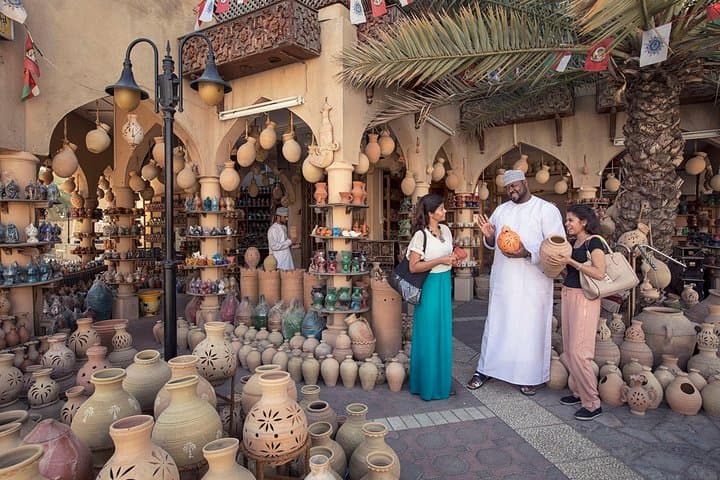
Back down in Nizwa, mornings hum early. The souq wakes before the heat, with clay pots, silver khanjars, and baskets of dates stacked in precise geometry. On Fridays, the cattle market rings with barter and the gravel scuffs under hooves; by late morning the famous round tower of Nizwa Fort calls you up its ramped spiral for horizon-wide views of palm groves and mountains. Built in the 1600s by the Yaruba dynasty, the fort’s cunning traps and firing ports speak to a time when Nizwa guarded trade routes linking the interior to the sea.
Then the desert. Locals call it Sharqiya, but travelers know the Wahiba Sands—seas of amber dunes in motion. Your 4x4 floats and dives along the slipfaces, warm wind pushing forward as you crest a ridge for sunset. Camp glows under starlight, the dunes settling around you like a slow breath. Stories swap over grilled lamb and cardamom tea; a cool night reminds you why desert mornings feel clean and new.
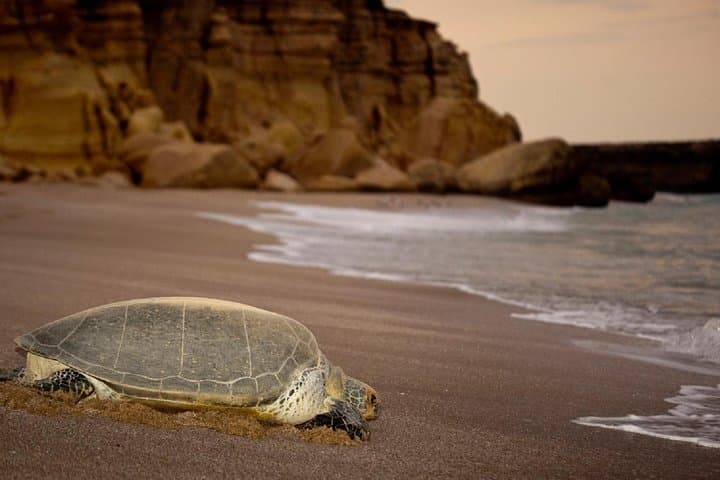
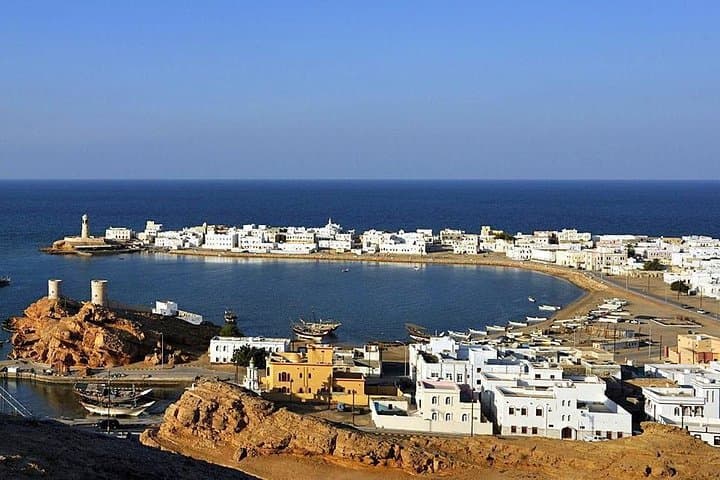
Along the coast near Sur, the Arabian Sea draws turtles to Ras al Jinz. At night, you walk under constellations while waves comb the shore. Guides lead in low voices—no lights, no flashes—as green turtles heave ashore to nest. The beach holds its breath when hatchlings break the sand and sprint for the surf.
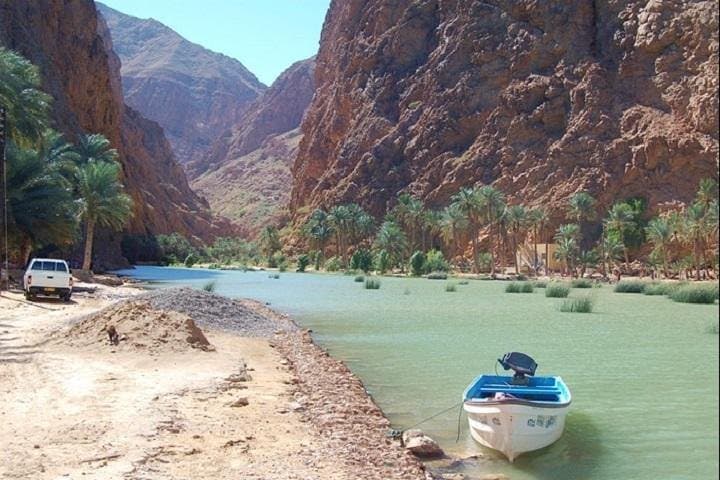
On the final day, Wadi Shab’s canyon invites a leg-stretch: about 45 minutes on a rocky path, then palm shade and turquoise pools. The water is clear and lightly brackish; swim through a slot to a hidden chamber where a curtain of water falls into a natural grotto. The rock keeps its cool, the wadi walls shine, and the hike back is an easy glide with the sun at your shoulder.
Practicalities: Expect several hours of scenic driving each day, some off-road sections, and short hikes on uneven terrain. Modest attire is appreciated in towns and souqs. Hydration matters year-round; October–April are most comfortable. At Nizwa, note Friday early closing for the fort. At Ras al Jinz, follow ranger instructions—turtles set the pace here.
moderate.
4 days.
Comfortable walking 3–6 km total over the trip on uneven terrain with short swims; able to handle stairs and standing on tours.
Most walking segments are short to moderate, with a 45-minute approach in Wadi Shab and optional swimming. Off-road driving is handled by your guide.
Yes, you can enjoy the lower pools in Wadi Shab; bring a flotation aid if unsure. The cave swim requires confidence in deep water.
Green turtles nest year-round at Ras al Jinz, with higher activity typically from May to September. Tours operate at night with rangers.
A private 4x4 is used for off-road segments like Wadi Bani Awf and dune driving; air-conditioned sedans may be used on paved sections depending on group size.
Yes—hotels in Nizwa and Ras al Hadd plus a desert camp night in the Wahiba Sands are included, subject to availability.
Dress modestly with shoulders and knees covered; light, breathable fabrics are best. Remove shoes if entering any prayer spaces.
Nizwa was a political and religious center in the 17th century, with its round-tower fort guarding caravan routes linking interior oases to the coast.
Ras al Jinz is a protected reserve—stick to ranger-led paths and avoid lights to reduce disturbance. In wadis, pack out all trash and use reef-safe sunscreen to protect aquatic life.
Oman Day Tours operates guided outdoor trips and adventures with an emphasis on safety, stewardship, and memorable experiences.
Dawn slides over Muscat in rose and gold as the Hajar Mountains lift from the haze, their limestone ribs catching the light. Your guide points the bonnet toward Wadi Bani Awf, where gravel tracks thread past terrace farms and date palms that sip at seasonal water. The wadi narrows and the cliffs lean in, daring the vehicle forward; villages appear like mirages, then fade as the road climbs toward Jebel Shams. Up high, cooler air moves across the plateau and the canyon known as Arabia’s “Grand Canyon” opens in a sudden reveal—strata stacked like pages, shadow and sun trading places by the minute.
Dawn slides over Muscat in rose and gold as the Hajar Mountains lift from the haze, their limestone ribs catching the light. Your guide points the bonnet toward Wadi Bani Awf, where gravel tracks thread past terrace farms and date palms that sip at seasonal water. The wadi narrows and the cliffs lean in, daring the vehicle forward; villages appear like mirages, then fade as the road climbs toward Jebel Shams. Up high, cooler air moves across the plateau and the canyon known as Arabia’s “Grand Canyon” opens in a sudden reveal—strata stacked like pages, shadow and sun trading places by the minute.
Back down in Nizwa, mornings hum early. The souq wakes before the heat, with clay pots, silver khanjars, and baskets of dates stacked in precise geometry. On Fridays, the cattle market rings with barter and the gravel scuffs under hooves; by late morning the famous round tower of Nizwa Fort calls you up its ramped spiral for horizon-wide views of palm groves and mountains. Built in the 1600s by the Yaruba dynasty, the fort’s cunning traps and firing ports speak to a time when Nizwa guarded trade routes linking the interior to the sea.
Then the desert. Locals call it Sharqiya, but travelers know the Wahiba Sands—seas of amber dunes in motion. Your 4x4 floats and dives along the slipfaces, warm wind pushing forward as you crest a ridge for sunset. Camp glows under starlight, the dunes settling around you like a slow breath. Stories swap over grilled lamb and cardamom tea; a cool night reminds you why desert mornings feel clean and new.
Along the coast near Sur, the Arabian Sea draws turtles to Ras al Jinz. At night, you walk under constellations while waves comb the shore. Guides lead in low voices—no lights, no flashes—as green turtles heave ashore to nest. The beach holds its breath when hatchlings break the sand and sprint for the surf.
On the final day, Wadi Shab’s canyon invites a leg-stretch: about 45 minutes on a rocky path, then palm shade and turquoise pools. The water is clear and lightly brackish; swim through a slot to a hidden chamber where a curtain of water falls into a natural grotto. The rock keeps its cool, the wadi walls shine, and the hike back is an easy glide with the sun at your shoulder.
Practicalities: Expect several hours of scenic driving each day, some off-road sections, and short hikes on uneven terrain. Modest attire is appreciated in towns and souqs. Hydration matters year-round; October–April are most comfortable. At Nizwa, note Friday early closing for the fort. At Ras al Jinz, follow ranger instructions—turtles set the pace here.