THE ADVENTURE COLLECTIVE® · Independent discovery and booking for outdoor travel

Spend a practical half-day off your cruise in Ancient Olympia—walk the athletes’ track, explore the Temple of Zeus, and absorb artifacts at the Archaeological Museum. This shore excursion from Katakolon combines guided insight with free time to browse the village.
Spend a practical half-day off your cruise in Ancient Olympia—walk the athletes’ track, explore the Temple of Zeus, and absorb artifacts at the Archaeological Museum. This shore excursion from Katakolon combines guided insight with free time to browse the village.
You step off the ship into a bright Aegean morning and the port town of Katakolon hums with quiet motion—fishermen mending nets, olive groves crowding the roadside. The bus eases east across low hills; the landscape itself seems to lean forward, eager to place you at the gates of history.
Verified experiences and guided adventures in the surrounding area.
Operated by JAT · Olympia, Elis
You step off the ship into a bright Aegean morning and the port town of Katakolon hums with quiet motion—fishermen mending nets, olive groves crowding the roadside. The bus eases east across low hills; the landscape itself seems to lean forward, eager to place you at the gates of history.
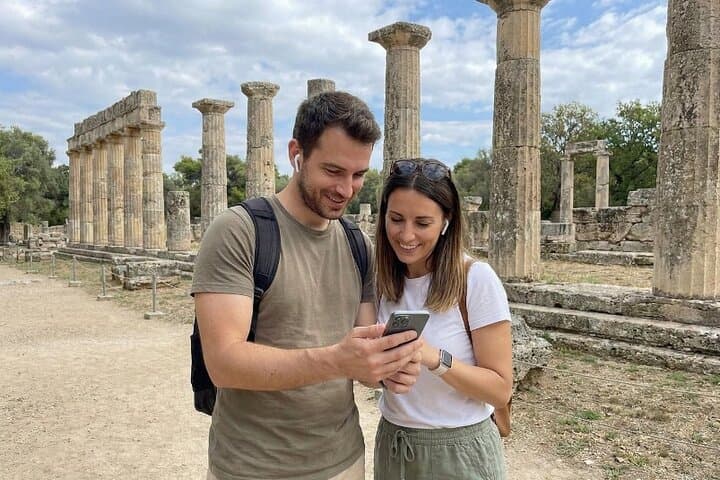
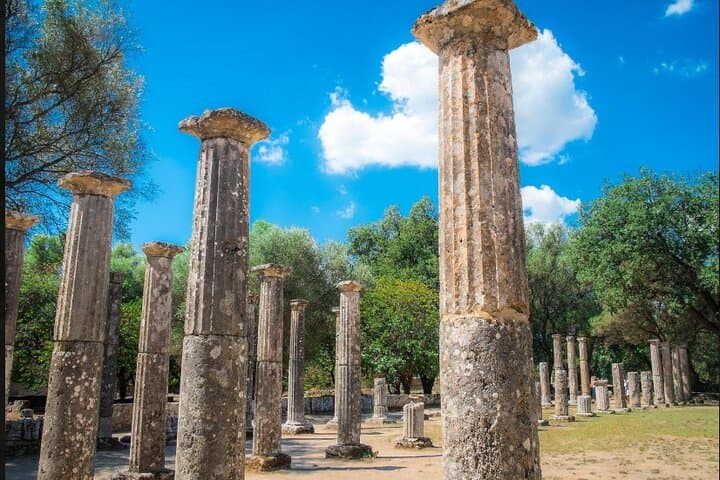
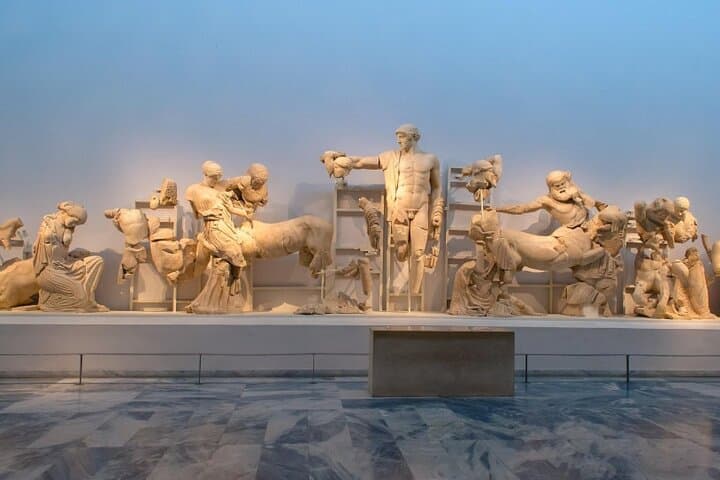
Ancient Olympia sits in a broad, alluvial plain where the Alfeios River once shaped fertile ground for sanctuaries and sport. Here, stone ruins and columns hold the memory of the first recorded Olympic Games (776 BC) and the Temple of Zeus, once home to Phidias’ colossal gold-and-ivory statue. The Archaeological Museum nearby tightens the story: marble fragments, votive offerings, and Praxiteles’ craftsmanship that map the lives of athletes, priests, and artisans.
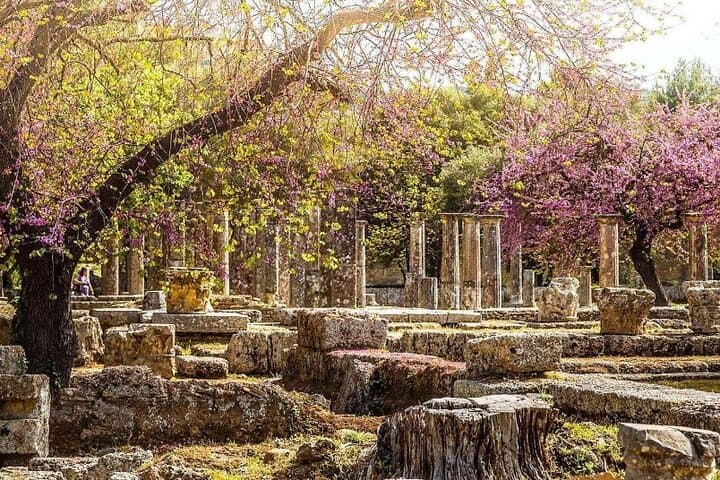
Culturally, modern Olympia is a small village that leans on the past—family tavernas, craft shops, and local olive oil producers sustain a slow rhythm. Geologically, the site is river plain and soft limestone; footpaths are level but uneven, with exposed stone and low steps.
Practical guidance: plan 4–5 hours for pickup, site tour, museum time, and a brief stroll through town. Wear sturdy walking shoes and sun protection—the site offers limited shade. Carry water; summer heat can be strong and the plain directs the sun like a spotlight. Photography is allowed at most outdoor ruins but check signage inside the museum for restrictions.
This excursion suits travelers who want a compact, reliable cultural stop with a guaranteed return to port—history-focused, easy walking, and rich in tangible connections to the ancient world.
easy.
4–5 hours.
Light walking fitness; able to stand and walk on uneven ground for up to an hour at a time
The drive typically takes about 30–40 minutes each way through rural Peloponnese, depending on traffic and cruise pickup logistics.
Yes—short runs are often permitted on the stadium track when not in use by official events, but follow guide instructions and posted signs.
No. The tour notes it is not wheelchair or scooter accessible due to uneven terrain, steps, and limited accessibility at some museum areas.
Ancient Olympia was the religious and athletic center of the region; the Olympic flame lighting ritual still occurs at the Temple of Hera before each modern Games.
The Hellenic Ministry of Culture manages the site; visitors should stick to marked paths to reduce erosion and avoid touching fragile marble surfaces.
JAT operates guided outdoor trips and adventures with an emphasis on safety, stewardship, and memorable experiences.
You step off the ship into a bright Aegean morning and the port town of Katakolon hums with quiet motion—fishermen mending nets, olive groves crowding the roadside. The bus eases east across low hills; the landscape itself seems to lean forward, eager to place you at the gates of history.
You step off the ship into a bright Aegean morning and the port town of Katakolon hums with quiet motion—fishermen mending nets, olive groves crowding the roadside. The bus eases east across low hills; the landscape itself seems to lean forward, eager to place you at the gates of history.
Ancient Olympia sits in a broad, alluvial plain where the Alfeios River once shaped fertile ground for sanctuaries and sport. Here, stone ruins and columns hold the memory of the first recorded Olympic Games (776 BC) and the Temple of Zeus, once home to Phidias’ colossal gold-and-ivory statue. The Archaeological Museum nearby tightens the story: marble fragments, votive offerings, and Praxiteles’ craftsmanship that map the lives of athletes, priests, and artisans.
Culturally, modern Olympia is a small village that leans on the past—family tavernas, craft shops, and local olive oil producers sustain a slow rhythm. Geologically, the site is river plain and soft limestone; footpaths are level but uneven, with exposed stone and low steps.
Practical guidance: plan 4–5 hours for pickup, site tour, museum time, and a brief stroll through town. Wear sturdy walking shoes and sun protection—the site offers limited shade. Carry water; summer heat can be strong and the plain directs the sun like a spotlight. Photography is allowed at most outdoor ruins but check signage inside the museum for restrictions.
This excursion suits travelers who want a compact, reliable cultural stop with a guaranteed return to port—history-focused, easy walking, and rich in tangible connections to the ancient world.