THE ADVENTURE COLLECTIVE® · Independent discovery and booking for outdoor travel

Join conservationists on the Oaxacan coast to watch and assist newborn Olive Ridley turtles make their first journey to the sea. This short, hands-on experience pairs education with meaningful local conservation work.
Join conservationists on the Oaxacan coast to watch and assist newborn Olive Ridley turtles make their first journey to the sea. This short, hands-on experience pairs education with meaningful local conservation work.
Night eases across the Oaxacan coast and the beach turns from gold to a soft, salt-scrubbed gray. Volunteers and conservationists move quietly along the sand while small shells and seaweed tangle at their feet; somewhere ahead, a protected nest stirs and a scatter of newborn Olive Ridley turtles begins the first leg of their life: the dash to the sea.
Verified experiences and guided adventures in the surrounding area.
Operated by Manglar Birdwatch · Puerto Escondido, Oaxaca
Night eases across the Oaxacan coast and the beach turns from gold to a soft, salt-scrubbed gray. Volunteers and conservationists move quietly along the sand while small shells and seaweed tangle at their feet; somewhere ahead, a protected nest stirs and a scatter of newborn Olive Ridley turtles begins the first leg of their life: the dash to the sea.
This experience takes place about 30 minutes from Puerto Escondido on a stretch of Pacific shoreline where local communities and NGOs have run hatcheries and patrols for decades. Olive Ridleys are best known here for their mass nesting events (arribadas) that shaped coastal livelihoods and conservation practices across Oaxaca. Geologically the coast is a mix of volcanic headlands and long sandy spits that funnel turtles toward the surf, and culturally the project is rooted in community stewardship—fishers, families and guides collaborate to protect nests and monitor hatchlings.
Expect hands-on, low-impact work: learning to identify nests, helping transfer eggs to protected enclosures when needed, and observing releases at dusk. The sand can be soft and the short walk to the water uneven; coastal winds shift quickly and lights are strictly controlled to avoid disorienting hatchlings. Bring a headlamp with a red filter or follow guide instructions, carry water, and be prepared to move slowly and quietly.
Practically: tours last about 2–3 hours, often include round-trip transport in air-conditioned vehicles, and are suitable for most fitness levels. Donations and small volunteer contributions support local hatcheries—your participation is part practical help, part eyewitness to a fragile, seasonal event on the Pacific rim.
easy.
2–3 hours.
Suitable for most adults and children who can walk short distances on sand; minimal exertion required.
The activity runs about 2–3 hours including transport; the core release portion occurs at dusk and varies with nest timing.
Yes—this experience is family-friendly but young children should be supervised closely and follow guide rules around nests and lights.
No—visitors generally observe and assist under guidance; direct handling of hatchlings is restricted to trained staff to avoid harm.
Bring closed-toe shoes, water, mosquito repellent and cash; avoid flash photography, bright lights, and plastic waste on the beach.
Local communities on the Oaxacan Pacific have long combined fishing with community-run hatcheries; organized protection efforts grew in the late 20th century in response to declining turtle numbers.
Support local hatcheries by following rules, donating locally, and minimizing plastic; volunteer efforts here focus on nest protection, night patrols, and public education.
Manglar Birdwatch operates guided outdoor trips and adventures with an emphasis on safety, stewardship, and memorable experiences.
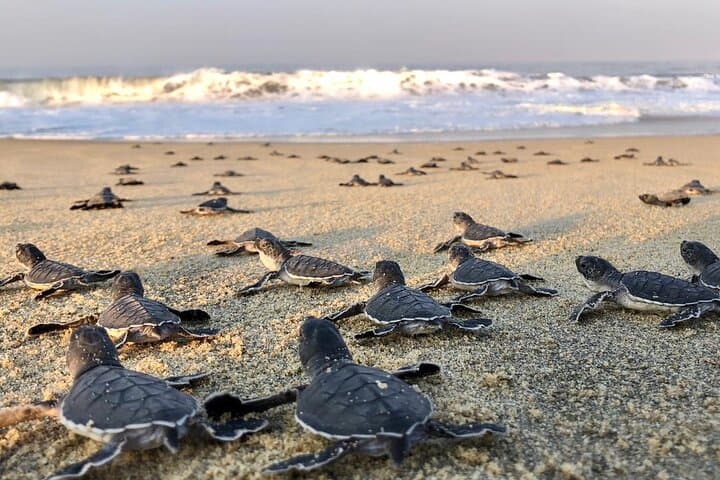
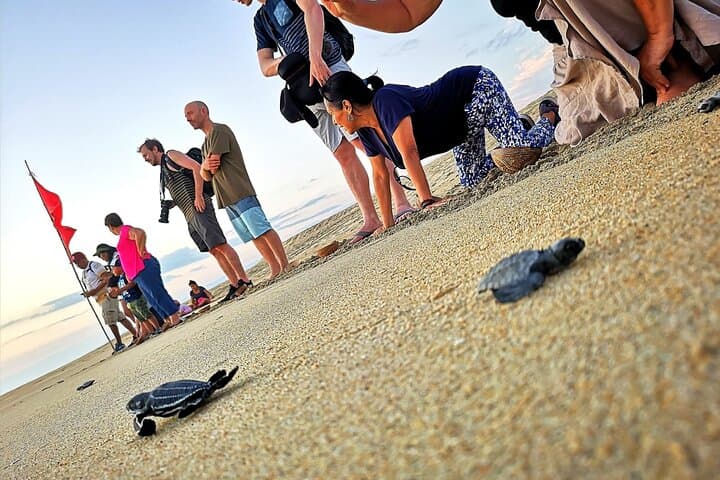
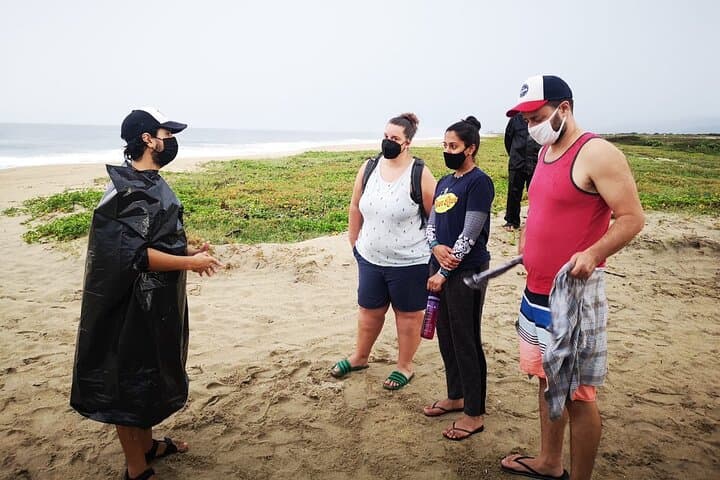
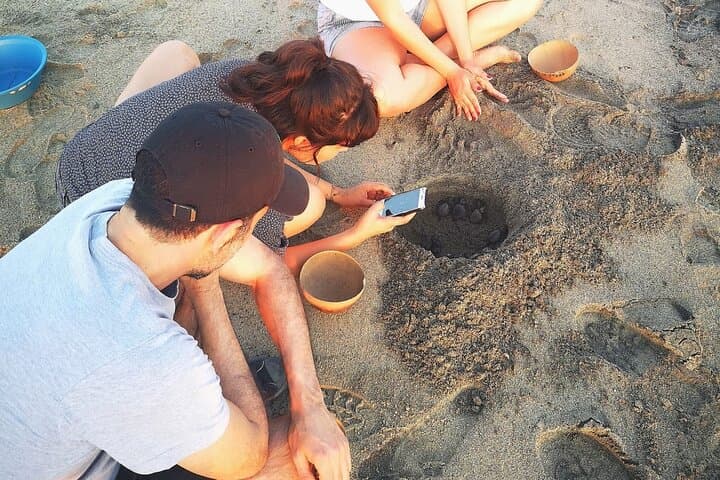
Night eases across the Oaxacan coast and the beach turns from gold to a soft, salt-scrubbed gray. Volunteers and conservationists move quietly along the sand while small shells and seaweed tangle at their feet; somewhere ahead, a protected nest stirs and a scatter of newborn Olive Ridley turtles begins the first leg of their life: the dash to the sea.
Night eases across the Oaxacan coast and the beach turns from gold to a soft, salt-scrubbed gray. Volunteers and conservationists move quietly along the sand while small shells and seaweed tangle at their feet; somewhere ahead, a protected nest stirs and a scatter of newborn Olive Ridley turtles begins the first leg of their life: the dash to the sea.
This experience takes place about 30 minutes from Puerto Escondido on a stretch of Pacific shoreline where local communities and NGOs have run hatcheries and patrols for decades. Olive Ridleys are best known here for their mass nesting events (arribadas) that shaped coastal livelihoods and conservation practices across Oaxaca. Geologically the coast is a mix of volcanic headlands and long sandy spits that funnel turtles toward the surf, and culturally the project is rooted in community stewardship—fishers, families and guides collaborate to protect nests and monitor hatchlings.
Expect hands-on, low-impact work: learning to identify nests, helping transfer eggs to protected enclosures when needed, and observing releases at dusk. The sand can be soft and the short walk to the water uneven; coastal winds shift quickly and lights are strictly controlled to avoid disorienting hatchlings. Bring a headlamp with a red filter or follow guide instructions, carry water, and be prepared to move slowly and quietly.
Practically: tours last about 2–3 hours, often include round-trip transport in air-conditioned vehicles, and are suitable for most fitness levels. Donations and small volunteer contributions support local hatcheries—your participation is part practical help, part eyewitness to a fragile, seasonal event on the Pacific rim.