THE ADVENTURE COLLECTIVE® · Independent discovery and booking for outdoor travel

Explore Old Town Albuquerque on a guided two-hour walk that links colonial history, a thriving local art scene, and an optional wine tasting. Learn to read regional art, visit the Albuquerque Museum, and discover the plazas and studios that shape this neighborhood.
Explore Old Town Albuquerque on a guided two-hour walk that links colonial history, a thriving local art scene, and an optional wine tasting. Learn to read regional art, visit the Albuquerque Museum, and discover the plazas and studios that shape this neighborhood.
You step off Central Avenue into a sunlit plaza where adobe walls throw long, cool shadows and cottonwoods whisper above cobbled paths. Streetlamps and wrought-iron benches outline San Felipe de Neri Church; artists set up easels and galleries open like pages of the town’s story. The square moves at walking pace—observant, tactile, and full of small discoveries.
Verified experiences and guided adventures in the surrounding area.
You step off Central Avenue into a sunlit plaza where adobe walls throw long, cool shadows and cottonwoods whisper above cobbled paths. Streetlamps and wrought-iron benches outline San Felipe de Neri Church; artists set up easels and galleries open like pages of the town’s story. The square moves at walking pace—observant, tactile, and full of small discoveries.
Old Town began as the Spanish colonial core of Albuquerque in 1706; its streets trace layers of Pueblo, Mexican and Anglo histories. Geologically the area sits on the Rio Grande valley, where alluvial soils meet the foothills of the Sandia Mountains—an earthly backdrop that shaped local building materials and adobe techniques. The neighborhood’s art scene mixes traditional Native pottery and Hispanic tinwork with contemporary painting and printmaking; the Albuquerque Museum nearby places those threads in civic context.
On a guided two-hour walk you can expect gallery stops, a museum admission, and optional interaction with working artists. Guides explain stylistic cues and local provenance, point out historic markers, and suggest where to continue exploring. For an elevated finish many tours offer a 30-minute wine tasting at an Old Town tasting room—New Mexico wines tend to be fruit-forward and pair well with light tapas.
Practical notes: wear comfortable shoes for uneven paving, carry water and sun protection, and bring an ID if you opt into wine sampling. Mid-afternoon or early evening light is best for photographs and quieter galleries. The tour is urban and accessible for most walkers; if mobility is a concern, check with the operator about route adjustments.
easy.
2 hours.
Basic walking fitness; able to stand and walk intermittently for two hours on paved uneven surfaces.
The standard guided tour runs about two hours; adding the optional wine tasting adds roughly 30 minutes.
Yes, this tour typically includes admission to the Albuquerque Museum as part of the itinerary.
Old Town has some uneven paving and cobblestones; contact the operator ahead of time to confirm accessible routing and accommodations.
No, you must be 21 or older and present valid ID to join the wine tasting portion.
Old Town was laid out in 1706 as a Spanish colonial plaza; many surviving adobe structures and the San Felipe de Neri Church reflect over three centuries of cultural layering.
Local businesses and museums encourage low-impact tourism—stick to marked routes, support local artists directly, and avoid disturbing native plantings around the plaza.
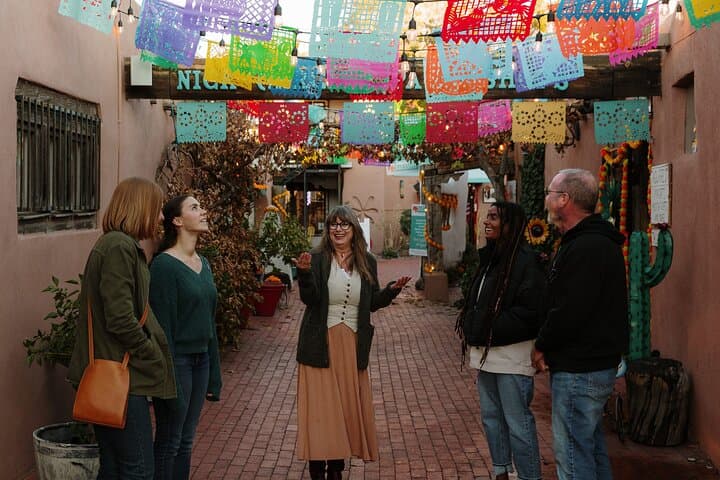
You step off Central Avenue into a sunlit plaza where adobe walls throw long, cool shadows and cottonwoods whisper above cobbled paths. Streetlamps and wrought-iron benches outline San Felipe de Neri Church; artists set up easels and galleries open like pages of the town’s story. The square moves at walking pace—observant, tactile, and full of small discoveries.
You step off Central Avenue into a sunlit plaza where adobe walls throw long, cool shadows and cottonwoods whisper above cobbled paths. Streetlamps and wrought-iron benches outline San Felipe de Neri Church; artists set up easels and galleries open like pages of the town’s story. The square moves at walking pace—observant, tactile, and full of small discoveries.
Old Town began as the Spanish colonial core of Albuquerque in 1706; its streets trace layers of Pueblo, Mexican and Anglo histories. Geologically the area sits on the Rio Grande valley, where alluvial soils meet the foothills of the Sandia Mountains—an earthly backdrop that shaped local building materials and adobe techniques. The neighborhood’s art scene mixes traditional Native pottery and Hispanic tinwork with contemporary painting and printmaking; the Albuquerque Museum nearby places those threads in civic context.
On a guided two-hour walk you can expect gallery stops, a museum admission, and optional interaction with working artists. Guides explain stylistic cues and local provenance, point out historic markers, and suggest where to continue exploring. For an elevated finish many tours offer a 30-minute wine tasting at an Old Town tasting room—New Mexico wines tend to be fruit-forward and pair well with light tapas.
Practical notes: wear comfortable shoes for uneven paving, carry water and sun protection, and bring an ID if you opt into wine sampling. Mid-afternoon or early evening light is best for photographs and quieter galleries. The tour is urban and accessible for most walkers; if mobility is a concern, check with the operator about route adjustments.