THE ADVENTURE COLLECTIVE® · Independent discovery and booking for outdoor travel

Walk Old Tbilisi’s winding streets, ride the cable car to Narikala and sample khachapuri, churchkhela and traditional wines on this four-hour highlights tour. Expect cobbled lanes, panoramic views and multiple tasting stops led by a local guide.
Walk Old Tbilisi’s winding streets, ride the cable car to Narikala and sample khachapuri, churchkhela and traditional wines on this four-hour highlights tour. Expect cobbled lanes, panoramic views and multiple tasting stops led by a local guide.
Morning light pours over the rust-red roofs of Old Tbilisi and the sulfur steam from Abanotubani seems to pull the city awake. A small group threads narrow lanes where balconies lean close and spices hang in paper cones; the guide points up toward the Mother of Georgia, a figure that surveys the city as if daring visitors to take in every angle.
Verified experiences and guided adventures in the surrounding area.
Operated by Real Georgia Tours · Tbilisi, Tbilisi
Morning light pours over the rust-red roofs of Old Tbilisi and the sulfur steam from Abanotubani seems to pull the city awake. A small group threads narrow lanes where balconies lean close and spices hang in paper cones; the guide points up toward the Mother of Georgia, a figure that surveys the city as if daring visitors to take in every angle.
This four-hour walk threads Tbilisi’s layered history: from the 5th-century founding under King Vakhtang Gorgasali to the stonework of medieval churches and the 19th-century bath district heated by the city’s thermal springs. Geology shows itself in warm, mineral-rich waters that made the neighborhood a settlement hub; culture comes through in bread—khachapuri and lobiani—sold from wood-fired ovens and in churchkhela strings of nuts and grape must.
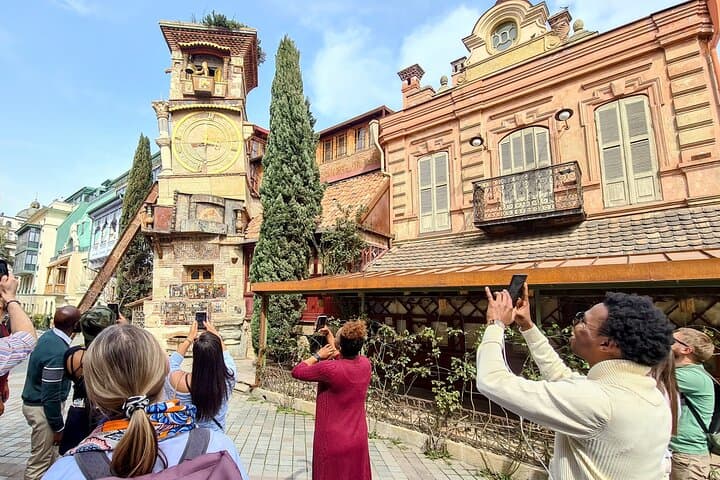
The route mixes architecture and taste: a cable-car lift to Narikala for sweeping views, a stop at the whimsical Gabriadze clock tower, a walk across the modern Peace Bridge, and multiple tastings—savory pastries, spices, sweets, and several traditional wines—scattered through local shops.
Practical notes: expect uneven cobbles and short stair sections; comfortable shoes and a light layer are wise. Bring ID for the wine tasting and small notes for market purchases; the group size keeps pace steady, with frequent stops for sampling and photography. Morning starts are cooler and less crowded; afternoon light is warmer for views. Respect bathhouse privacy, taste in moderation, and use refillable water to reduce plastic in the historic district.
easy.
3–4 hours.
Suitable for most fitness levels; participants should be comfortable walking on uneven pavements and climbing short flights of stairs.
Yes—several small wine tastings (local red and white varieties) and traditional sweets are included as part of the tour.
The tour lasts about four hours with intermittent walking and stops; distances accumulate to a few kilometers across Old Town streets and viewpoints.
Children are allowed but must be accompanied by an adult; note there are alcoholic tastings and some sections with stairs.
The meeting point is central in Old Tbilisi, easily reachable by public transport and a short walk from major hotels and the metro.
Tbilisi grew around hot mineral springs; its position on trade routes meant Persian, Ottoman and Russian influences layered onto a Georgian core, visible in architecture and cuisine.
As visitor numbers rise, support small local vendors, avoid single-use plastics, and stay on established paths to protect fragile historic masonry.
Real Georgia Tours operates guided outdoor trips and adventures with an emphasis on safety, stewardship, and memorable experiences.

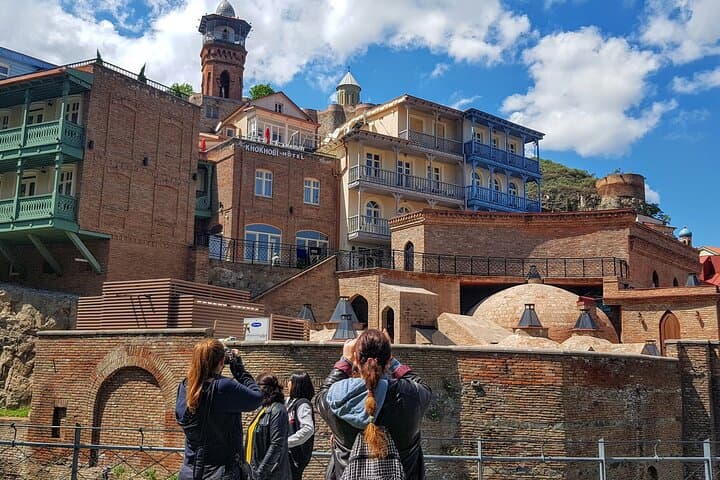
Morning light pours over the rust-red roofs of Old Tbilisi and the sulfur steam from Abanotubani seems to pull the city awake. A small group threads narrow lanes where balconies lean close and spices hang in paper cones; the guide points up toward the Mother of Georgia, a figure that surveys the city as if daring visitors to take in every angle.
Morning light pours over the rust-red roofs of Old Tbilisi and the sulfur steam from Abanotubani seems to pull the city awake. A small group threads narrow lanes where balconies lean close and spices hang in paper cones; the guide points up toward the Mother of Georgia, a figure that surveys the city as if daring visitors to take in every angle.
This four-hour walk threads Tbilisi’s layered history: from the 5th-century founding under King Vakhtang Gorgasali to the stonework of medieval churches and the 19th-century bath district heated by the city’s thermal springs. Geology shows itself in warm, mineral-rich waters that made the neighborhood a settlement hub; culture comes through in bread—khachapuri and lobiani—sold from wood-fired ovens and in churchkhela strings of nuts and grape must.
The route mixes architecture and taste: a cable-car lift to Narikala for sweeping views, a stop at the whimsical Gabriadze clock tower, a walk across the modern Peace Bridge, and multiple tastings—savory pastries, spices, sweets, and several traditional wines—scattered through local shops.
Practical notes: expect uneven cobbles and short stair sections; comfortable shoes and a light layer are wise. Bring ID for the wine tasting and small notes for market purchases; the group size keeps pace steady, with frequent stops for sampling and photography. Morning starts are cooler and less crowded; afternoon light is warmer for views. Respect bathhouse privacy, taste in moderation, and use refillable water to reduce plastic in the historic district.