THE ADVENTURE COLLECTIVE® · Independent discovery and booking for outdoor travel

Drive an hour from Chisinau into a gorge where cliff‑carved monasteries and a 19th‑century religious compound tell Moldova’s medieval and cultural story. This day trip combines short hikes, scenic viewpoints, and architectural history with practical logistics for a reliable half‑day outing.
Drive an hour from Chisinau into a gorge where cliff‑carved monasteries and a 19th‑century religious compound tell Moldova’s medieval and cultural story. This day trip combines short hikes, scenic viewpoints, and architectural history with practical logistics for a reliable half‑day outing.
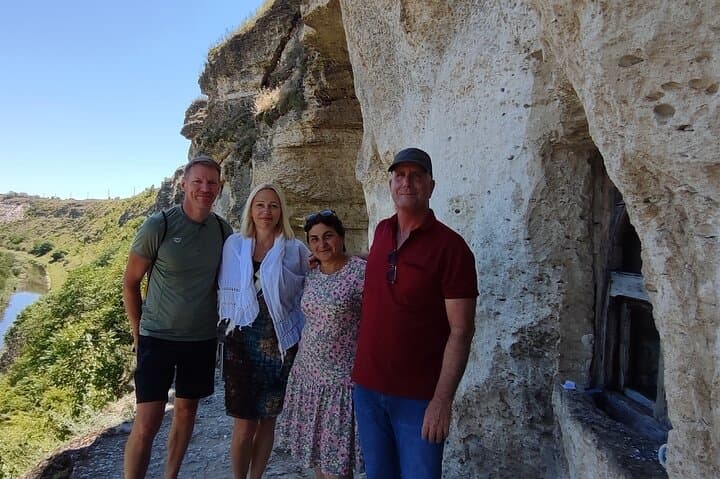
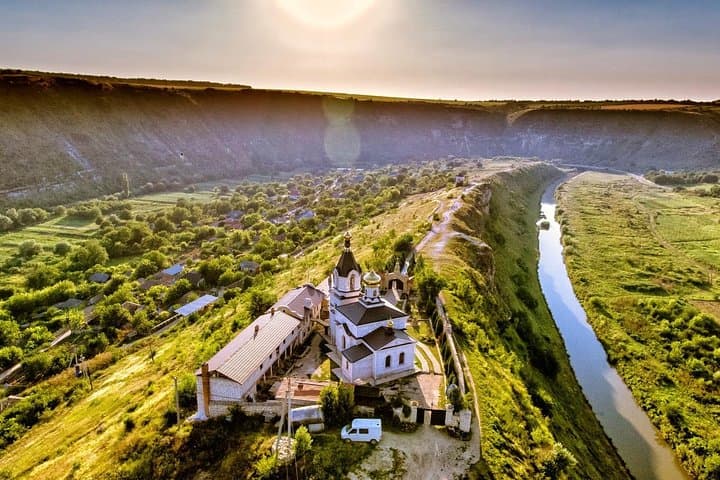
You step out of the air‑conditioned car and the Răut River dares you to follow its twists — a ribbon cutting through limestone and loess that has guided people for a thousand years. From the parking area a patchwork of dirt tracks and stone steps leads toward cliffside caves where monks once carved cells and chapels; farther on, the white domes of Curchi Monastery puncture a broad agricultural plain, their facades catching the light.
Verified experiences and guided adventures in the surrounding area.
Operated by Moldovatovisit&tours · Orhei, Orhei District
You step out of the air‑conditioned car and the Răut River dares you to follow its twists — a ribbon cutting through limestone and loess that has guided people for a thousand years. From the parking area a patchwork of dirt tracks and stone steps leads toward cliffside caves where monks once carved cells and chapels; farther on, the white domes of Curchi Monastery puncture a broad agricultural plain, their facades catching the light.
Old Orhei (Orheiul Vechi) is an archaeological complex layering Paleolithic camps, medieval settlements, and Middle Ages cave monasteries into a compact landscape. The gorge cuts through Miocene clay and limestone; erosion has revealed terraces where communities lived, fought, and worshipped. Curchi Monastery, rebuilt in the 19th century in an Eastern Orthodox style, reflects Bessarabia’s religious and cultural shifts — Ottoman suzerainty, Russian influence, and local Moldovan traditions.
Expect 1–1.5 hours each way from Chisinau depending on traffic, short climbs of roughly 50–100 m on uneven paths, and open‑air viewpoints that reward a slow pace. Photography is good at golden hour; shade is limited in summer and trails get muddy after rain.
Practicalities: bring sturdy shoes for dirt and stone steps, sun protection and water, and modest clothing for the monastery interior. Guided tours typically include entrance and bottled water and run 5–6 hours. Move deliberately, respect sanctuaries, and leave artifacts in place — the cliffs are fragile and the site is best preserved by careful footsteps.
easy.
5–6 hours.
Suitable for travelers in light to moderate physical condition able to walk short steep sections and stand for viewpoints
Most operators list 5–6 hours round‑trip, including transport and guided visits to Old Orhei and Curchi Monastery.
Standard private and shared tours typically include transport, entrance fees, bottled water, and a guide — confirm details at booking.
Some paths are stroller‑accessible near parking, but cliff trails and cave steps are unsuitable for strollers and require supervision for children.
Photography policies vary by church; exterior and landscape photos are fine, and interior photography may be allowed if you are discreet and follow signage.
Orheiul Vechi preserves successive occupations from prehistoric times through medieval Moldavian settlements; Curchi Monastery reflects 19th‑century ecclesiastical architecture in Bessarabia.
The gorge’s soft sediments are vulnerable to erosion — stick to marked trails, avoid touching fragile cave facades, and support local guides who promote sustainable access.
Moldovatovisit&tours operates guided outdoor trips and adventures with an emphasis on safety, stewardship, and memorable experiences.
You step out of the air‑conditioned car and the Răut River dares you to follow its twists — a ribbon cutting through limestone and loess that has guided people for a thousand years. From the parking area a patchwork of dirt tracks and stone steps leads toward cliffside caves where monks once carved cells and chapels; farther on, the white domes of Curchi Monastery puncture a broad agricultural plain, their facades catching the light.
You step out of the air‑conditioned car and the Răut River dares you to follow its twists — a ribbon cutting through limestone and loess that has guided people for a thousand years. From the parking area a patchwork of dirt tracks and stone steps leads toward cliffside caves where monks once carved cells and chapels; farther on, the white domes of Curchi Monastery puncture a broad agricultural plain, their facades catching the light.
Old Orhei (Orheiul Vechi) is an archaeological complex layering Paleolithic camps, medieval settlements, and Middle Ages cave monasteries into a compact landscape. The gorge cuts through Miocene clay and limestone; erosion has revealed terraces where communities lived, fought, and worshipped. Curchi Monastery, rebuilt in the 19th century in an Eastern Orthodox style, reflects Bessarabia’s religious and cultural shifts — Ottoman suzerainty, Russian influence, and local Moldovan traditions.
Expect 1–1.5 hours each way from Chisinau depending on traffic, short climbs of roughly 50–100 m on uneven paths, and open‑air viewpoints that reward a slow pace. Photography is good at golden hour; shade is limited in summer and trails get muddy after rain.
Practicalities: bring sturdy shoes for dirt and stone steps, sun protection and water, and modest clothing for the monastery interior. Guided tours typically include entrance and bottled water and run 5–6 hours. Move deliberately, respect sanctuaries, and leave artifacts in place — the cliffs are fragile and the site is best preserved by careful footsteps.