THE ADVENTURE COLLECTIVE® · Independent discovery and booking for outdoor travel

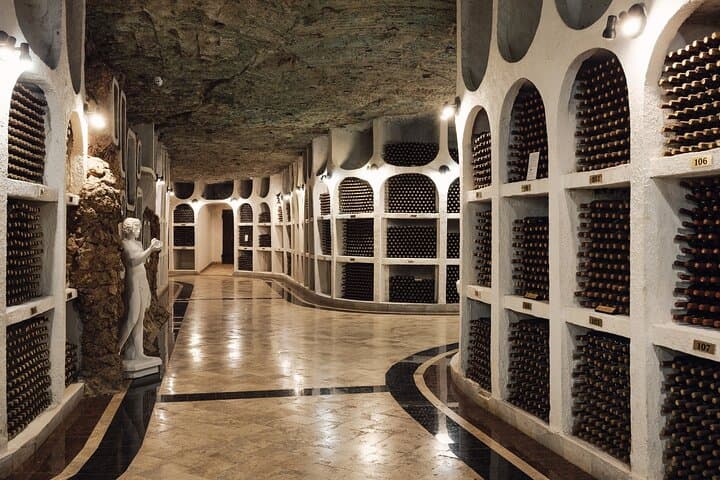
Explore Moldova’s rugged river cliffs and living monasteries on a full-day tour from Chisinau. Visit Curchi’s domes, walk the cave cells of Old Orhei, and optionally descend into Cricova’s underground wine labyrinths.
Explore Moldova’s rugged river cliffs and living monasteries on a full-day tour from Chisinau. Visit Curchi’s domes, walk the cave cells of Old Orhei, and optionally descend into Cricova’s underground wine labyrinths.
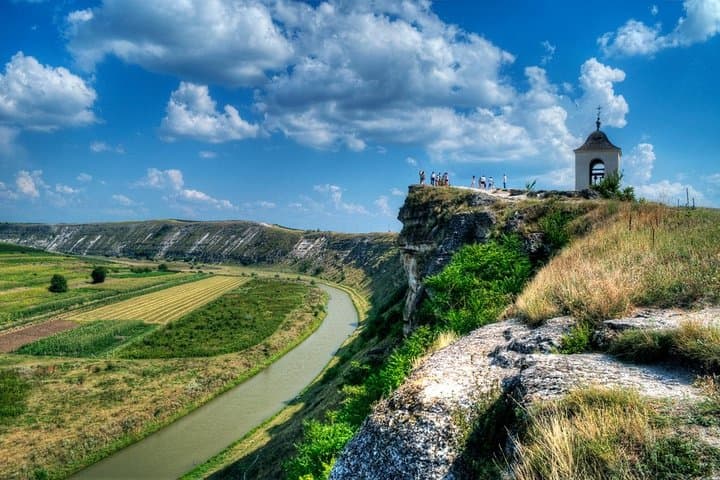
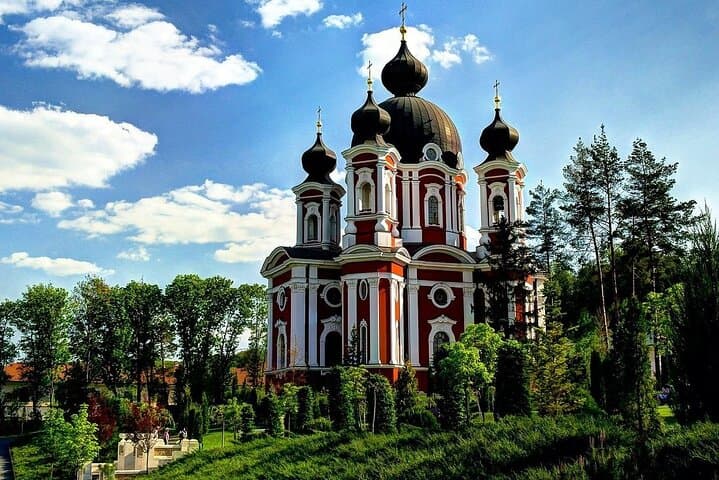
A pale morning light lifts off the Dniester valley as your minivan leaves Chișinău and the road narrows toward limestone cliffs. Within an hour you arrive at Curchi Monastery: whitewashed walls and onion domes that catch the sun while a small bell seems to mark the cadence of an old rural day. The route continues to Orheiul Vechi (Old Orhei), where carved cave cells and ruined city walls sit on a steep river bend carved by the Răut — cliffs that command the valley and push you toward short, uneven trails and cliffside viewpoints.
Verified experiences and guided adventures in the surrounding area.
Operated by Private guide in Moldova · Chisinau, Chișinău Municipality
A pale morning light lifts off the Dniester valley as your minivan leaves Chișinău and the road narrows toward limestone cliffs. Within an hour you arrive at Curchi Monastery: whitewashed walls and onion domes that catch the sun while a small bell seems to mark the cadence of an old rural day. The route continues to Orheiul Vechi (Old Orhei), where carved cave cells and ruined city walls sit on a steep river bend carved by the Răut — cliffs that command the valley and push you toward short, uneven trails and cliffside viewpoints.
Old Orhei is an archaeological complex spanning medieval settlement layers (14th–16th centuries) and a functioning cave monastery carved into the limestone. Curchi, built in the 19th century, shows Orthodox monastic architecture and fresco work. Geologically, the region is compact limestone and loess; expect loose scree, compacted dirt tracks and short stair climbs (roughly 80–150m total elevation change on site walks). Culture here is village first—Butuceni serves simple, ecological Moldovan food and local hospitality.
Practical guidance: plan a full 7–8 hour day, bring sturdy walking shoes for uneven trails and steps, and carry cash for village lunches and optional Cricova wine tours (advance booking for Cricova recommended). Expect limited shade at viewpoints; hydrate and time visits for morning or late afternoon light to avoid peak heat. Respect monastic spaces—modest clothing and quiet voices—and stay on marked paths to protect fragile archaeological features.
easy.
7–8 hours.
Light walking fitness required; able to handle short uneven trails and stair sections.
No—the Cricova visit and tasting are optional and charged separately (around €38 per person); book the tasting in advance.
Expect 30–60 minutes of walking across uneven trails and stairs at the archaeological site with brief climbs to viewpoints; total on-site distance is moderate.
Curchi’s main complex has flatter access, but the cave monastery at Old Orhei involves steps and uneven terrain and may be challenging for some visitors.
Lunch is optional and not included—many groups stop in the nearby village of Butuceni for traditional Moldovan dishes at local guesthouses.
Old Orhei holds layered settlements and cave monastic cells with medieval ruins from the 14th–16th centuries; Curchi reflects 19th-century Orthodox monastic revival.
Stick to marked paths to protect fragile archaeological strata and avoid climbing on ruins; support local businesses to encourage sustainable heritage tourism.
Private guide in Moldova operates guided outdoor trips and adventures with an emphasis on safety, stewardship, and memorable experiences.
A pale morning light lifts off the Dniester valley as your minivan leaves Chișinău and the road narrows toward limestone cliffs. Within an hour you arrive at Curchi Monastery: whitewashed walls and onion domes that catch the sun while a small bell seems to mark the cadence of an old rural day. The route continues to Orheiul Vechi (Old Orhei), where carved cave cells and ruined city walls sit on a steep river bend carved by the Răut — cliffs that command the valley and push you toward short, uneven trails and cliffside viewpoints.
A pale morning light lifts off the Dniester valley as your minivan leaves Chișinău and the road narrows toward limestone cliffs. Within an hour you arrive at Curchi Monastery: whitewashed walls and onion domes that catch the sun while a small bell seems to mark the cadence of an old rural day. The route continues to Orheiul Vechi (Old Orhei), where carved cave cells and ruined city walls sit on a steep river bend carved by the Răut — cliffs that command the valley and push you toward short, uneven trails and cliffside viewpoints.
Old Orhei is an archaeological complex spanning medieval settlement layers (14th–16th centuries) and a functioning cave monastery carved into the limestone. Curchi, built in the 19th century, shows Orthodox monastic architecture and fresco work. Geologically, the region is compact limestone and loess; expect loose scree, compacted dirt tracks and short stair climbs (roughly 80–150m total elevation change on site walks). Culture here is village first—Butuceni serves simple, ecological Moldovan food and local hospitality.
Practical guidance: plan a full 7–8 hour day, bring sturdy walking shoes for uneven trails and steps, and carry cash for village lunches and optional Cricova wine tours (advance booking for Cricova recommended). Expect limited shade at viewpoints; hydrate and time visits for morning or late afternoon light to avoid peak heat. Respect monastic spaces—modest clothing and quiet voices—and stay on marked paths to protect fragile archaeological features.